 how-to
How to Prepare for a House Rewire Without the Mess
Last Updated: November 5, 2026
Quick Summary
A house rewire is messy, mainly from dust and debris when walls and ceilings are chased and floorboards lifted. The mess is predictable, though, and careful preparation with dust sheets, sealed doorways and a clear clean-up agreement keeps the disruption manageable.
- Dust from chasing plaster and masonry spreads through the whole house within hours without sealing.
- The first-fix stage is usually the noisiest and dustiest part of the project.
- Cover furniture with dust sheets and move it to the centre of each room before work starts.
- Agree a written clean-up plan, including dust extraction and daily clean-up, before the work begins.
- Budget for plaster repairs, redecorating and a professional clean once the rewire is finished.
Table of Contents
- Why rewiring creates dust and debris
- How Long Does It Take to Rewire a House?
- How to Prepare for a House Rewire Room by Room
- Living in a House During Rewiring: Practical Arrangements
- Rewiring a House Without Damaging Walls: Chasing, Floorboards and Making Good
- Dust Control, Clean-Up and Redecorating Costs to Plan For
- Booking Your Rewire: Questions to Ask Before You Hire an Electrician
- Frequently Asked Questions
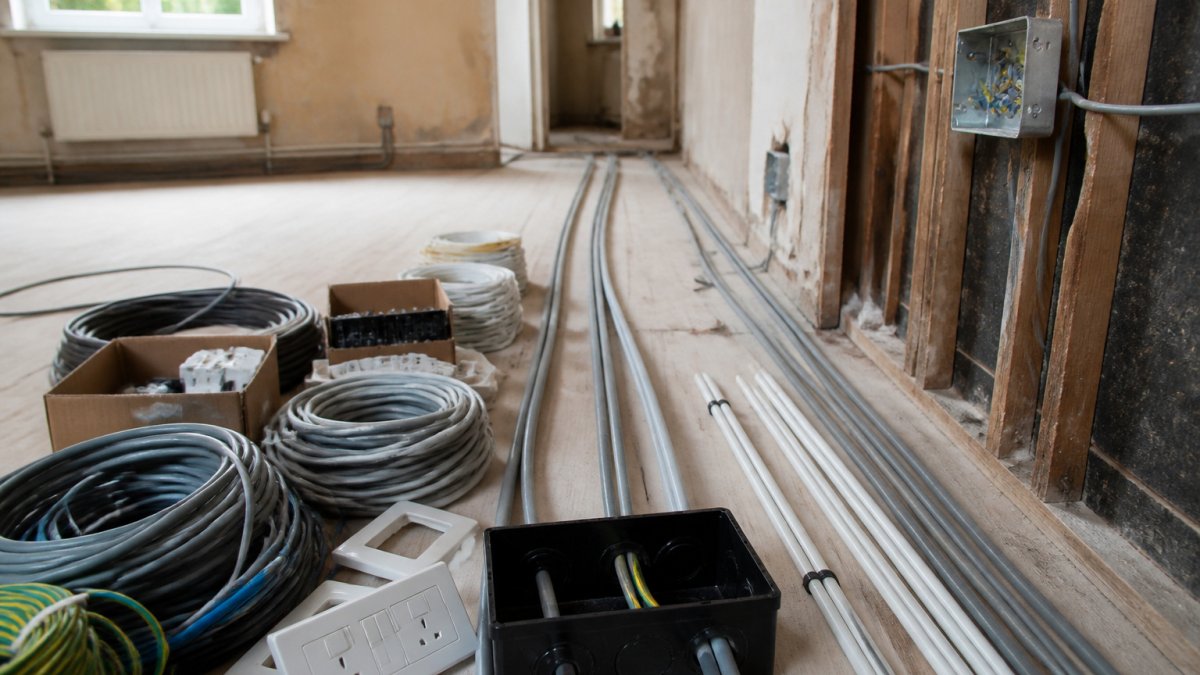
A full house rewire is messy, but the mess is predictable and manageable with the right preparation. Our guide to how disruptive a full house rewire really is sets out the dust, access and disruption you can expect, room by room. Homeowners across Glasgow, Renfrewshire and Ayrshire often ask this question before they commit, and the honest answer is that dust, debris and disruption are real but can be controlled. Knowing what to expect in advance makes the difference between a stressful few weeks and a manageable project.
A house rewire is the process of replacing old cabling, fuse boards and wiring routes throughout a property. Most of the disruption comes from the physical work of accessing those cables inside walls, ceilings and floors.
Most people picture plaster everywhere and floorboards up in every room. In practice, the scale depends on the property, the age of the wiring and how the installation is planned.
Why rewiring creates dust and debris
The main source of dust is cutting channels into walls and ceilings so new cables can be routed safely. Plaster and brick dust travel further than people expect, so protection matters from day one.
Common sources of mess include:
- Chasing channels into plaster and masonry walls
- Lifting floorboards to reach cables beneath
- Drilling holes for sockets, switches and light fittings
- Removing old cabling and fittings
A common mistake is assuming dust stays in one room. Without sealed doorways and dust sheets, fine particles spread through the whole house within hours.
Which parts of the house are affected
Not every room is disrupted equally. Work tends to concentrate in these areas:
- Ground floor and upper floor rooms where the old cables run
- Loft spaces and under-floor voids where cables are routed
- Kitchens and bathrooms, where new circuits and sockets are often added
- Hallways and landings, which usually carry the main cable routes
Older properties with solid walls tend to need more chasing than newer timber-frame homes, so the mess varies by construction type.
How Long Does It Take to Rewire a House?
The duration of a full rewire depends on the size of the property, the condition of the existing installation and how much access the electricians can get. The duration of a full rewire depends on the size of the property, the condition of the existing installation and how much access the electricians can get, and larger or older properties typically run longer. You can compare typical timescales for each stage in our article on how long a full property rewire takes. The work is split into first fix (routing and chasing cables), testing, second fix (fitting accessories and the consumer unit) and making good, and the mess peaks in the first stage.
The stages of a rewire generally follow the same order: first fix, when cables are routed and chased, testing before accessories are fitted, second fix, when sockets, switches and light fittings are connected, and finally making good and clean-up. The first-fix stage is usually the noisiest and dustiest, and plaster may need time to dry before decorating.
Plan for disruption throughout, not just on the days the electricians are visibly working. A common pattern is for householders to underestimate the gap between second fix and being able to decorate, because plaster repairs need to dry and cure first. Ask your electrician for a stage-by-stage schedule in writing before work starts so you can plan around the noisiest days.
Watch out: if the property is occupied, the first-fix stage is when temporary power arrangements and room closures matter most, so agree the daily power-off windows in advance rather than discovering them on the morning.
How to Prepare for a House Rewire Room by Room
Preparation makes the biggest difference to how messy the project feels, and most of it is the homeowner's job rather than the electrician's. For a clear overview of what happens at each stage of the wider process, see the domestic rewiring process explained. Work through each room before the first day, and treat the checklist below as the minimum.
Before the work starts, in every room:
- Clear wall-mounted items, pictures and shelves
- Move furniture to the centre of the room and cover it with dust sheets
- Remove curtains and blinds where possible
- Lift or cover rugs and carpets
- Protect or remove any valuable or fragile items
- Empty nearby cupboards and drawers so doors can be opened safely
Living room and bedrooms: Cover the floor with dust sheets, seal off the doorway with tape and plastic if possible, and move anything you will need during the work into a room that is not being disturbed.
Kitchen: Empty wall cupboards that sit over planned chasing, cover worktops and appliances, and plan how you will prepare meals on days when power or access is limited. If the consumer unit is being replaced, expect a longer power-off period and plan food accordingly.
Hallways and landings: Clear them completely, since these are often the main cable routes and the busiest walkways. Remove shoes, coats and any trip hazards from the route the electricians will use.
Lofts and under-floor spaces: Remove stored items so the electricians can access cables safely, and clear a path to the loft hatch. Boarding or stored boxes over cable routes will need to be moved.
Bathrooms: Clear shelves and surfaces, and agree with the electrician how the room will be kept usable, since bathroom circuits are often replaced early.
Children, pets and working from home: Set up a separate room away from the work for anyone who needs quiet, keep pets out of the work areas and agree a routine for school runs and deliveries. Working from home is hardest during first fix, when noise and dust are at their peak, so plan to work elsewhere or in the furthest room if you can.
What the electrician should control: Ask in advance about dust extraction, sealed doorways, daily clean-up and whether floorboards will be relaid at the end of each day. A written clean-up agreement can help prevent disputes later, and it is reasonable to ask what equipment will be used.
Watch out: if you leave furniture in place without covering it, fine plaster dust will settle into upholstery and electronics within hours, and it is far harder to remove after the work than to prevent beforehand.
Living in a House During Rewiring: Practical Arrangements
Many homeowners stay in their property during the rewire. You can do so, but plan around the disruption.

- Arrange temporary power or access to a working kitchen and bathroom
- Keep a clear path to the bathroom and main exit
- Tell the team if children, pets or home workers need quiet or a separate room
- Agree in advance when power cuts will happen and how long they will last
Working from home is harder during first fix, when noise and dust are at their peak. Set up in a room away from the work if you can.
Rewiring a House Without Damaging Walls: Chasing, Floorboards and Making Good
Careful planning of cable routes can limit damage, including using existing cable paths where safe. Chasing is still required in most older homes, and the walls need repairing afterwards.
Ask your installer how they will:
- Keep chasing to the minimum needed
- Lift and relay floorboards carefully
- Make good the plaster and leave surfaces ready for decorating
Most of the visible damage is repairable, but it does add time and cost after the electrical work is finished.
Dust Control, Clean-Up and Redecorating Costs to Plan For
Plan for clean-up and redecoration as part of the project, not an afterthought. Dust sheets and a thorough final clean help reduce the mess that remains.
Budget for these items:
- Plaster repairs and skim coats on chased walls
- Redecorating the rooms affected by the work
- Replacing or refinishing floorboards if they were lifted
- A professional clean once the work is complete
Costs vary widely by property size and finish, so ask for a written quote that itemises the making good and redecorating work. Pricing depends on the scope of the job, so request a current quote from Project Rewire for your home.
The table below summarises the main items to budget for once the rewire is finished.
| Item | What it covers | Note |
|---|---|---|
| Plaster repairs | Skim coats on chased walls | Adds time and cost after electrical work |
| Redecorating | Rooms affected by the work | Budget as part of the project |
| Floorboards | Replacing or refinishing lifted boards | Needed if boards were lifted |
| Professional clean | Final clean once work is complete | Reduces remaining mess |
| Dust sheets | Covering furniture and floors | Use from day one |
Booking Your Rewire: Questions to Ask Before You Hire an Electrician
Before you book, ask every electrician these questions:
- How do you contain dust, and what clean-up is included?
- Will you chase walls or use existing routes where possible?
- How long will the first and second fix stages take?
- What making good is included in the quote?
- Are you NAPIT approved, and do you provide a guarantee on the work?
Project Rewire is a NAPIT approved contractor, and we offer a 10-year guarantee on all rewiring jobs. For a full house rewire quote covering Glasgow, Renfrewshire and Ayrshire, explore our home rewiring services and what they include before you make a decision.
Ready to plan your rewire with fewer surprises? Get a quote for your home from Project Rewire and we will walk you through the disruption, timescale and clean-up for your property.
Frequently Asked Questions
Is rewiring a house very messy?
Yes, a full house rewire is messy, mainly because cables are run through walls, ceilings and under floorboards. Chasing channels into plaster and brick creates dust and debris, and lifting boards brings up old dirt. Protecting floors and furniture with dust sheets, sealing off work areas and cleaning up at the end of each day all help limit the mess. The mess is heaviest during first fix and eases during second fix, when sockets, switches and light fittings are installed. Clearing rooms and covering belongings beforehand makes a large difference to how much dust reaches your home.
How long does a full house rewire take?
The duration of a full house rewire depends on the size of the property, its age, how many rooms are affected and whether the house is occupied. The time a rewire takes depends on the size and age of the property, how many rooms are affected and whether the house is occupied, and larger or older properties can take longer. Work is usually split into first fix, when cables are installed, and second fix, when fittings and the consumer unit are completed and tested. Ask your electrician for a day-by-day timeline before work starts so you know what to expect each week.
Can you stay in your house while it is being rewired?
In most cases, yes. Many homeowners remain in their property during a rewire, although daily life is disrupted. Power is usually switched off for periods during the work, so arrange a temporary supply for essentials such as fridges and phone charging. It helps to set up a quieter area away from the work, keep children and pets away from active work zones, and agree with your electrician when the power will be off. Tell your electrician in advance if you work from home so they can plan around your needs.
Does a house need redecorating after rewiring?
Most rewires leave some making good to do, because cables are hidden in chased channels and holes are made for sockets and switches. Plastering or filling the channels, patching ceilings and sanding floorboards may be needed before you redecorate. Plan a budget for making good and redecorating alongside the electrical work, and ask your electrician whether plastering is included in their quote or whether you will need a separate tradesperson. For a clear breakdown of what your own property will involve, speak to Project Rewire directly for a quote.