 how-to
How long does a full property rewire take?
Last Updated: October 26, 2026
Quick Summary
A full property rewire typically takes between 2 to 4 weeks, depending on the size and complexity of your home. For a standard three-bedroom house, you should expect around 3 weeks of active work spread across first and second fix installations.
- First fix installation takes 7 to 10 days and is the most disruptive phase
- Second fix installation takes 5 to 7 days and is far less disruptive than first fix
- Older properties take longer because electricians must navigate existing infrastructure and address safety issues
- Property age, size, condition, and access are the biggest factors affecting rewire duration
- You can stay in your home during rewiring, though first fix is more disruptive than second fix
Table of Contents
- How long does a full property rewire take?
- Stages of rewiring a house explained
- How long to rewire a three-bedroom house
- Factors that affect rewire duration
- Can you live in a house during rewiring?
- How to prepare for a house rewire
- Getting your rewire quote and timeline
- Frequently Asked Questions
How long does a full property rewire take?
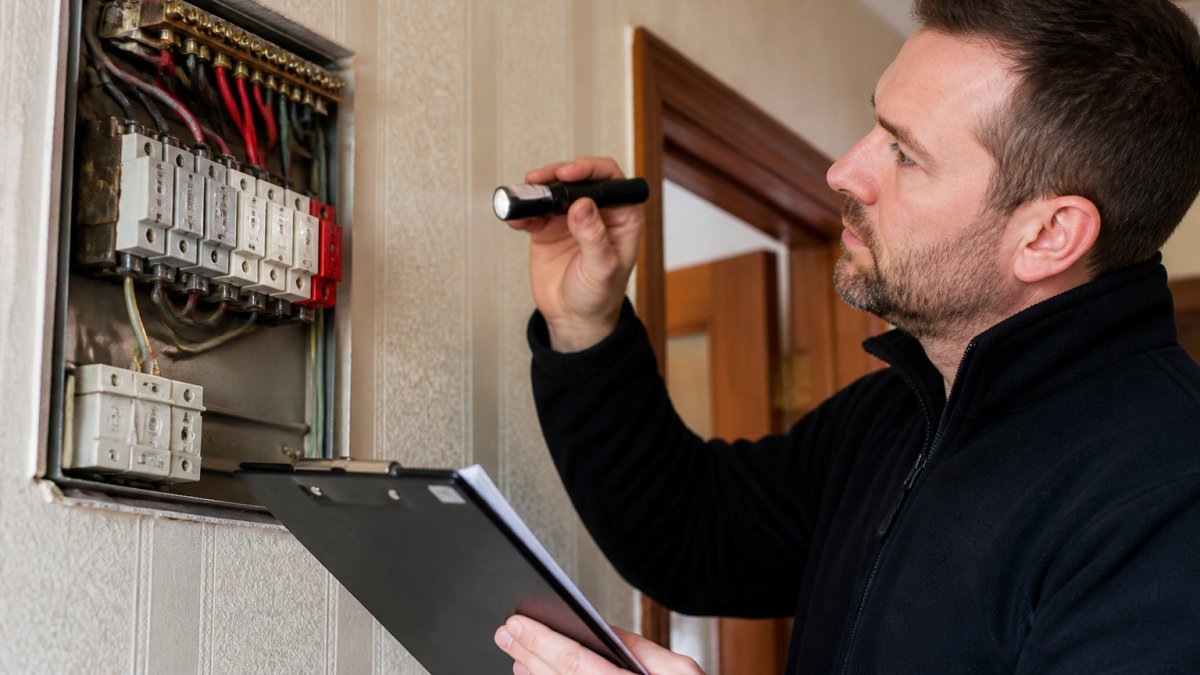
A full property rewire typically takes between 2 to 4 weeks, depending on the size and complexity of your home. For a standard three-bedroom house, you should expect around 3 weeks of active work spread across first and second fix installations. Older properties with original wiring often take longer because electricians must carefully navigate existing infrastructure and address safety issues that newer homes don't have.
The timeline isn't just about how many days the electricians spend on site. It includes planning, material ordering, inspections, and the work itself. The real duration depends on several factors we'll explore below, but knowing the general timeframe helps you decide whether a full rewire suits your schedule.
Stages of rewiring a house explained
A full property rewire happens in two main phases: first fix and second fix. Learn more about the domestic electrical rewiring process to understand what happens during each installation stage. Understanding these stages is crucial because they determine how long the work takes and how disruptive it will be to your daily life.
First fix installation
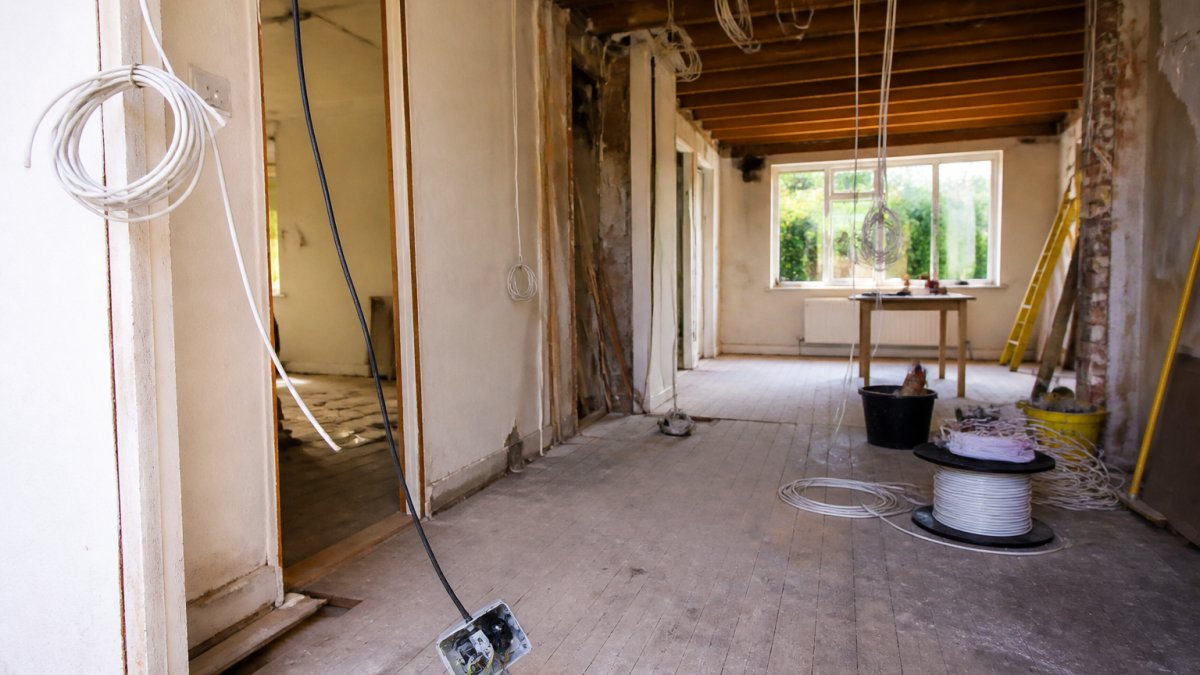
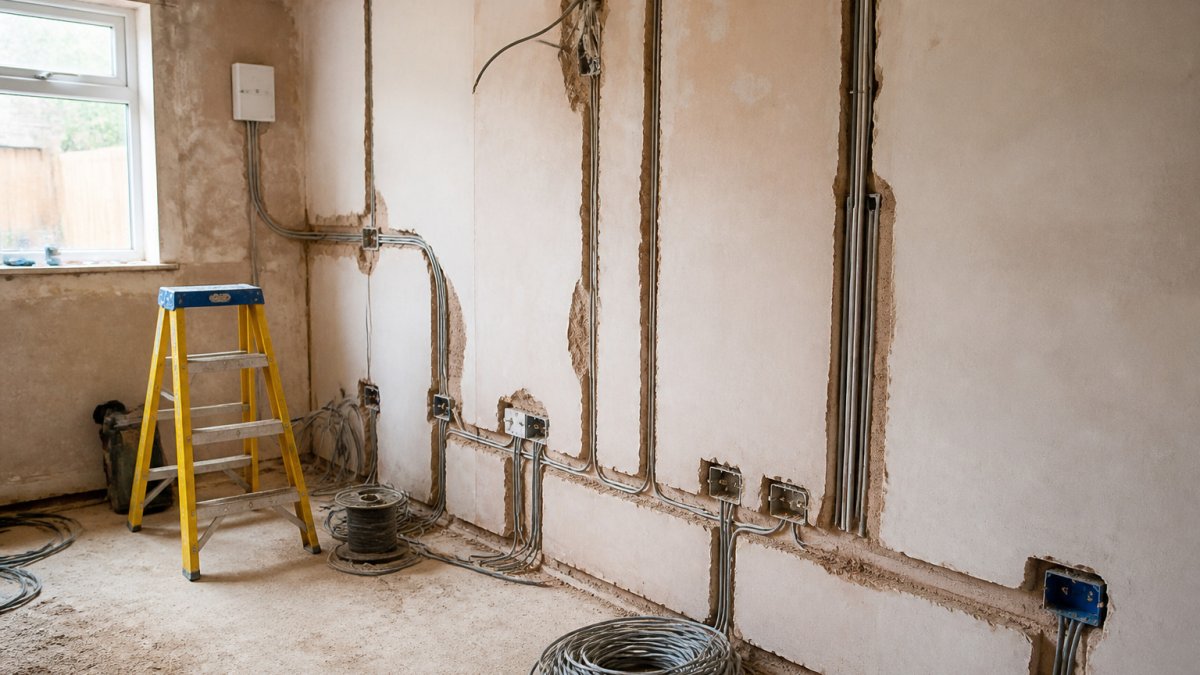
First fix is where the main structural work happens. Electricians route cables through walls, ceilings, and floor cavities before plasterboard goes up. They install conduit, trunking, and cable runs. They also fit backboxes for switches and sockets. This stage typically takes 7 to 10 days for a three-bedroom house, though it varies based on the property's layout and whether walls need to be opened up.
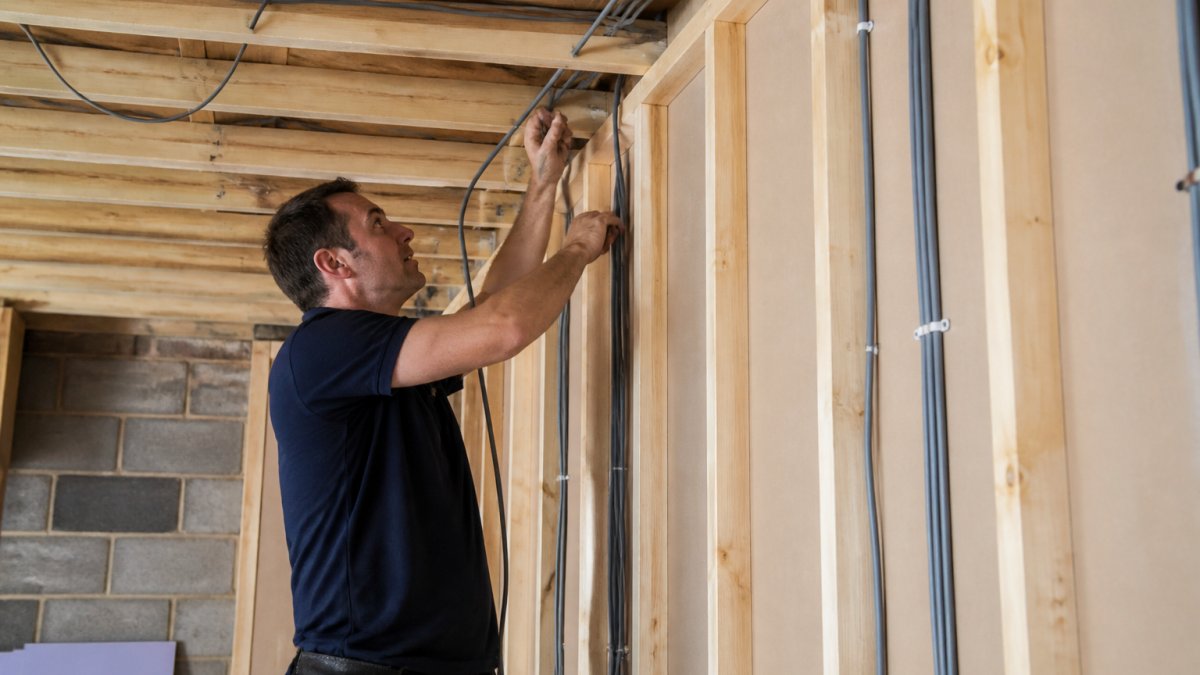
During first fix, your home will be noticeably disrupted. Walls may be chased (grooved) to accommodate cables, and ceilings are often opened. Dust and noise are part of the process. Most homeowners choose to stay elsewhere during this phase if possible. The work is intensive but essential for a safe, compliant installation that meets current Building Regulations.
Second fix installation
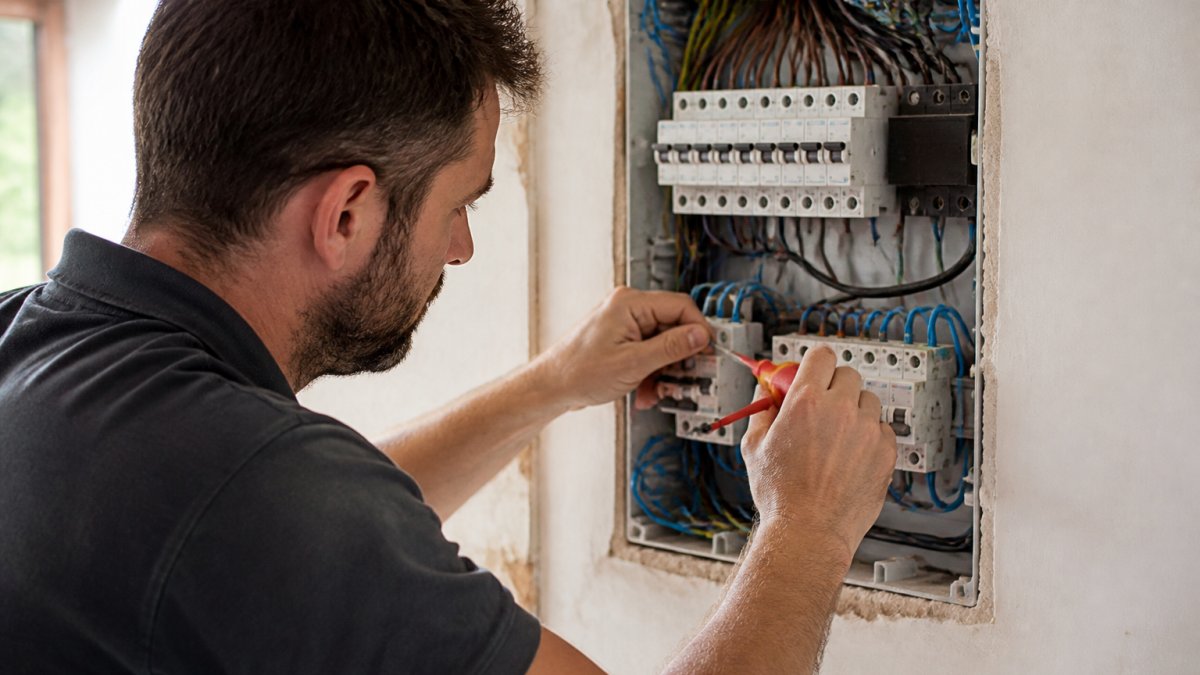
Second fix happens after plasterboard is fitted and decorated. Electricians install the visible components: switches, sockets, light fittings, and consumer units. They test circuits, certify the installation, and ensure everything meets safety regulations. This stage typically takes 5 to 7 days and is far less disruptive than first fix.
During second fix, your home is largely habitable. Electricians work in specific rooms while the rest of the property remains functional. Power may be isolated to certain circuits, but you won't lose electricity entirely. Once second fix is complete, your electrician issues an Electrical Installation Certificate (EIC) or completion certificate, confirming the work meets safety standards.
How long to rewire a three-bedroom house
A three-bedroom house is the standard reference point for rewiring timelines. Most three-bedroom properties take 3 to 4 weeks from start to finish, including both first and second fix installations.
Here's what that breaks down to:
- First fix: 7 to 10 days
- Plasterboard and decoration: 5 to 10 days (often done by other contractors)
- Second fix: 5 to 7 days
- Testing and certification: 1 to 2 days
The total duration assumes continuous work without delays. In reality, you might see the timeline stretch if materials are delayed, if the property has unexpected complications, or if other trades (plasterers, decorators) are involved. A Victorian terrace with original plaster and narrow cavities will take longer than a 1970s semi with straightforward layouts.
When you're planning a rewire, assume 4 weeks as a realistic timeframe and budget for potential delays. This gives you a safety margin for the unexpected issues that frequently emerge once walls are opened.
A three-bedroom house typically takes 3 to 4 weeks total, broken down across these stages:
| Stage | Duration | Notes |
|---|---|---|
| First fix | 7 to 10 days | Cables routed, most disruptive phase |
| Plasterboard and decoration | 5 to 10 days | Often done by other contractors |
| Second fix | 5 to 7 days | Switches, sockets, light fittings installed |
| Testing and certification | 1 to 2 days | Electrical Installation Certificate issued |
Factors that affect rewire duration
Several variables influence how long your full property rewire will take. Understanding these helps you anticipate timescales and avoid surprises.
Property age and condition is the biggest factor. A 1960s house with original wiring presents more challenges than a 1990s build. Older properties often have narrower cavities, harder plaster, and outdated circuit arrangements that must be carefully managed. We've seen Victorian properties take 50% longer than modern homes because of the structural complexity.
Property size matters directly. A two-bedroom bungalow might take 2 to 3 weeks. A five-bedroom detached house could take 6 to 8 weeks. The more circuits, the more installation work.
Existing electrical condition affects the timeline. If the current wiring is dangerous or the consumer unit is in an awkward location, electricians may need extra time to plan safe solutions. Asbestos in old cable sheathing or insulation requires specialist removal, which adds weeks.
Access and layout influence duration. A property with open-plan living is faster to rewire than one with many small rooms and corridors. Difficult access to lofts, underfloors, or external walls slows progress.
Material availability can delay the project. Lead times for consumer units, cables, and fittings vary. Ordering early prevents hold-ups.
Other trades involved extend the timeline. If you're also having plasterboard fitted, decorated, or having other work done, the overall project stretches. Coordinating multiple contractors takes time.
Inspections and certification add 1 to 2 days. Building Control inspections and electrical testing are non-negotiable but must be scheduled around the electrician's availability.
Can you live in a house during rewiring?
Whether you can stay in your home during a full property rewire depends on which phase you're in and your tolerance for disruption. Many homeowners do stay, but it requires planning.
During first fix, living in the property is challenging but possible. Expect noise, dust, and disruption from 8am to 5pm. Walls are opened, cables are routed, and the house feels like a building site. If you have young children, pets, or health conditions sensitive to dust, you might prefer to stay elsewhere. Some families manage it by using one area of the house as a refuge while work happens in other zones.
During second fix, living in the property is much more manageable. Work is cleaner, quieter, and more localised. You'll have power to most rooms, and the disruption is minimal compared to first fix. Most homeowners stay during this phase without significant difficulty.
how disruptive the work will be(page:1) before deciding whether you can manage staying in your home. Understanding the reality of dust, noise, and lack of power in certain areas helps you make an informed choice.
If you do stay during first fix, prepare by:
- Clearing furniture and belongings from work areas
- Protecting surfaces with dust sheets
- Setting up a clean zone away from the main work
- Arranging alternative accommodation for particularly intensive days if possible
How to prepare for a house rewire
Preparation is the difference between a smooth rewire and a stressful one. Start planning several weeks before work begins.
Clear the work areas. Remove furniture, personal items, and anything breakable from rooms where first fix will happen. Electricians need clear access to walls, ceilings, and floors. The more clutter you remove, the faster they work.
Plan your accommodation. If you're not staying in the house, arrange alternative accommodation for the first fix phase. Some homeowners stay with family, rent a holiday property, or book a hotel. Others stay in one area of the house and accept the disruption. Decide early so you're not scrambling when work starts.
Inform your neighbours. First fix generates noise and dust. A courtesy conversation with neighbours prevents complaints and builds goodwill, especially if work happens early or late in the day.
Sort out access. Ensure the electrician can access your property easily. If you have gates, locks, or security systems, provide clear instructions. If parking is tight, arrange a space for their van.
Discuss the timeline with your electrician. Confirm the start date, expected duration, and whether work will be continuous or spread across weeks. Ask about potential delays and how they'll communicate progress.
Plan for disruption. Arrange to be elsewhere during the noisiest parts of first fix if you're sensitive to noise. Make sure vulnerable family members (elderly relatives, young children, pets) have a quiet space or alternative accommodation.
Check your insurance. Notify your home insurer that rewiring work is happening. Some policies require notification of major works.
comprehensive guidance on preparing for and planning your home rewire project(page:5) to ensure you're ready for every stage.
Getting your rewire quote and timeline
Getting a quote is your first step toward understanding the true timeline and cost of your rewire. A professional electrician will visit your property, assess the existing wiring, discuss your requirements, and provide a detailed estimate with a realistic timescale.
When you request a quote, provide as much information as possible: the property's age, size, current electrical condition, and any specific requirements (new circuits, EV charging, lighting upgrades). This helps the electrician give you an accurate timeline.
A good quote includes:
- Estimated duration for first fix and second fix
- Breakdown of work stages
- Material costs and labour costs
- Expected start and completion dates
- Details of any potential delays or complications
- Warranty and certification information
Ask your electrician about their experience with properties similar to yours. A team familiar with 1960s semis, for example, can give you more accurate timescales than someone who mainly works on new builds.
understand costs alongside timescales to make an informed decision(page:2) about your rewire project. how to get a quote and understand the timeline for your specific project(page:3) so you can move forward with confidence.
Our NAPIT approval and decade of experience mean we understand the complexities of older properties.
A full property rewire is a significant undertaking, but understanding the timeline helps you plan effectively. Most three-bedroom homes take 3 to 4 weeks, with first fix being the most disruptive phase. Factors like property age, size, and condition influence the final duration. Project Rewire's experienced team delivers electrical rewiring, backed by our NAPIT certification and 10-year guarantee. Get a quote today to understand your rewire timeline and take the first step toward a safer, modernised home.
Frequently Asked Questions
How long does it take to rewire a three-bedroom house?
The time required for a full property rewire depends on the property's age, condition, and layout.
Can you live in a house during rewiring?
Whether you can remain in your home during rewiring depends on the work and your circumstances. Discuss your needs with your contractor beforehand.
What factors most affect how long a house rewire takes?
The time required for a full property rewire depends on the property's age, size, condition, and layout.
How should I prepare my home for a rewire?
Remove or protect furniture and belongings from dust.