 how-to
Domestic Electrical Rewiring Process Explained
Table of Contents
- Why Domestic Electrical Rewiring Matters
- What Happens During a House Rewire
- How Long Does It Take to Rewire a House
- House Rewire Preparation Checklist
- Understanding Your Electrical Installation Condition Report
- Safety Precautions and Compliance Standards
- Frequently Asked Questions
Last Updated: October 21, 2026
Why Domestic Electrical Rewiring Matters
Outdated wiring poses serious risks to your home and family. Properties built in the 1960s and earlier often contain wiring that no longer meets modern safety standards. Outdated wiring can cause flickering lights, overheated sockets, and worse.
The electrical rewiring process isn't optional maintenance, it's a safety upgrade. Modern homes demand more power than decades-old systems can safely deliver. Rewiring brings your property up to current regulations and protects against electrical fires, shocks, and equipment damage.
A full rewire typically addresses:
- Replacing brittle, degraded wiring
- Upgrading to modern circuit protection
- Adding circuits for new appliances and EV chargers
- Installing proper earthing and bonding
- Meeting Building Regulations and relevant British Standards
When you invest in rewiring, you're investing in safety, reliability, and peace of mind. Properties with modern electrical systems command higher resale values and pass mandatory safety inspections without issue.
What Happens During a House Rewire
The electrical rewiring process unfolds in three main phases: inspection, installation, and testing. Understanding each stage helps you prepare and know what to expect.
Initial Inspection and Planning
Your electrician begins with a thorough survey of the existing system. They'll identify the current wiring type, circuit layout, and any obvious hazards. This inspection determines the scope of work needed.
During this phase, the electrician will:
- Test circuits and measure load capacity
- Check for exposed wiring or damaged insulation
- Identify where new circuits are needed
- Plan cable routes through walls and ceilings
- Assess access points for running new wiring
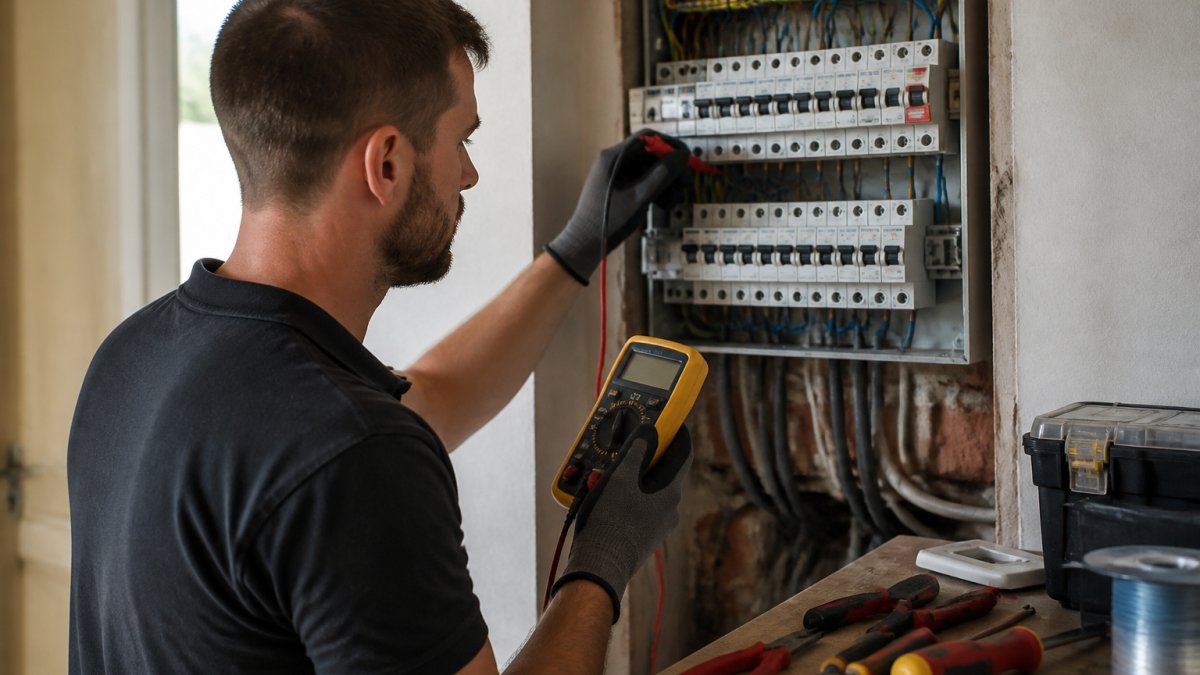
This planning stage is crucial. A proper plan minimises disruption and ensures the final installation meets all regulations. The electrician will discuss options for cable routing, some routes require less wall disturbance than others.
Removing Old Wiring and Installing New Circuits
Once planning is complete, the old wiring comes out and new cabling goes in. This is where the work becomes visible and sometimes disruptive.
The installation process includes:
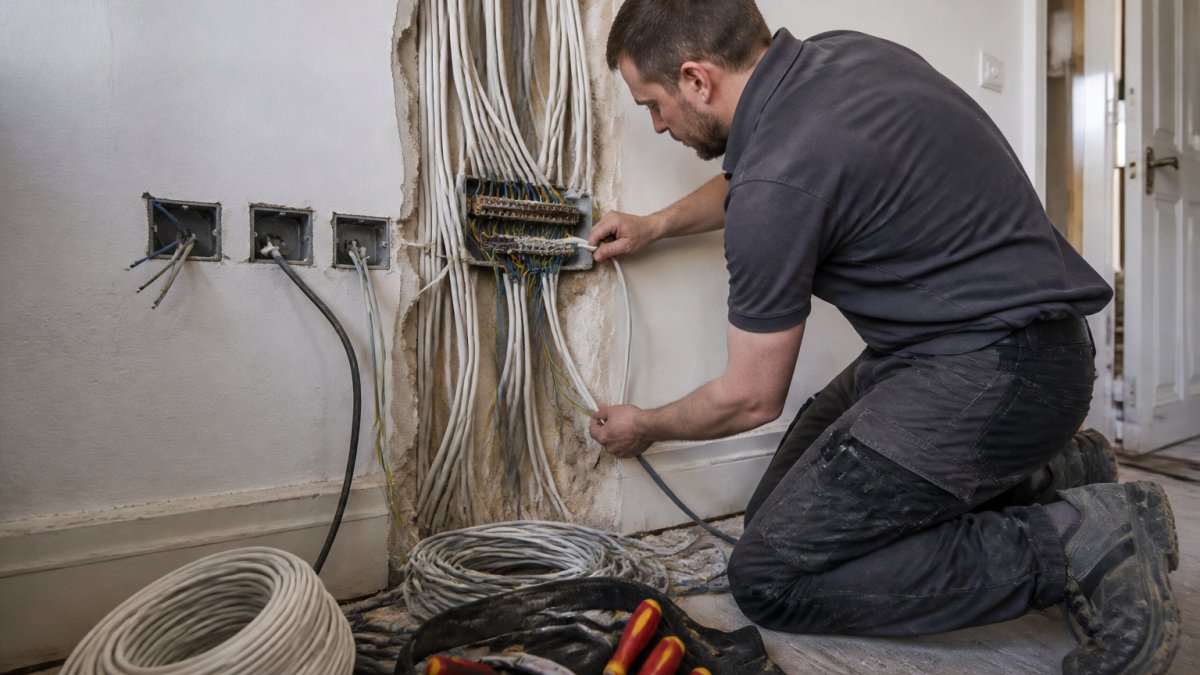
- Isolating and removing old cables safely
- Running new cables through walls, ceilings, and floors
- Installing new consumer units and circuit breakers
- Fitting new sockets, switches, and light fittings
- Connecting new circuits to the main supply
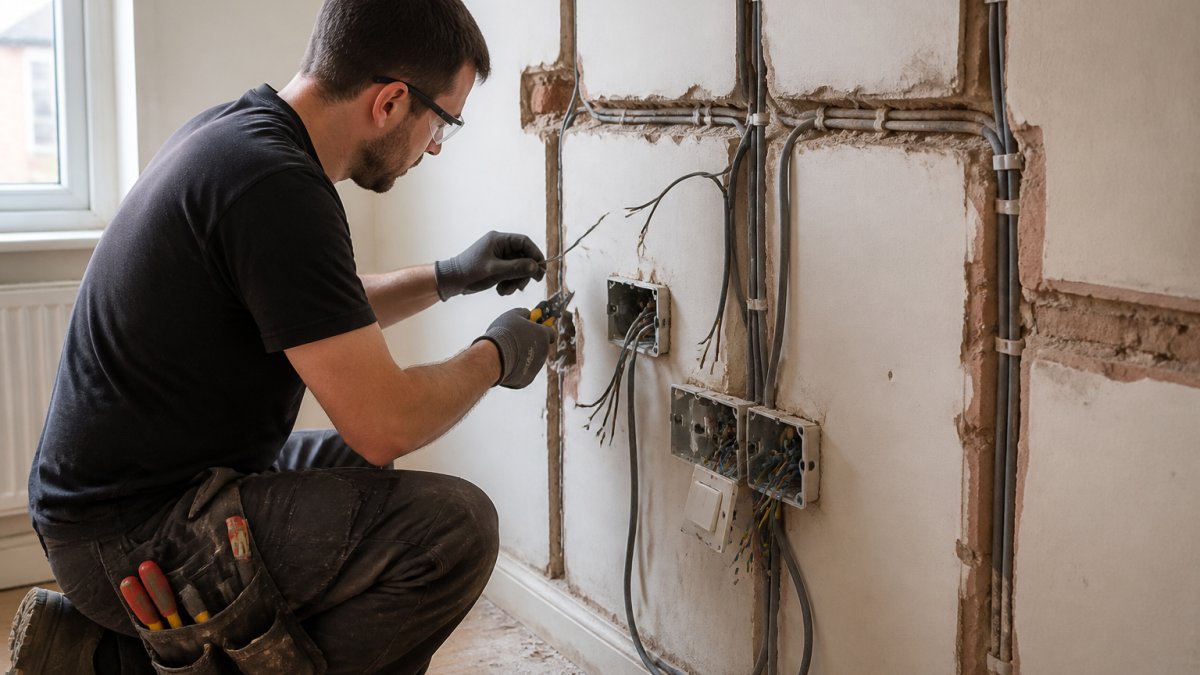
Modern installations use PVC-sheathed cable rather than older rubber or cloth-covered types. New circuits are segregated by function, lighting, power, cooker circuits, and so on. This separation improves safety and makes future maintenance easier.
Most rewiring work requires some wall chasing (cutting channels for cables) or lifting floorboards. We minimise this disruption by planning efficient routes and making good any damage once work is complete.
Testing and Certification
Once installation finishes, rigorous testing begins. No circuit goes live without passing comprehensive checks.
The electrician will test:
- Insulation resistance on all circuits
- Earth continuity and bonding
- RCD (residual current device) functionality
- Circuit load and voltage under normal operation
- All sockets and switches for correct polarity
After successful testing, you receive an Electrical Installation Certificate. This document proves your rewiring meets Building Regulations and current safety standards. It's essential for selling your property and satisfies insurance requirements.
How Long Does It Take to Rewire a House
Timeline depends on property size, complexity, and how much disruption you're willing to tolerate. Most full rewires take between 5 and 10 working days for a typical domestic property.
Factors affecting duration include:
- Property age and wiring condition
- Number of circuits needed
- Whether walls are plasterboarded or solid brick
- Access to roof spaces and under-floor areas
- Extent of decoration work needed afterwards
Smaller properties or partial rewires may take 3-5 days. Larger homes or those requiring extensive replastering can take 2-3 weeks. Project Rewire provides a detailed timeline during the planning phase so you know exactly what to expect.
Planning around the work helps. Some homeowners prefer to stay elsewhere during the rewire to avoid noise and dust. Others manage fine by using unaffected rooms. Discuss your preferences with your electrician, flexibility in scheduling often speeds the job.
House Rewire Preparation Checklist
Preparation before work begins makes the process smoother and faster. Use this checklist to get ready:
- Clear access to walls, ceilings, and under-floor areas
- Move furniture away from walls where cables will run
- Protect belongings from dust and debris
- Arrange alternative accommodation if needed during work
- Notify neighbours of planned disruption
- Ensure electrician has safe access to the property
- Identify where new sockets and switches should go
- Discuss lighting design and placement
- Plan for any new appliances (EV charger, cooker, etc.)
- Arrange insurance cover for the work period
- Keep the property secure during work
Discuss these points with your electrician during the planning meeting. They'll advise on what access is genuinely needed and what can wait until after installation.
Understanding Your Electrical Installation Condition Report
If you're a landlord or buying a property, you'll encounter an Electrical Installation Condition Report (EICR). This document assesses the safety of existing wiring without requiring full replacement.
An EICR involves:
- Visual inspection of all circuits and equipment
- Testing of insulation and earth continuity
- Assessment against current safety standards
- Classification of any defects found
The report categorises findings as:
- Code 1: Danger present, repair urgently
- Code 2: Potentially dangerous, repair soon
- Code 3: Minor issues, consider improvement
Many older properties receive Code 1 or Code 2 ratings, which means full rewiring becomes necessary. An EICR often reveals why rewiring is justified, it gives you documented evidence of safety issues that need addressing.
Project Rewire can arrange EICR inspections and provide honest advice on whether partial repairs or full rewiring makes sense for your property. A full rewire eliminates future EICR concerns for years to come.
Safety Precautions and Compliance Standards
Rewiring work must comply with Building Regulations and British Standards. These requirements exist to protect your home and family.
Key standards include:
- BS 7671 - Requirements for electrical installations (IET Wiring Regulations)
- Building Regulations Part P - Electrical safety in buildings
- BS 1363 - Socket outlets and plugs
Your electrician must be registered with a competent person scheme such as NAPIT (National Association of Professional Inspectors and Testers) (Competent person scheme - current schemes and how schemes are authorised). NAPIT-approved contractors have demonstrated expertise and maintain professional standards.
During rewiring, safety measures include:
- Isolating circuits before work begins
- Using appropriate personal protective equipment
- Testing all work before energising circuits
- Proper disposal of old wiring materials
- Insurance cover for the work period
Compliance isn't a bureaucratic burden, it's practical protection. Standards exist because electrical failures cause fires, shocks, and deaths. Following them properly prevents tragedy.
At Project Rewire, we're NAPIT-approved and hold a 10-year guarantee on all rewiring work. This guarantee reflects our confidence in workmanship and commitment to safety. Every installation receives full certification, giving you documented proof that your home meets current standards.
Frequently Asked Questions
What exactly is involved in the domestic electrical rewiring process?
The domestic electrical rewiring process involves a complete replacement of your home's electrical installation. This includes removing outdated wiring, installing new circuits to modern standards, upgrading your consumer unit, and fitting new sockets, switches, and lighting points. A qualified electrician will assess your property, plan the new layout, carry out the work, and provide certification that your installation meets current Building Regulations and relevant British Standards.
How long does a typical house rewire take to complete?
Rewiring timescales vary based on property size and complexity. Older properties with difficult-to-access wiring or structural complications may take longer. Your electrician will provide a specific timeline after the initial survey, accounting for any additional work discovered during the process.
Do I need to move out during a house rewire?
Most homeowners can remain in their property during rewiring, though it involves disruption. Your electrician will plan the work to minimise inconvenience, often completing one area before moving to the next. You may experience temporary loss of power to specific circuits. However, if your property is uninhabitable or the work is extensive, temporary relocation may be necessary, discuss this with your contractor during planning.
What is an EICR and why do I need one?
An Electrical Installation Condition Report (EICR) is a safety inspection of your existing electrical system. It identifies any faults, wear, or non-compliance with current standards. Landlords must provide an EICR every five years for rental properties under the Electrical Safety Standards in the Private Rented Sector Regulations 2020. Homeowners benefit from an EICR to identify safety risks before they become hazardous, often revealing the need for rewiring in older properties.
Electrical safety isn't something to compromise on. Outdated wiring creates genuine hazards that worsen over time. If your property shows signs of electrical problems, flickering lights, warm sockets, tripping circuits, a professional assessment is overdue. Project Rewire can inspect your system, explain what needs doing, and handle the rewiring process from start to finish. Contact us for a quote and discover how we can make your home safe and modern.