 how-to
Is Your 1960s Wiring Safe? Book an Inspection
Last Updated: October 31, 2026
Quick Summary
A home electrical safety inspection checks whether your fixed wiring, consumer unit, sockets and earthing are still safe, usually through an Electrical Installation Condition Report (EICR). Wiring from the 1960s is especially worth checking because its insulation degrades over time and it was never designed for modern household loads.
- Age alone does not make wiring dangerous, but it is a strong reason to get it checked.
- Flickering lights, warm sockets, or a consumer unit that trips regularly are signs to book an inspection.
- An EICR records defects and grades them, giving you a practical plan for any remedial work.
- Confirm the electrician's competent person scheme registration and insurance before booking.
- Compare quotes using the same property description and check whether the report and VAT are included.
Table of Contents
- Is 1960s Wiring Safe to Keep Using?
- Signs Your Home Needs an Electrical Safety Inspection
- What an Electrical Safety Inspection Checks
- How to Book a Home Electrical Safety Inspection
- How Long Does an EICR Take?
- Electrical Inspection Cost and What Affects the Price
- Booking Your Inspection in Glasgow, Renfrewshire or Ayrshire
- Frequently Asked Questions
Is 1960s Wiring Safe to Keep Using?
Wiring installed in the 1960s was never designed for the electrical demands of a modern home. Many older Scottish properties still carry that original cabling, and it may no longer be safe under today's loads. This is why many homeowners searching for "book home electrical safety inspection" are really asking whether their current wiring is still fit for purpose. This is a question many homeowners across Glasgow, Renfrewshire and Ayrshire ask.
The honest answer is that age alone does not make wiring dangerous, but it is a strong reason to get it checked. Rubber and fabric insulation becomes brittle over decades. Earthing is often missing or incomplete. Sockets and switches may be worn, and circuits were sized for a handful of lamps rather than kettles, showers, chargers and multiple devices.
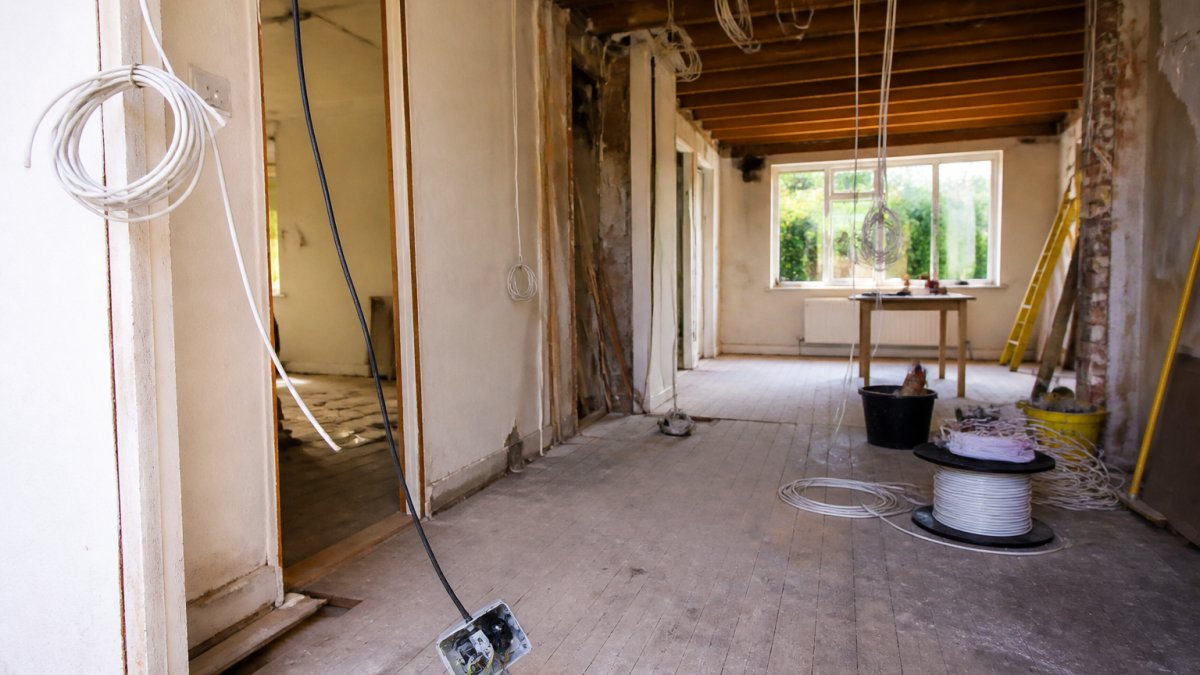
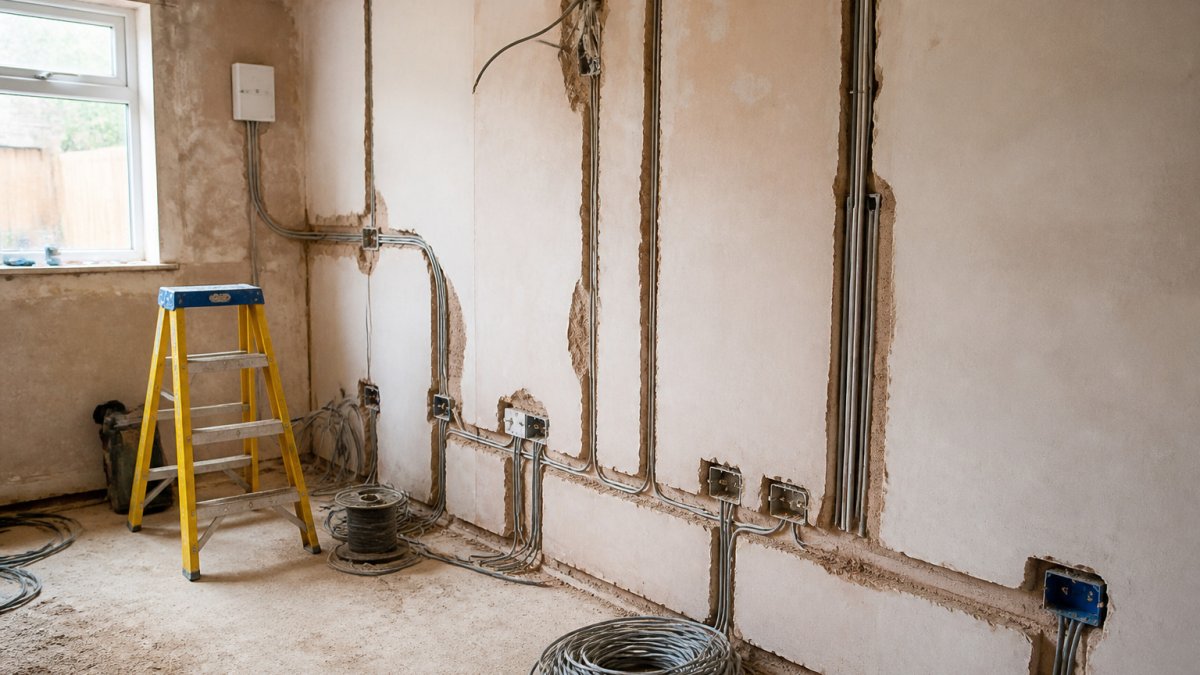
Many homes built in this era have also been partly altered over time. Extensions, loft conversions and added sockets can overload circuits that were never meant to carry the extra current. A professional inspection shows whether the existing installation is still safe or whether it needs attention.
Signs Your Home Needs an Electrical Safety Inspection
Some warning signs are easy to spot. Lights that flicker or dim when appliances switch on can point to an overloaded circuit or a loose connection. Sockets that feel warm, crackle, or smell of burning should be switched off and reported straight away.
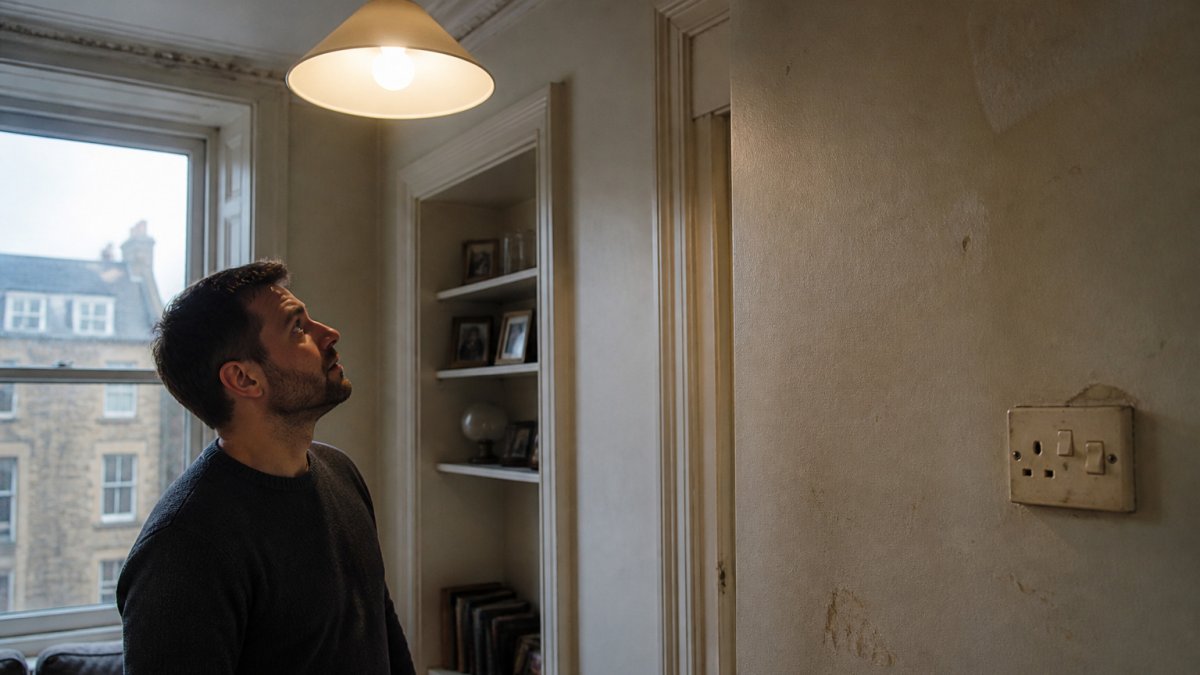
Other signs are less obvious. A fuse box or consumer unit that trips regularly, scorch marks around sockets, or a plug that becomes hot during use all suggest a fault that needs proper investigation. If your property has old round-pin sockets, two-pin outlets, or cloth-covered cabling, an inspection is worth arranging even if nothing seems wrong.
A common mistake is waiting for a problem to become obvious. By then, the installation may already be deteriorating. Treat small symptoms as a reason to book an inspection, not as something to live with.
What an Electrical Safety Inspection Checks
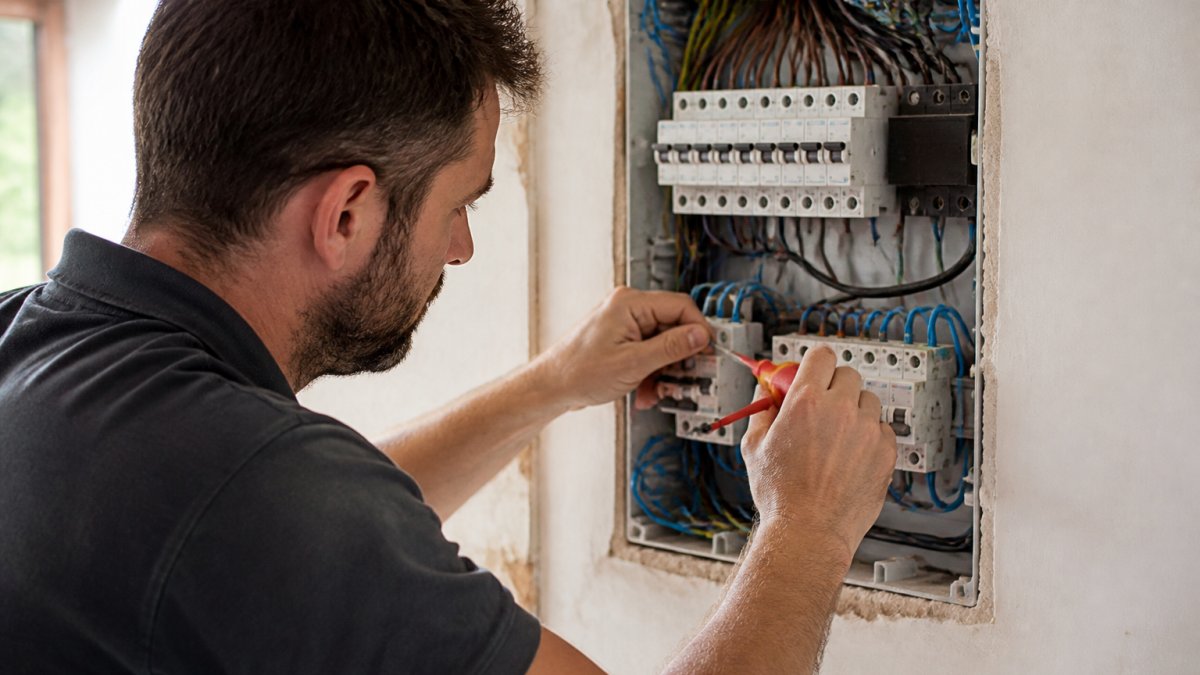
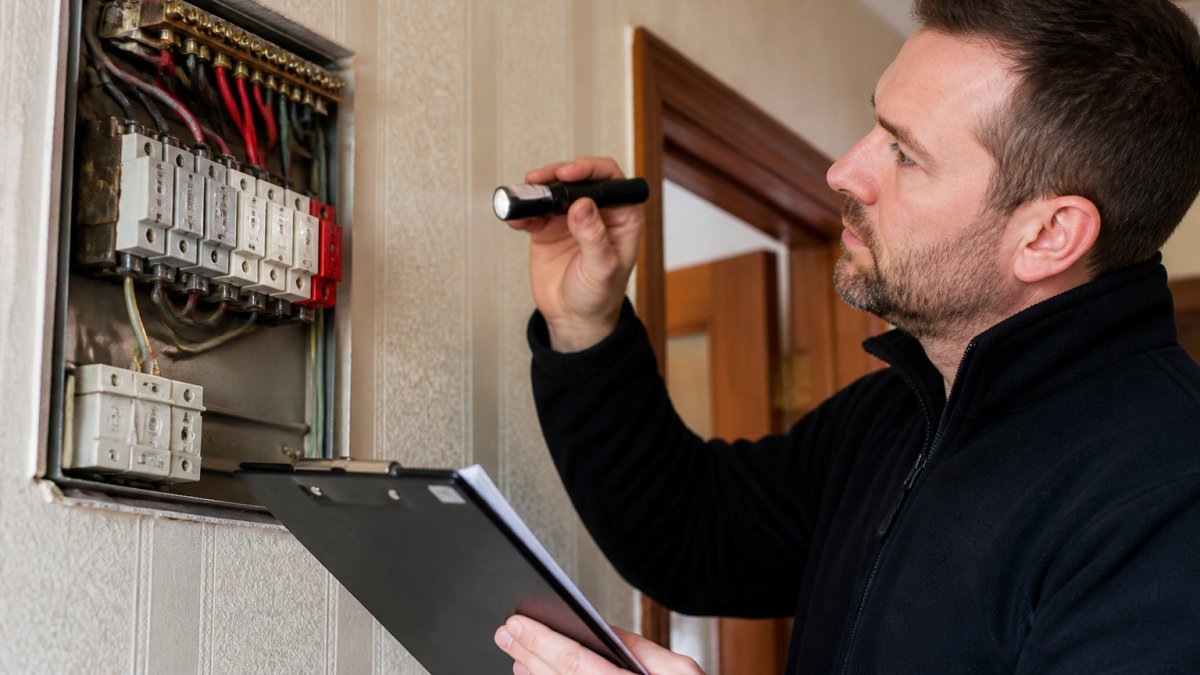
An Electrical Installation Condition Report, usually called an EICR, is the standard way to assess the condition of a fixed electrical installation (Periodic Inspection and Testing). The inspection combines a visual check with functional testing. The electrician looks at the consumer unit, wiring, sockets, switches, lighting and earthing, and tests the circuits to confirm they are safe.
The report records any defects and grades them. Satisfactory installations receive a clear result. Unsatisfactory results list the faults that need remedial work, along with codes showing how urgent each one is. This gives you a practical plan rather than a vague warning.
An inspection cannot guarantee that nothing will ever go wrong. It gives a snapshot of the installation at the time of testing. Its real value is identifying problems before they cause harm.
How to Book a Home Electrical Safety Inspection
Booking an inspection is more straightforward than many people expect, but the quality of the booking process determines the quality of the report you receive. Follow these steps to arrange a visit and avoid unsuitable providers.
- Verify the electrician's credentials before you enquire. Ask which competent person scheme they belong to, NAPIT, NICEIC, ELECSA or SELECT are the commonly recognised schemes in the UK (Competent person scheme - current schemes and how schemes are authorised). Confirm the individual electrician, not just the company, is registered, and check the registration number on the scheme's own online register. Ask for public liability insurance and, if they employ staff, employers' liability insurance, and request the certificate or policy number.
- Describe the property accurately. Tell the electrician the property type, approximate age, number of bedrooms, number of consumer units, and whether there are outbuildings, extensions or loft conversions on separate circuits. Mention any known faults, recent tripping, or recent alterations. Accurate information lets them quote realistically rather than revise the price on the day.
- Ask what the quote includes. A clear quote should state whether the EICR certificate and report are included, whether the price covers testing of all circuits or a sample, whether VAT is included, and what the call-out or abortive visit charge is if access fails. Ask whether remedial work is priced separately and whether they will provide a separate quote for it.
- Compare like for like. Obtain at least two or three quotes using the same property description. Compare the scope, not just the headline price, a cheap quote that tests a sample of circuits or excludes the certificate is not comparable to a full inspection.
- Agree a date and access arrangements. Confirm who will be at home, whether the electrician needs access to the loft, cupboards, garage or outbuildings, and how long they expect to be on site. Ask whether the power will be interrupted during testing and for how long, so you can plan around it.
- Prepare the property before the visit. Clear access to the consumer unit, meter and any distribution boards. Move furniture away from sockets that need testing. Have any previous EICRs, installation certificates or paperwork to hand. Note any faults you have already seen so you can point them out.
- Confirm the report timeline in writing. Ask when the report will be issued after the visit, most electricians issue it within a few working days, and whether it will be a paper copy, a PDF, or both.
Project Rewire is a NAPIT-approved contractor. You can request a quote from Project Rewire to start the booking.
The booking steps are summarised below so you can check each stage before arranging a visit.
| Step | What to do | Time or frequency |
|---|---|---|
| Verify credentials | Check scheme registration and insurance | Before you enquire |
| Describe the property | Give type, age, bedrooms and known faults | When you first contact |
| Check the quote | Confirm report, VAT and remedial work scope | Before agreeing |
| Compare quotes | Use the same property description for each | Two or three quotes |
| Agree access | Confirm who is home and power interruption | Before the visit |
| Prepare the property | Clear consumer unit and sockets to test | Before the visit |
| Confirm report timeline | Ask format and issue date in writing | Before the visit |
How Long Does an EICR Take?
Older homes can take longer because the electrician may need to trace hidden circuits and test more carefully.
The inspection itself is only part of the timeline. Once the testing is finished, the report must be prepared and issued. If the results show remedial work is needed, you will then decide how and when to have it done. For a detailed breakdown of each stage, read our guide on how long an EICR takes.
Electrical Inspection Cost and What Affects the Price
EICR pricing depends on several factors, including the size and complexity of the property, which a quote from the electrician will reflect. Understanding what affects the price helps you compare quotes fairly and spot a quote that is too cheap to be a full inspection.
What drives the price:
- Property size and circuit count. A one-bedroom flat with a single consumer unit and a handful of circuits takes far less time to test than a four-bedroom house with multiple consumer units, outbuildings and separate garage circuits.
- Age and condition of the installation. Older wiring takes longer to trace, and deteriorating insulation or earthing can mean more test points and more careful investigation.
- Access. Properties where the consumer unit is in a difficult location, or where loft, cupboard or underfloor access is restricted, take longer and may attract an access surcharge.
- Remedial work. Remedial work is always priced separately from the inspection. The cost of fixing faults depends entirely on what the report finds, a single faulty socket is a very different job from a consumer unit replacement or a partial rewire.
- Location and travel. Ask whether travel is included in the quote.
- VAT. Confirm whether quotes are inclusive or exclusive of VAT, as this can change the comparison significantly.
What a quote should include: ask providers to confirm the scope of the inspection, whether the EICR certificate and report are included, and whether remedial work will be quoted separately.
How to compare quotes: use the same property description for every enquiry, ask each provider to confirm the number of circuits they will test, and compare the total including VAT. A quote that is significantly cheaper than the others usually reflects a smaller scope, a sample test rather than a full inspection, or a report without the certificate.
For current prices and a quote specific to your home, contact Project Rewire directly. Our team can explain what affects the cost of electrical work across the property types we cover. You can also read our breakdown of the factors that drive house rewiring costs.
Booking Your Inspection in Glasgow, Renfrewshire or Ayrshire
Project Rewire works on domestic electrical installations across Glasgow, Renfrewshire and Ayrshire. If you have an older property, a rental to certify, or an electrical fault that needs urgent attention, our team can help you decide on the right next step.
Landlords need an EICR for rental properties (Electrical safety standards in the private and social rented sectors: guidance). Homeowners preparing for a sale or renovation often benefit from knowing the condition of the wiring before work begins. If you have an electrical fault that is causing immediate concern, you can contact Project Rewire.
Our NAPIT-approved team is ready to help you with your electrical questions and arrange the work that suits your home.
Frequently Asked Questions
How do I book a home electrical safety inspection?
Contact Project Rewire through the website to request a quote. Give the property type, approximate age, number of bedrooms and whether the property is owner-occupied or rented. For current availability and prices, visit the Project Rewire website or contact the team directly for a quote tailored to your property in Glasgow, Renfrewshire or Ayrshire.
Is an EICR the same as an electrical safety inspection?
In practice, the terms are often used interchangeably. An EICR, or Electrical Installation Condition Report, is the formal document produced after an inspection and testing of the fixed electrical installation. It records the condition of the wiring, sockets, switches, lighting and consumer unit, and grades any defects. Landlords need a satisfactory EICR for rented homes. Homeowners can use the report to understand the state of their installation and plan any remedial work.
What happens if an electrical inspection finds a fault?
An EICR typically classifies each defect, for example as C1 (danger present), C2 (potentially dangerous), C3 (improvement recommended) or FI (further investigation required). Urgent C1 and C2 items should be repaired promptly. Keeping the report and the remedial work records is useful when selling the property or dealing with insurers.
Do I need an electrical safety inspection when buying a house?
Buyers of older properties, particularly those built before the 1970s, should strongly consider an electrical inspection before completing the purchase. Original wiring, rubber or lead-sheathed cables and older fuse boards can present risks that a standard survey may not fully assess. Commissioning an EICR gives you a clear picture of the installation's condition and any costs to address before you move in. Include the report in your negotiations if the findings justify it.
Project Rewire offers a 10-year guarantee on all rewiring jobs. Get a quote today and book your electrical safety inspection.