 how-to
How to Prepare for a House Rewire: A Step-by-Step Guide
Quick Summary
A house rewire replaces old cables, sockets and switches with new ones that meet current safety standards. Start planning at least a few weeks ahead, deciding on socket and switch positions, and clearing each room in the order the electrician will work.
- Decide socket, switch and lighting positions before any walls are opened.
- Clear rooms one stage ahead, following the electrician's sequence rather than your walkthrough.
- Pack jewellery, documents and small electronics into sealed boxes stored outside the work zone.
- Ask for daily power-off windows and confirm the plan each morning.
- Choose an electrician registered with a recognised scheme who issues an Electrical Installation Certificate.
Table of Contents
- What a House Rewire Involves and Why Preparation Matters
- Decisions to Make Before Work Starts
- How Long a Full House Rewire Takes and How to Plan Around It
- Room-by-Room Preparation Checklist
- Power, Internet and Essential Services During the Rewire
- Budgeting for a House Rewire and Allowing for Extra Costs
- Part P Building Regulations and Choosing a Qualified Electrician
- Book Your Rewire Survey with Project Rewire
- Frequently Asked Questions
What a House Rewire Involves and Why Preparation Matters
A house rewire replaces the old cables, sockets and switches in your home with new ones that meet current safety standards.
Watch out: A rewire is a large job. Plan for the house to be a building site while it runs, even if you keep living there.
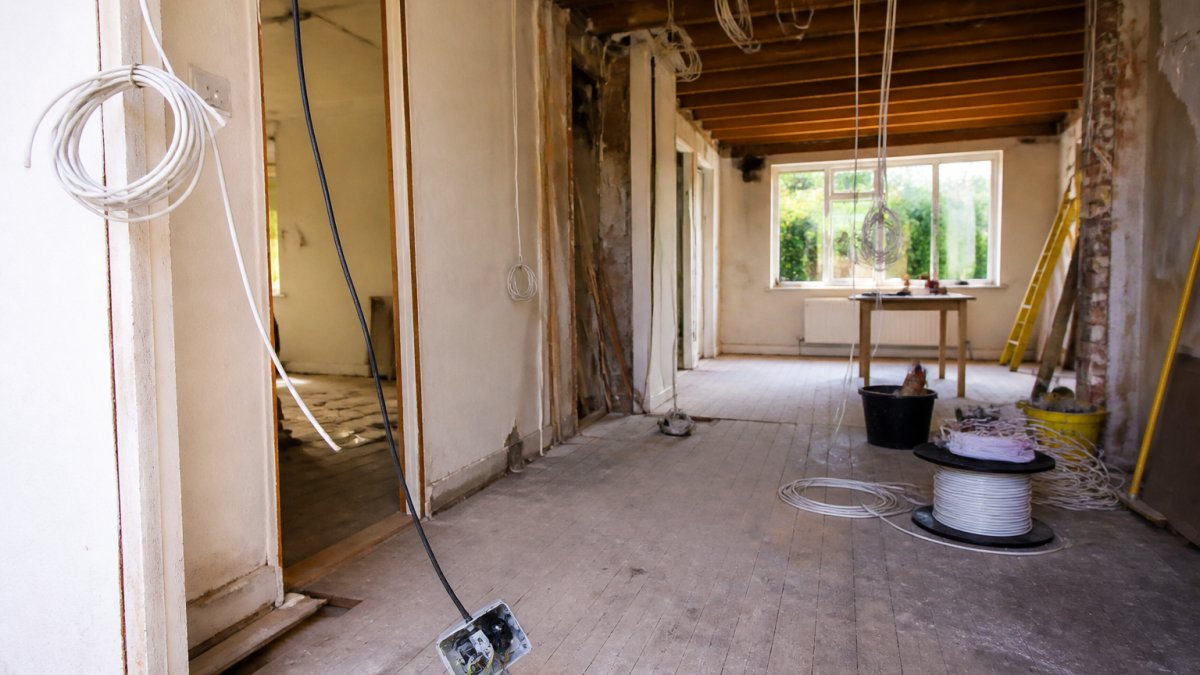
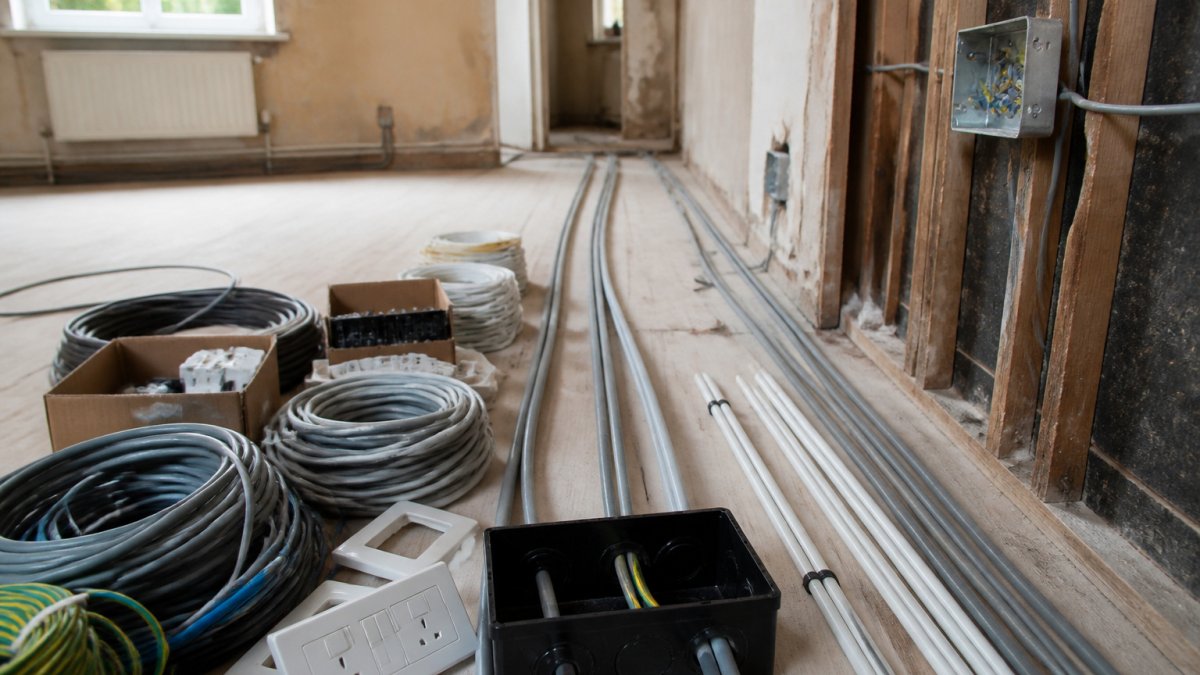
Preparation matters because the electrician needs access to walls, floors and ceilings to run new cables.
Decisions to Make Before Work Starts
Before any work starts, you need to settle several decisions. If you are unsure whether your wiring needs replacing, you can book an inspection of older wiring before committing to work. Making them early avoids delays once the electricians arrive.
Consider these points:
- Where you want sockets and switches. Think about furniture, TVs and charging points now.
- Whether you want new lighting positions. Ceiling and wall lights are easier to plan before walls are opened.
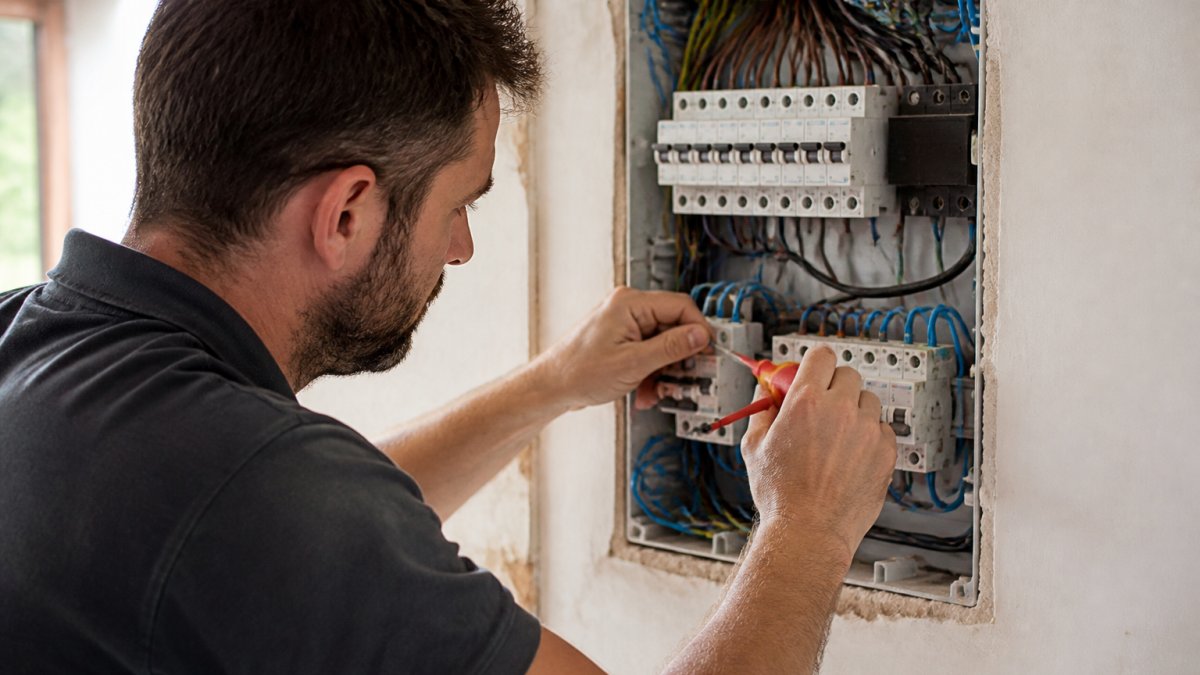
- Where the consumer unit (fuse box) will sit. Check whether it needs to move.
Write these decisions down and share them with your electrician. Changes made midway through the job usually cost more and take longer.
How Long a Full House Rewire Takes and How to Plan Around It
The length of a full house rewire depends on the size of the property, the number of rooms and how much of the old wiring is accessible. Your electrician can give you a realistic timeframe after a survey.
Plan around the work by:
- Asking for a timetable and a named point of contact
- Arranging somewhere else to stay or work if you cannot live with the disruption
- Booking time off if you need to be there for access or decisions
Ask your electrician how they will handle working days, access and the times you need to be out of the house.
Room-by-Room Preparation Checklist
Work through each room in the order the electrician is likely to work, not the order you happen to walk through the house. Ask your electrician for their room sequence before work starts and clear rooms one stage ahead so the team is never waiting on you.

- Hallways and stairs: These are usually first because cable routes run from the consumer unit. Clear shoes, coats, prams and console tables. Remove stair gates only if the electrician confirms it is safe to do so, and keep a temporary barrier for children and pets. Leave a clear walkway at least the width of a door so cable drums and steps can pass.
- Living rooms: Move sofas and cabinets to the centre of the room and cover them with dust sheets rather than thin plastic, which tears on castors. Take down curtains, pictures and lampshades. Unplug televisions, routers and games consoles and move them to a room outside the work zone. Note where your TV aerial and broadband entry points are, because these often share routes with new cabling.
- Bedrooms: Empty wardrobes and drawers on the walls being worked on. Move beds away from walls and strip bedding. Pack jewellery, documents and small electronics into sealed boxes and label them. If you have a loft bed or fitted furniture, confirm with the electrician whether it needs dismantling before the day.
- Kitchens: Clear worktops and cupboards on affected walls. Remove fridges, freezers and small appliances from the walls and, where possible, move them to another room. Empty the fridge and freezer if power will be off for more than a few hours, or plan cool bags and a friend's fridge. Photograph the consumer unit and meter positions before anything is moved.
Protecting Belongings, Furniture and Valuables
Protecting your belongings reduces the risk of damage from dust and debris, but the method matters. Protect furniture with dust sheets, pack small items in sealed boxes, and use rigid crates for anything fragile.
- Pack jewellery, documents and small electronics into sealed boxes and store them in a room outside the work zone.
- Cover furniture you cannot move with cotton dust sheets, then a plastic sheet on top to stop dust settling through.
- Roll up rugs and carpets where you can, and tape down the edges of any carpet that stays.
- Label boxes by room so you can find essentials without opening everything.
Watch out: Plastic sheeting alone traps moisture and can mark some finishes, so use a breathable sheet underneath and never wrap electronics in plastic while they are still warm.
Children, Pets and Household Safety
Rewiring work creates trip hazards, sharp tools and exposed cables, and the risk is highest when children or pets are curious.
- Fit a temporary stair gate if the hallway is a work zone.
- Keep pets in a closed room or with a neighbour on days when doors will be open.
- Move medicines and first-aid supplies to a room outside the work zone.
- Agree a signal with the electrician for when power is about to be switched off, so anyone using medical equipment at home can prepare.
Watch out: Do not let children or pets into a room where floorboards are up, even briefly, because a fall through an open joist gap is a serious injury risk.
Clearing rooms in the order the electrician is likely to work saves time, so the summary below lists the key preparation steps for each room.
| Room | Key preparation | Note |
|---|---|---|
| Hallways and stairs | Clear shoes, coats, prams and console tables | Leave a walkway at least a door's width |
| Living rooms | Move sofas to centre and cover with dust sheets | Unplug TVs, routers and consoles |
| Bedrooms | Empty wardrobes on affected walls | Pack jewellery and documents in sealed boxes |
| Kitchens | Clear worktops and cupboards on affected walls | Photograph consumer unit and meter positions |
| Bathrooms | Remove mirrors, cabinets and toiletries from walls | Confirm when shower or extractor fan is affected |
| Loft and cellar | Clear access routes and label stored items | Check for damp or pests before work starts |
Power, Internet and Essential Services During the Rewire
Power will be switched off for parts of the day while circuits are changed, and the pattern is rarely uniform. Most rewires isolate one circuit at a time, so sockets in one room may be dead while lights in another still work.
- Charge phones, laptops and power banks before work starts, and keep one power bank reserved for emergencies.
- Check whether you need a working fridge or freezer for medication or food. If power will be off for more than a few hours, move medication to a cool box with ice packs and confirm with a pharmacist whether that is suitable.
- Ask your electrician when the power will be off and for how long, and confirm the plan each morning rather than assuming a fixed schedule.
- Contact your internet provider to check whether your router needs to stay powered, and ask whether a mobile hotspot or dongle is a practical backup for remote work.
Watch out: Do not assume the power will return at the same time each day. Ask for updates and confirm the plan each morning, and never plug essential equipment into an extension lead run from a neighbour's supply without checking it is safe and agreed.
Planning for Refrigeration, Remote Work and Communications
Refrigeration is the service most often overlooked. A full freezer stays cold for roughly 24 to 48 hours if the door stays shut, so group frozen food together, fill gaps with newspaper or bottles of water, and avoid opening the door during outages. For remote work, confirm with your electrician which days the room you use as an office will be affected, and plan to work elsewhere or use annual leave on those days.
- Move frozen food to a cool box or a neighbour's freezer if the outage will be long.
- Keep a charged mobile phone and a written list of key contacts, including your electrician and provider.
- Confirm whether your alarm, doorbell or heating controls rely on mains power and what the fallback is.
What to Confirm with Your Electrician Before Work Starts
A short written confirmation prevents most day-one surprises. Ask your electrician to set out the daily power-off windows, which circuits are affected, how exposed cable ends will be made safe at the end of each day, and who to contact if power does not return as expected. Confirm whether they will provide temporary power for essential equipment, and agree how you will be told about changes.
Budgeting for a House Rewire and Allowing for Extra Costs
Rewiring costs vary with the size of the property, the number of circuits and how much making good is needed. Pricing depends on factors such as the layout of your property and the work involved, so ask for a written breakdown. For current prices or a quote, visit the Project Rewire website.
Allow for extra costs such as:
- Plastering and decorating after cables are run
- Replacing damaged floorboards or skirting
- Upgrading the consumer unit
- Additional sockets, lighting or specialist circuits
Set aside a contingency budget for unexpected findings once walls are opened.
Part P Building Regulations and Choosing a Qualified Electrician
Electrical work in a home is regulated under the building standards that apply to your property, so check the rules that apply where you live. Your electrician should be registered with a recognised competent person scheme and should issue an Electrical Installation Certificate once the work is complete.
When choosing an electrician, ask for:
You can also use this checklist for vetting local NAPIT-registered tradespeople before you hire.
- Proof of registration with a recognised scheme
- Written quotes and a clear scope of work
- Details of the certificates they will provide at the end of the job
Book Your Rewire Survey with Project Rewire
The best next step is a survey, so you know exactly what your home needs before work begins. Project Rewire is a NAPIT-approved contractor with over a decade of experience and fully qualified electrical engineers. Each rewiring job is backed by a 10-year guarantee. Visit the Project Rewire website for current prices or to request a quote for your property.
Frequently Asked Questions
How long does a full house rewire take?
A full house rewire in a typical UK home usually takes between one and three weeks, depending on the size of the property, its layout and how many rooms are involved. Older properties with plaster walls and hidden cable routes often take longer because more making good is needed. Ask your electrician for a written programme before work starts, and confirm which days the power will be off so you can plan around it.
Do I need to move out during a house rewire?
Many homeowners stay in the property, but it is disruptive. Expect sections of the house to be without power for parts of the day, dust and noise, and access to some rooms to be restricted. If you have young children, a health condition or pets, or if the work covers most of the ground floor, consider arranging temporary accommodation for part of the job. Discuss this with your electrician during the survey so the schedule suits your household.
What should I clear before the electricians arrive?
Clear floor space and wall areas where the electricians will work, especially around sockets, switches and consumer unit locations. Remove curtains, blinds, lampshades, pictures and wall-mounted items. Pack breakable items, valuables and small appliances in boxes away from the work area. Move large furniture to the centre of rooms and cover it with plastic sheeting, and clear access routes to the loft and under-stairs cupboard where the consumer unit may be located.
What are Part P building regulations and do they apply to a rewire?
Building standards apply to electrical installation work in homes, and the requirements that apply to your property depend on where you live. Electrical work in a home is generally expected to be carried out and certified by a competent, registered electrician. Ask your electrician to confirm how the work will be certified before it begins.