 how-to
Is Your Home Due a Rewire? Warning Signs to Check
Quick Summary
Your home may need electrical rewiring if you notice warm sockets, frequent tripping breakers, flickering lights, buzzing sounds or burning smells. Homes wired before the 1990s are most at risk, and only a qualified electrician can confirm the condition of the wiring.
- Sockets that feel warm, scorch marks, or stiff switches are early warning signs of old wiring.
- Frequently tripping breakers suggest the circuit is overloaded, insulation has worn, or there is a fault.
- A burning smell is urgent: switch off the circuit at the consumer unit and call an electrician straight away.
- An EICR is a documented inspection that rates an installation as satisfactory, satisfactory with observations, or unsatisfactory.
- An unsatisfactory EICR does not automatically mean a full rewire, as targeted repairs may be enough.
Table of Contents
- Spotting the Early Warning Signs of Old Wiring
- Frequent Blown Fuses and Tripping Circuit Breakers
- Flickering Lights, Buzzing Sounds and Burning Smells
- Checking Sockets, Switches and Your Consumer Unit
- How Old Is Too Old? Understanding Wiring Age and Rewire Timelines
- What an Electrical Rewire Inspection Involves
- Booking Your Rewire Assessment with Project Rewire
- Frequently Asked Questions
Last Updated: 4 November 2026
Is your home due a rewire? Warning signs to check
Most homes built or wired before the 1990s were never designed for today's electrical demands. Many Glasgow, Renfrewshire and Ayrshire homeowners only find out their wiring is outdated when something goes wrong. Project Rewire has put together this guide so you can spot the warning signs early and decide what to do next.
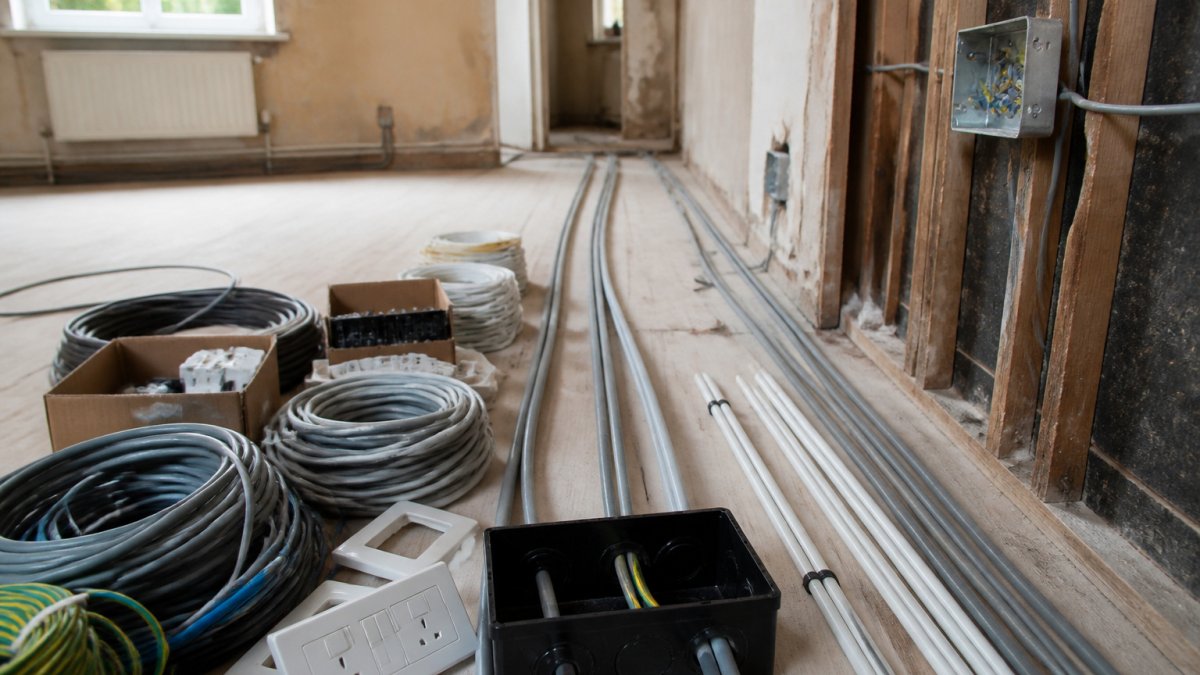
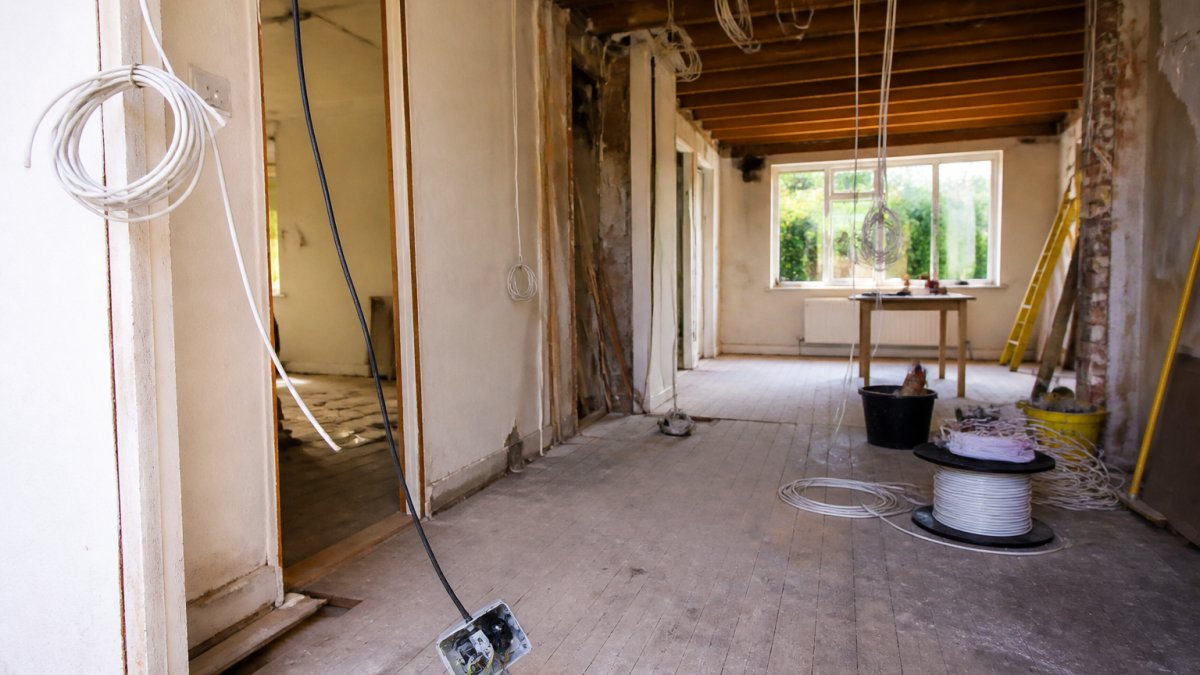
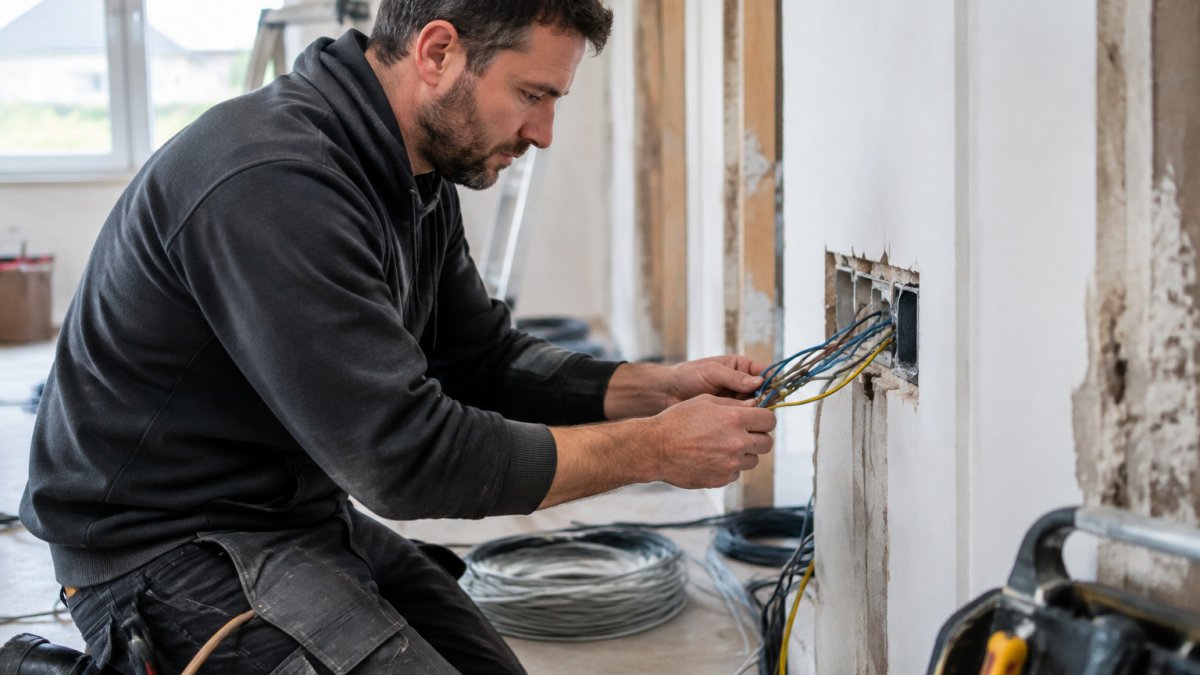
Electrical rewiring is the process of replacing old or failing cables, sockets and switches with a new, safe installation. Knowing the signs early can prevent a serious fire or shock.
Spotting the Early Warning Signs of Old Wiring
Old wiring rarely fails all at once. It usually gives small clues first, and these are easy to miss.
Look out for these common signs:
- Sockets that feel warm to the touch
- Switches that are stiff, loose or hard to turn
- Scorch marks or browning around outlets
- A fuse box or consumer unit that looks decades old
- No earth wire at sockets (two-pin plugs only)
- Rubber-insulated cables, which can crumble with age
If you notice one of these, it is worth having an electrician take a look. You do not need to open any walls to start checking. Our homeowner's checklist for assessing your own wiring walks you through the visible signs step by step before you call anyone.
Frequent Blown Fuses and Tripping Circuit Breakers
A circuit breaker that trips now and then is normal. One that trips often is a warning.
Frequent tripping can mean:
- The circuit carries too much load for its wiring
- Insulation has worn down, causing faults
- A faulty appliance is pulling too much current
- Damp or a fault is causing leakage to earth
Do not keep resetting the breaker without finding the cause. Repeated tripping is your home telling you something is wrong.
Flickering Lights, Buzzing Sounds and Burning Smells
These three symptoms need quick attention. They can point to loose connections or overheating cables.
- Flickering or dimming lights often mean a loose connection somewhere on the circuit.
- Buzzing from sockets, switches or the consumer unit can signal arcing.
- A burning smell with no obvious source is an urgent sign.
Watch out: if you smell burning or see scorching, switch off the circuit at the consumer unit and call a qualified electrician straight away. Do not wait to see if it settles.
Checking Sockets, Switches and Your Consumer Unit
Your sockets, switches and consumer unit show the condition of the whole system.
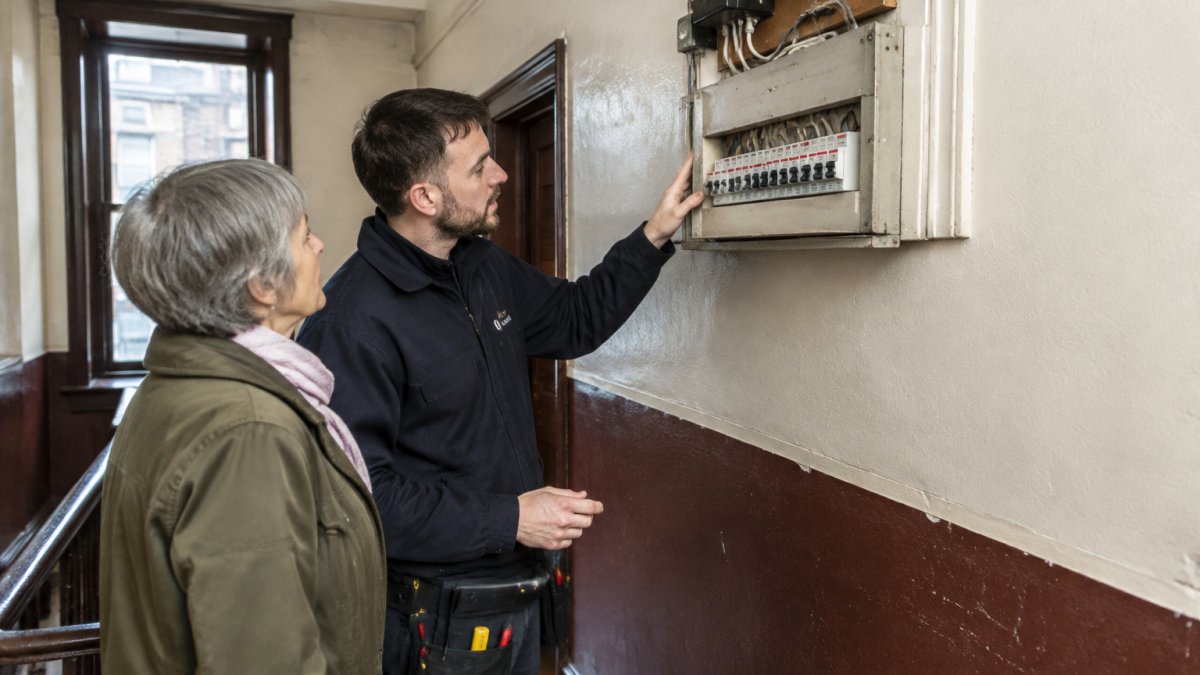
Check for:
- Discoloured, cracked or scorched sockets and switches
- Outlets that work only in certain positions
- A consumer unit with old rewirable fuses rather than modern RCD protection
- Missing or damaged labels on the consumer unit
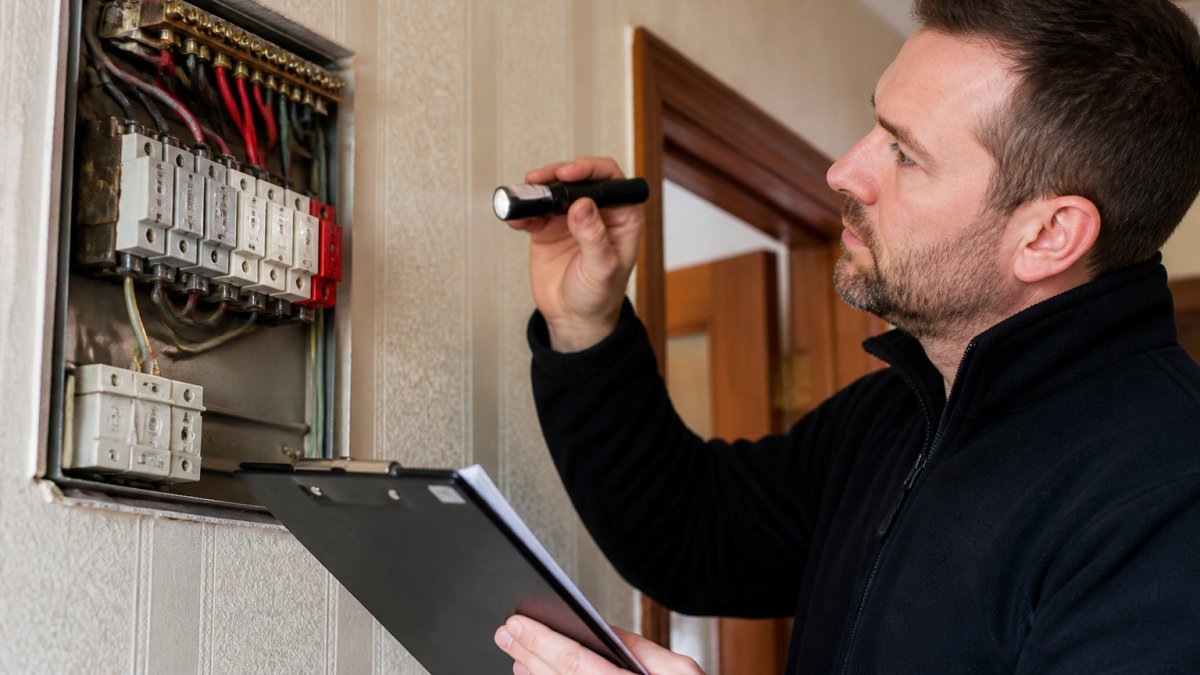
Most of these checks are visual. Only a qualified electrician should open a consumer unit or socket to inspect the wiring.
How Old Is Too Old? Understanding Wiring Age and Rewire Timelines
Age alone does not decide whether a home needs rewiring, but it is a useful starting point. The wiring methods used in different eras tell you what to look for, even if only an electrician can confirm the condition.
A rough guide to what you may find:
- Pre-1950s properties often still contain rubber-insulated cables or lead-sheathed wiring. Rubber perishes and crumbles with age, and the earth provision may be inadequate by modern standards.
- 1950s to 1960s installations frequently used black rubber or early PVC cables, sometimes without a circuit protective conductor (earth) at every point. Two-pin sockets with no earth are a red flag.
- 1960s to 1970s wiring may include aluminium conductors in some installations. Aluminium is prone to loosening at terminations, which can cause overheating and arcing.
- 1970s to 1980s systems often lack residual current device (RCD) protection, which is now expected for socket circuits and other specified circuits under current wiring regulations.
- 1990s onward generally saw PVC twin-and-earth with improved earthing, though consumer units from that period may still rely on rewirable fuses rather than modern protective devices.
A common pattern is that homes wired before the 1980s have had partial updates over the years, so the age of the consumer unit may not match the age of the cables behind the walls. That mismatch is one reason a visual check alone is not enough.
There is no fixed interval at which every home must be rewired. A rewire is generally considered when the existing installation is unsafe or cannot be brought up to a compliant standard with reasonable repairs. An electrician can advise whether targeted repairs or partial rewiring would resolve the problem.
Watch out: do not assume that an old fuse box means the whole house needs rewiring, or that a modern consumer unit means the cables are sound. The only reliable way to judge is an inspection by a qualified electrician, and the outcome of that inspection should drive the decision. If you want to confirm whether your home is safe, you can book a professional wiring inspection.
The article sets out roughly what to expect from wiring in different eras, which a reader can scan at a glance.
| Property era | Typical wiring found | Key concern |
|---|---|---|
| Pre-1950s | Rubber-insulated or lead-sheathed cables | Rubber perishes; earth may be inadequate |
| 1950s to 1960s | Black rubber or early PVC cables | Two-pin sockets with no earth |
| 1960s to 1970s | Some aluminium conductors | Loosening at terminations, overheating |
| 1970s to 1980s | Often no RCD protection | RCDs now expected on socket circuits |
| 1990s onward | PVC twin-and-earth | Consumer unit may still use rewirable fuses |
What an Electrical Rewire Inspection Involves
A proper inspection goes beyond a quick look at the sockets. A qualified electrician will usually check the condition of the cables, the consumer unit, earthing and bonding, and the protection devices in place. For a detailed guide to how the work is carried out once a rewire is needed, see Domestic Electrical Rewiring Process Explained.
For landlords, and increasingly for homeowners buying or selling a property, the formal route is an Electrical Installation Condition Report (EICR). An EICR is a documented inspection and test of the fixed electrical installation. It records the condition of the wiring, the consumer unit, earthing and bonding, and any faults found, and it assigns an overall outcome.
In plain English, the EICR outcome usually falls into one of three categories:
- Satisfactory, the installation is considered safe for continued use, though the report may still note improvements worth making.
- Satisfactory with observations, the installation is safe, but the report lists items that should be monitored or addressed at the next opportunity.
- Unsatisfactory, one or more defects are serious enough that remedial work is required. The report will identify the specific issues, which may range from a single faulty accessory to deteriorating cables.
A common pattern is that an unsatisfactory EICR does not automatically mean a full rewire. The report may recommend targeted repairs, a consumer unit replacement, improved earthing or partial rewiring. The decision depends on the extent and nature of the defects, the age and type of the cables, and whether the installation can be made compliant with reasonable work.
An EICR also has limitations. It is not a full strip-down of the property, and it cannot assess wiring hidden in walls beyond what testing and sampling reveal. That is why the electrician's judgement and the report's observations matter together.
If you are unsure whether your home needs a rewire or a smaller repair, ask the electrician to explain the EICR findings in plain terms and to set out the options. A written report gives you a clear basis for deciding what to do next, rather than relying on a single warning sign.
Booking Your Rewire Assessment with Project Rewire
If you recognise several of the signs above, book a professional assessment rather than waiting for a breakdown. You can check if we cover your area before you get in touch.
Our team is NAPIT approved and fully qualified, and we specialise in domestic rewiring. Before you book, you can also see our full rewiring services and 10-year guarantee. For an accurate figure, contact us directly for a quote, as pricing depends on the size and condition of your property.
Do not leave warning signs unchecked. Contact Project Rewire today to arrange an assessment and find out where your home stands.
Frequently Asked Questions
What are the signs that a house needs rewiring?
The most common signs include fuses that blow or breakers that trip repeatedly, flickering or dimming lights, sockets and switches that feel warm or look scorched, buzzing from the consumer unit, and a burning smell with no obvious source. Any one of these can point to a fault, and several together strongly suggest that the installation needs professional assessment. An electrician can confirm the cause and advise whether a full rewire, targeted repairs or a consumer unit replacement is the right step. If you notice a burning smell or scorch marks, switch off the affected circuit where it is safe to do so and contact an electrician promptly.
How old does a house have to be before it needs rewiring?
There is no fixed age at which a house must be rewired, but wiring installed several decades ago, particularly rubber or lead-sheathed cables and older rewirable fuse boxes, is far more likely to be worn or outdated. Many homes built before the 1960s, and a good number from the 1960s and 1970s, still have original wiring. Age alone does not condemn a system, so the condition of the wiring and the results of an inspection matter more than the year the house was built.
Can old wiring cause circuit breakers to trip?
Yes. Worn insulation, loose connections and overloaded circuits can all cause breakers or fuses to trip. Older circuits were often not designed for the number of appliances now in use, so a single socket running a kettle, heater and washing machine can overheat the cable. Repeated tripping is a warning sign and should not be fixed by simply replacing a fuse or resetting a breaker. An electrician can trace the cause and recommend whether the circuit can be repaired or needs rewiring.
How can an electrician check whether a house needs rewiring?
A qualified electrician will usually carry out an Electrical Installation Condition Report (EICR). This involves testing the installation, inspecting the consumer unit, sockets, switches and visible wiring, and checking earthing and bonding against the current wiring regulations. The report classifies any defects and states whether the installation is safe to continue in use. It can often indicate whether a full rewire is needed, or whether targeted repairs will resolve the issues. Project Rewire can advise on the right inspection for your property; contact us for a quote.