 ultimate-guide
EV Charger Installation Costs in Scotland: A Full Guide
Last Updated: 4 November 2026
Quick Summary
Typical ev charger installation costs in Scotland range from £800 to £1,750 for a standard 7kW install, covering the unit, labour, cable and certification. If a consumer unit upgrade is needed, expect £1,200 to £2,550. Non-standard work such as long cable runs or groundworks adds £200 to £1,000 or more.
- A 7kW smart charger unit alone typically costs £400 to £800.
- Labour and installation usually adds £300 to £600 to the total.
- Cable runs over ten metres or routes needing excavation count as non-standard.
- Check current grant scheme rules before budgeting, as funding changes.
- An off-peak tariff with a smart charger lowers ongoing running costs.
Table of Contents
- What Drives EV Charger Installation Costs in Scotland
- Standard Versus Non-Standard Installations
- The Cost to Install a 7kW EV Charger
- EV Charger Installation and Consumer Unit Upgrade
- EV Charger Installation Grants Scotland Homeowners Can Use
- EV Charger Installation Time and What to Expect on the Day
- Costs for Flats, Shared Parking and Homes Without Off-Street Parking
- Running Costs and Off-Peak Charging Savings
- Frequently Asked Questions
What Drives EV Charger Installation Costs in Scotland
Working out what EV charger installation costs in Scotland comes down to two things: the charge point you buy and the work needed to fit it safely. Everything else, from the grant you can claim to the cable run across your garden, adjusts those two figures up or down. Pricing depends on the property, so no two jobs price the same. For local readers, planning a home EV charger in Glasgow or Paisley covers parking, supply checks, charger choice, installation costs and installer qualifications.
The single biggest variable is your existing electrical supply. A modern home with a spare way in the consumer unit and a short cable run is a straightforward job. A 1960s semi with the original fuse board and a detached garage fifty metres from the house is a different day's work entirely.
Charger Hardware and Type
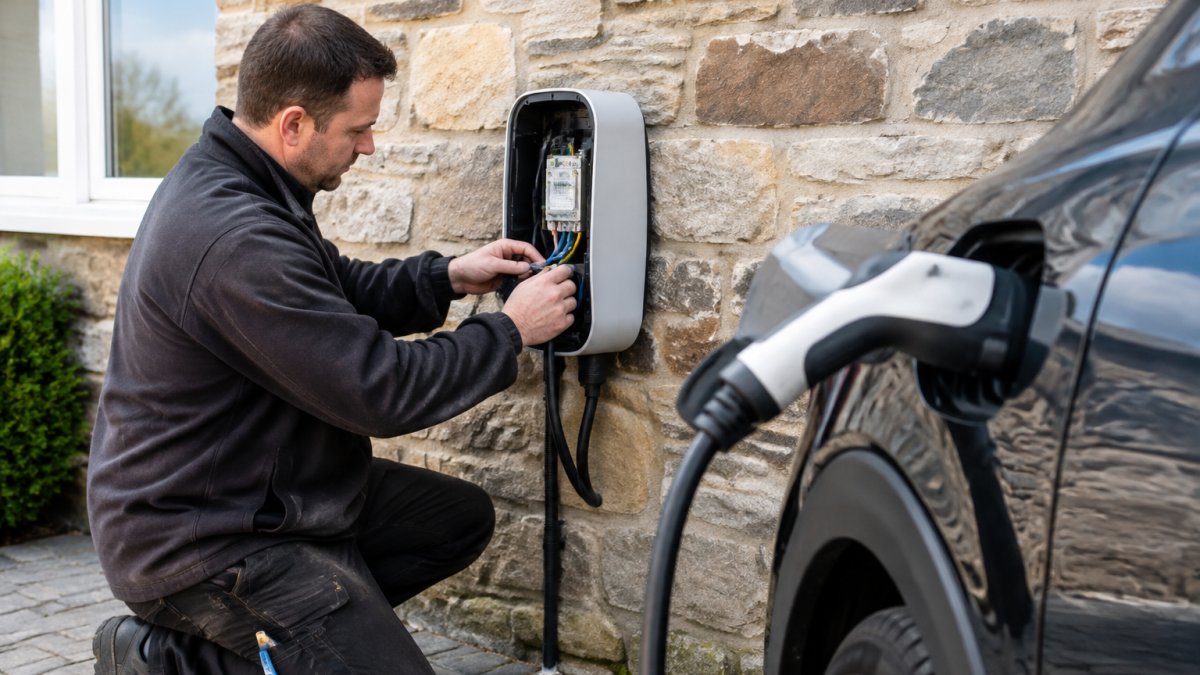
A home charge point is the wall-mounted unit that charges your electric vehicle from your domestic electricity supply.
The main choice is tethered versus untethered. A tethered charger has the cable permanently attached, which suits a driveway where only one car charges. An untethered unit has a socket, so you use your own cable, which helps if you share the charger or park at an angle.
Installation Labour and Cabling
A short run through a single wall is quick. A run that crosses a garden, goes up an outside wall or needs trunking through a finished hallway takes longer and uses more materials. Every job should finish with the appropriate test certificates and building regulations notification, so ask what is included rather than assuming.
Standard Versus Non-Standard Installations
A standard installation assumes a short cable run, a suitable existing consumer unit, and a mount on an exterior wall next to where the car parks. Most quotes are built on that assumption.
A non-standard installation is anything outside it, and this is where quotes diverge sharply.
Common non-standard factors include:
- Cable runs over ten metres, or routes needing excavation
- Consumer unit upgrades or a new dedicated circuit
- Properties without off-street parking, needing a post, trench or shared-supply arrangement
- Older wiring that cannot safely carry the additional load
- Listed buildings or conservation areas with restrictions on external fittings
The Cost to Install a 7kW EV Charger
A 7kW charger is the standard domestic choice because it matches most homes' single-phase electricity supply and fully recharges an average car overnight. The installed cost is the charger unit plus labour, cable, protective devices and certification, and it varies with the property rather than the postcode.
Rather than quote a single headline figure, it helps to see how the total is built up.
| Cost element | Typical range (GBP) | What it covers |
|---|---|---|
| Charger unit (7kW smart) | £400-£800 | Hardware only, tethered or untethered |
| Labour and installation | £300-£600 | Electrician's time, mounting, wiring, testing |
| Cable and protective devices | £50-£200 | Cable by the metre, RCBO, isolator, trunking |
| Certification and notification | £50-£150 | Test certificates, building regulations notification |
| Consumer unit upgrade (if needed) | £400-£800 | New board with RCD protection and spare ways |
| Groundworks or long cable run | £200-£1,000+ | Trenching, ducting, extra cable |
| Total standard install | £800-£1,750 | Unit, labour, cable, certification |
| Total with upgrade | £1,200-£2,550 | As above plus consumer unit work |
Watch out: a quote that looks cheapest often assumes a standard job, then adds surcharges once the electrician arrives and finds a long cable run or an old fuse board. Get the assumptions written into the quote, including whether the cable run is capped at a certain length and what happens if it is exceeded.
Pricing depends on the property, so we recommend getting a quote from Project Rewire directly for current prices. You can explore charger options and arrange a consultation to get that started.
EV Charger Installation and Consumer Unit Upgrade
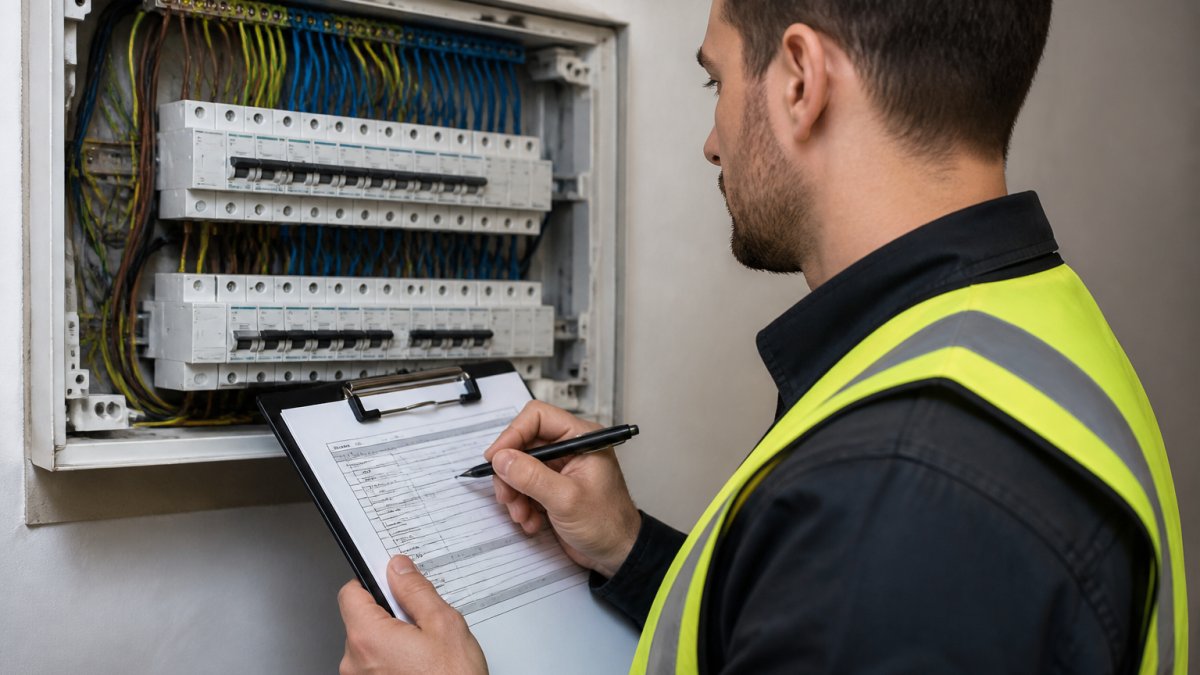
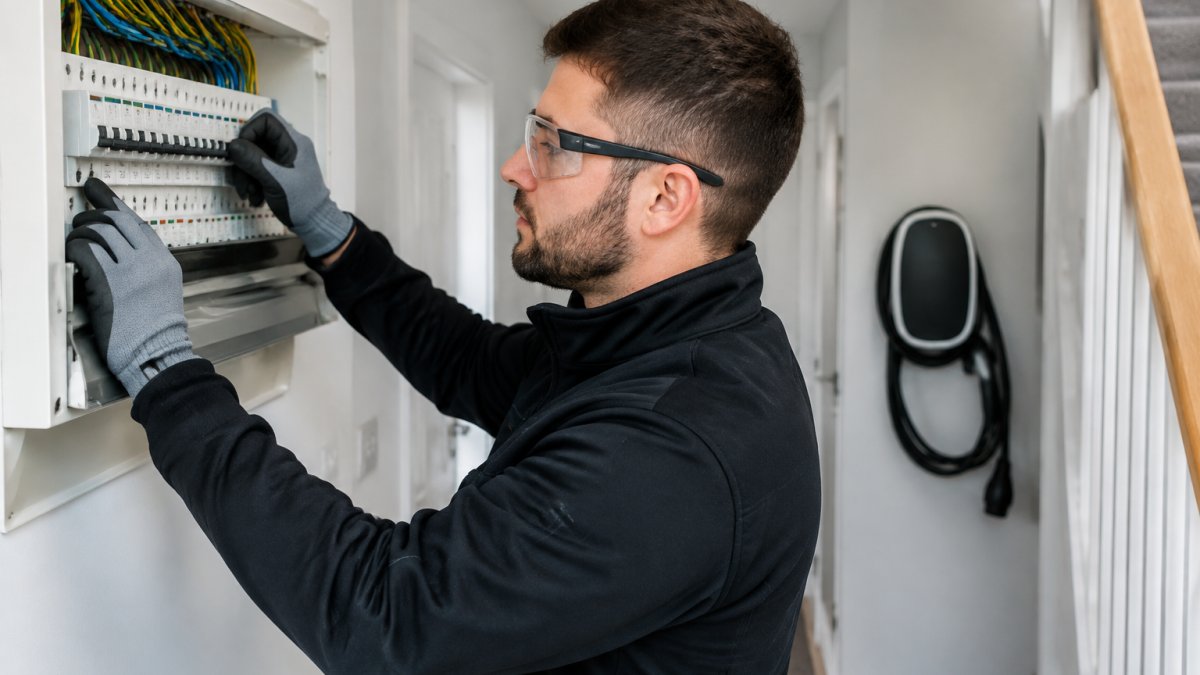
Many older homes need a consumer unit upgrade before a charger can be fitted. The charger draws a sustained high current for hours at a time, and an ageing fuse board may not have a spare way, the right protective device, or the capacity to carry that load safely alongside everything else in the house.
We can explain why and when a consumer unit upgrade is needed, and our electrical upgrades service covers what the work involves and how to get started.
EV Charger Installation Grants Scotland Homeowners Can Use
Grant funding for home charge points changes, and eligibility depends on circumstances that the official guidance sets out (Electric vehicle chargepoint grants). Rather than quote a figure that may be out of date, check the current scheme rules directly through the UK government guidance on electric vehicle charge point grants before you budget.
| Property type | Typical grant position | Key condition |
|---|---|---|
| Owner-occupied house with off-street parking | Usually eligible for the main domestic scheme | Must use an approved installer and a smart charge point |
| Rented house or flat | Eligibility usually rests with the landlord or owner | Tenant needs written consent before any work |
| Flat with shared parking | Often excluded from domestic schemes | May need commercial or landlord-specific funding route |
| Property without off-street parking | Generally not eligible for domestic grant | Alternative funding may exist via landlord or factor |
| Listed building or conservation area | Eligible in principle, but consent needed | External fittings may need planning permission |
Check the current scheme rules before booking, including whether your installer is approved for the scheme. Our guide to the checks before hiring a local NAPIT electrician walks through what accreditation to verify.
EV Charger Installation Time and What to Expect on the Day
On the day, expect the electrician to isolate the relevant circuits, mount and wire the unit, then test and certify the installation before switching it on. You should receive the test certificates and notification paperwork at the end. Power to the rest of the house is usually restored once the new circuit is in.
Costs for Flats, Shared Parking and Homes Without Off-Street Parking
These jobs cost more because they involve more: groundworks, cable routes across shared ground, permissions, and sometimes a new supply. Renters and flat owners should start with the landlord or factor, since consent is usually the first hurdle. Commercial and shared installations also fall under different metering and billing arrangements, so get the whole arrangement agreed before any cable is laid.
Running Costs and Off-Peak Charging Savings
| Situation | What it means for cost |
|---|---|
| Standard installation, short cable run | Lowest labour and materials |
| Consumer unit upgrade needed | Adds a separate job to the quote |
| Long cable run or groundworks | Priced by distance and disruption |
| Flat or shared parking | Permissions and groundworks add cost |
| Off-peak tariff with smart charger | Lowers ongoing running costs |
Frequently Asked Questions
How much does it cost to install a home EV charger in Scotland?
There is no single figure because EV charger installation costs depend on the charger you choose, the cable run from your consumer unit, and whether your electrical supply needs upgrading. Ask for a written quote from Project Rewire that separates hardware, labour, cabling and any certification so you can compare like for like.
Are there grants available for home EV charger installation?
Grant funding for home charge points has changed several times. Eligibility rules and funding availability change, so check the current position before you budget and confirm with your installer whether any scheme applies to your property.
Can I install an EV charger if my consumer unit needs upgrading?
Yes, but a consumer unit upgrade may be needed, particularly in properties on older wiring. Check your existing board and earthing arrangement with a qualified electrician before work begins.
How long does EV charger installation take?
Ask your installer to confirm the expected duration before work begins so you can plan for any interruption to power.
What should I check when comparing EV charger installation quotes?
Ask for a written, itemised quote covering charger hardware, installation labour, cabling and any consumer unit or earthing work. Check that the installer's credentials are verifiable before you book.
Does the installation price include the charger and electrical work?
Ask for a written, itemised quote so that the total you compare is the total you would pay. Request the charger make and model, and confirm what is included before you book.
If you are weighing up a charge point and your fuse board is older than you are, get the electrical supply checked before you buy hardware. Project Rewire is a NAPIT approved contractor with over a decade of experience and a 10-year guarantee on rewiring work, and we survey the property properly before quoting. Get started with Project Rewire and arrange a survey that tells you exactly what your installation needs.