 listicle
7 Checks Before Hiring a Local NAPIT Electrician
Last Updated: 2 November 2026
Quick Summary
To hire a local NAPIT electrician in Glasgow, search the NAPIT installer register by the business name and postcode, not just the individual's name, and confirm the registration is current. Registration lets the business self-certify notifiable work, so check it before comparing prices.
- Search the NAPIT installer register by business name and postcode before comparing quotes.
- Confirm the registration status is current, not lapsed or suspended.
- Check the business name and address match your written quote and the register.
- Ask whether the electrician will notify and certify notifiable work in their own name.
- Compare quotes line by line, since a much lower price often means work has been dropped.
Table of Contents
- Why Registration Matters Before You Hire a Local NAPIT Electrician
- How to Verify NAPIT Registration Using the Installer Search
- What NAPIT Registration Means for Domestic Electrical Work
- Electrician Quote Checklist: Comparing Typical Costs Fairly
- Questions to Ask an Electrician Before You Commit
- Paperwork to Expect: Electrical Installation Certificates and EICRs
- Booking Your Glasgow Electrician Consultation With Project Rewire
- Frequently Asked Questions
Why Registration Matters Before You Hire a Local NAPIT Electrician
Choosing an electrician for work inside your home is a decision you live with for years, because most electrical faults stay hidden until they cause a problem. Registration is the fastest way to filter out contractors who cannot show their work meets the rules.
A registered electrician is one who has been assessed against a recognised scheme and who certifies their own notifiable work. That is what makes the difference when something goes wrong.
Here is a short list of the seven checks this guide covers:
- Confirm NAPIT registration on the official installer search
- Understand what that registration covers for domestic work
- Compare quotes on scope, not just price
How to Verify NAPIT Registration Using the Installer Search
Do not rely on a logo on a van, a badge on a website or a claim in a quote. NAPIT is a competent person scheme operator, and it maintains a public register of installers that you can search yourself in a couple of minutes (Competent person scheme - current schemes and how schemes are authorised). The register is the only reliable way to confirm that the person quoting for your job is actually registered for the type of work you need.
Step one: search by the business, not just the name
Open the NAPIT installer search and search by the trading name and the postcode of the business that gave you the quote. Searching by an individual electrician's name alone is unreliable, because many sole traders trade under a business name that differs from their own. If the business trades as, say, a Renfrewshire rewiring firm but the quote is signed by an individual, search both and confirm they match.
Step two: read what the result actually tells you
A register entry typically shows the business name, the trading address, the scheme(s) the business is registered under, the date the registration is valid to, and the categories of work the business is assessed for. Check four things:
- Status, the registration must be current, not lapsed or suspended. A registration that expired last month is not a registration.
- Scheme scope, confirm the entry covers the electrical work you need. NAPIT registers businesses across several disciplines, so the scope of a registration should be checked against the work you need.
- Business identity, the name and address on the register should match the name and address on your written quote and, later, on the invoice.
Step three: check the individual, not only the business
Competent person schemes register businesses, but the work is carried out by individuals. Ask which qualified supervisor is responsible for the job and whether that person holds the relevant Level 3 electrical qualification and the current edition of the wiring regulations (BS 7671). A registered business should be able to name the qualified supervisor without hesitation.
Step four: confirm the notification route
Registration is what allows the business to self-certify notifiable work and notify the local authority building standards department. Ask the electrician to confirm, before work starts, that they will notify the work and issue the certificate in their own name. If they say the householder must notify building control separately, that is a sign the work is outside their registration scope.
What to do if the search comes back empty
If you cannot find the business on the register, do not proceed on the strength of a verbal assurance. Ask for the registration number and the scheme name in writing, then search again using those details. If the business still does not appear, treat the quote as unverified. You can also cross-check the same business against the equivalent register held by another competent person scheme operator, because a legitimate business is normally registered with one scheme and can be found there.
What NAPIT Registration Means for Domestic Electrical Work
Registration is often described as a badge of quality, which undersells what it actually does. In practice, registration with a competent person scheme can allow a business to self-certify notifiable electrical work, rather than the homeowner having to apply separately to the local authority for a building warrant and completion certificate. Understanding that mechanism helps you judge whether registration matters for the specific job you are booking.
Registration, competence and self-certification are three different things
- Competence is the individual electrician's training, qualifications and experience. It is demonstrated by holding a relevant Level 3 qualification and working to the current edition of BS 7671, the IET Wiring Regulations.
- Registration is the business's membership of a competent person scheme, following assessment of its work, its procedures and its public liability insurance.
- Self-certification is the legal right that registration confers, the ability to sign off notifiable work and notify the local authority building standards department without a separate building warrant application.
A highly competent electrician who is not registered can still do the work, but they cannot self-certify it. In that case, the homeowner must apply to the local authority for a building warrant and arrange inspection, which adds cost and delay. That is why registration matters even when the electrician's personal qualifications are excellent.
Which domestic jobs are notifiable in Scotland
Notifiable work generally includes the installation of a new circuit, the replacement of a consumer unit, work in a special location such as a bathroom or shower room, and certain alterations to existing circuits. Routine like-for-like replacements, swapping a socket faceplate, changing a light fitting on an existing circuit, are generally not notifiable. The dividing line is not always obvious, which is why you should ask the electrician to confirm the notification position for your specific job before work starts, rather than assuming.
What the certificate actually does
When a registered electrician completes notifiable work, they issue an Electrical Installation Certificate and notify the local authority. The certificate records the extent of the work, the test results and the departures, if any, from BS 7671. It is the document a solicitor will ask for when you sell, and the document an insurer may ask for after a claim.
What registration does not guarantee
Registration is not a guarantee of a perfect job, and it does not cover every type of work. It does give you two things an unregistered contractor cannot: a scheme operator that can review the standard of work and a formal complaints route if something goes wrong.
Ask the electrician two questions before booking: "Will you notify this work to building standards and issue the certificate in your business name?" and "Which scheme are you registered with, and what is your registration number?" A registered electrician will answer both immediately. A vague answer is your cue to look elsewhere.
Matching the registration to the job
Registration is not a single, undifferentiated status. A business may be registered for electrical installation work but not for, say, renewable technology installations, or vice versa. For a routine repair or an EICR, the electrical installation scope is what matters. For a larger project, a rewire, a consumer unit upgrade, an EV charger installation, confirm that the specific category of work is within the business's assessed scope.
Electrician Quote Checklist: Comparing Typical Costs Fairly
Quotes for the same job can differ widely, and the cheapest figure is often the one that leaves something out. Compare quotes line by line, checking that each one covers the same rooms, the same circuits, testing, making good and certification.
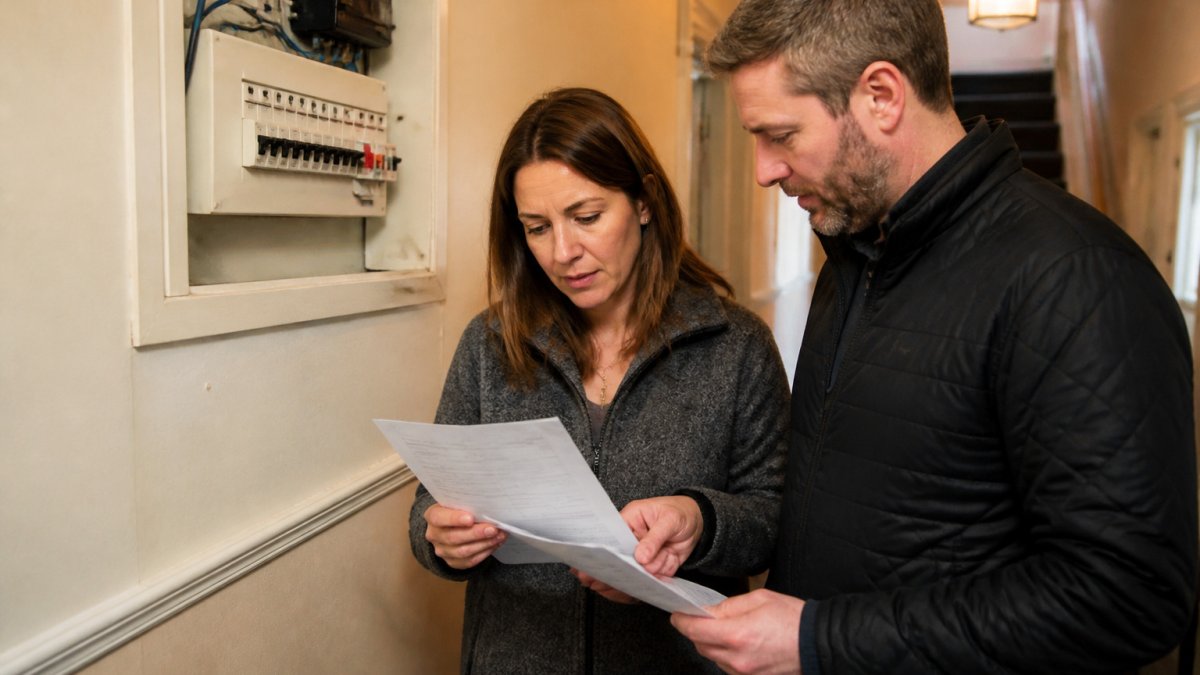
Pricing depends on the size of the property, the age of the wiring, access and the scope of work, so we cannot give a reliable figure for your home in this guide. Our signs your home may need rewiring guide helps you judge whether a proposed scope is justified.
If you are weighing up whether a home really needs rewiring, our guide on spotting the signs of an outdated system is a useful starting point.
Questions to Ask an Electrician Before You Commit
Asking the right questions reveals more than any brochure. Ask how long they have been registered, whether they will certify the work, who will be on site, and what happens if a fault appears after completion.
A good electrician will answer plainly and will not push you to sign on the spot. If the answers are vague, treat that as a warning sign rather than a minor inconvenience.
The table below summarises the questions to put to an electrician and what a sound answer looks like.
| Question | What a good answer looks like | Warning sign |
|---|---|---|
| How long have you been registered? | A clear, direct answer | Vague or evasive reply |
| Will you certify the work? | Yes, in their own business name | Says the householder must notify separately |
| Who will be on site? | Named qualified supervisor | No one named |
| What testing do you carry out? | Named tests before handover | Testing not mentioned |
| What happens if a fault appears later? | Clear after-completion route | No answer or pressure to sign now |
Paperwork to Expect: Electrical Installation Certificates and EICRs
Once notifiable work is complete, you should receive paperwork. For new installations and alterations, this is usually an Electrical Installation Certificate, which records what was installed and tested. For an existing installation, an Electrical Installation Condition Report (EICR) records its condition and any defects found.
Keep every certificate with your house documents. If a contractor cannot tell you which certificate they will issue, that is a reason to look elsewhere.
Booking Your Glasgow Electrician Consultation With Project Rewire
If you are ready to talk through your property, Project Rewire offers home rewiring across Glasgow, Renfrewshire and Ayrshire, with a 10-year guarantee on rewiring jobs and a NAPIT-approved team of fully qualified electrical engineers. Visit our Glasgow home rewiring page to request a consultation, or see the full details of our rewiring service and guarantee before you get in touch.
Frequently Asked Questions
How do I check whether an electrician is registered with NAPIT?
Use NAPIT's own installer search on its website to look up registered tradespeople. Enter the electrician's name or company and confirm the listing matches the business you are hiring. Ask for their registration number as well, and check it against the directory. If the electrician cannot be found or refuses to give details, treat that as a warning sign and look for another contractor before paying any deposit.
What does NAPIT registration mean for domestic electrical work?
NAPIT registration means the electrician's work is assessed against recognised electrical standards and is subject to ongoing inspection by the scheme. For domestic jobs, registered installers may be able to self-certify certain notifiable work, which can remove the need for a separate council inspection. Registration does not replace checking insurance, references or the specific paperwork for your job.
What should I ask an electrician before accepting a quote?
Ask what the quote includes, such as materials, testing, certification and making good after the work. Confirm whether the price is fixed or depends on the amount of work found once floors and walls are opened. Ask how long the job will take, whether they will be on site for the full period, and what happens if they find extra faults. Request the NAPIT registration number and ask for a copy of the certificate you will receive when the job is complete.
What certificates should I receive after electrical work?
For new installation or alteration work, you should receive an Electrical Installation Certificate (EIC) for new circuits or an Electrical Installation Condition Report (EICR) for an inspection of an existing installation. Keep these documents safe, as landlords need an EICR for rental properties and buyers or insurers may ask to see them later.