 ultimate-guide
Landlord EICR Certificate Requirements Scotland: 2026 Guide
Table of Contents
- Landlord EICR Certificate Requirements in Scotland: The Basics
- Electrical Safety Inspection Frequency for Landlords in Scotland
- How to Arrange an EICR: The Step-by-Step Process
- EICR Report Codes C1, C2, C3 and FI Explained
- EICR Remedial Work: Your Responsibilities as a Landlord
- Portable Appliance Testing for Landlords in Scotland
- Common Pitfalls and How to Avoid Them
- Frequently Asked Questions
Last Updated: 19 October 2026
Landlord EICR Certificate Requirements in Scotland: The Basics
An EICR, or Electrical Installation Condition Report, is a documented assessment of the fixed wiring and electrical installations inside a rental property, carried out by a qualified electrician. For landlords, landlord EICR certificate requirements in Scotland form part of the repairing standard enforced by local authorities, and getting them wrong exposes you to financial penalties and invalid insurance. At Project Rewire, our NAPIT-approved team handles these inspections across Glasgow, Renfrewshire and Ayrshire. Below, we break down exactly what the law demands, how the process works, and where landlords come unstuck.
What the Law Actually Requires
The legal duty sits within the repairing standard for private rented housing. Landlords must ensure the electrical installation is safe at the start of a tenancy and at reasonable intervals thereafter, and must hold a satisfactory report as evidence.
Three points matter most:
- The inspection must be carried out by a competent, qualified electrician
- The report must confirm the installation is satisfactory, or list remedial work that must be completed
- A copy must be provided to the tenant, and retained for the local authority on request
This is not a box-ticking exercise. A report flagged as unsatisfactory leaves you non-compliant until the work is done and re-certified.
Electrical Safety Inspection Frequency for Landlords in Scotland
The short answer: at least every five years, and at every change of tenancy. Electrical safety inspection frequency for landlords in Scotland is generally accepted as a five-year cycle, though the report itself may specify a shorter interval if the installation's condition warrants it. Maintaining this consistent testing schedule ensures that your property remains fully compliant with broader regulatory obligations, including the annual requirement for a landlord gas safety check.
Two triggers override the calendar:
- New tenancy: a satisfactory report must be in place before a tenant moves in
- Report recommendation: if the electrician states the next inspection is due sooner, that date governs
A common mistake is treating the five-year mark as flexible. It isn't. Diarise the date the moment the certificate lands, and book the next inspection before it lapses.
How to Arrange an EICR: The Step-by-Step Process
Arranging an inspection takes four practical steps.
- Book with a qualified, registered electrician. Confirm competence and ask what the inspection covers.
- Provide access and information. Share the property's age, any recent alterations, and known faults.
- Attend the inspection or arrange access. The electrician tests circuits, consumer unit, earthing and bonding.
- Review the report and act on any coded observations. Remedial work must be completed before the certificate is valid.
Choosing a Qualified Electrician
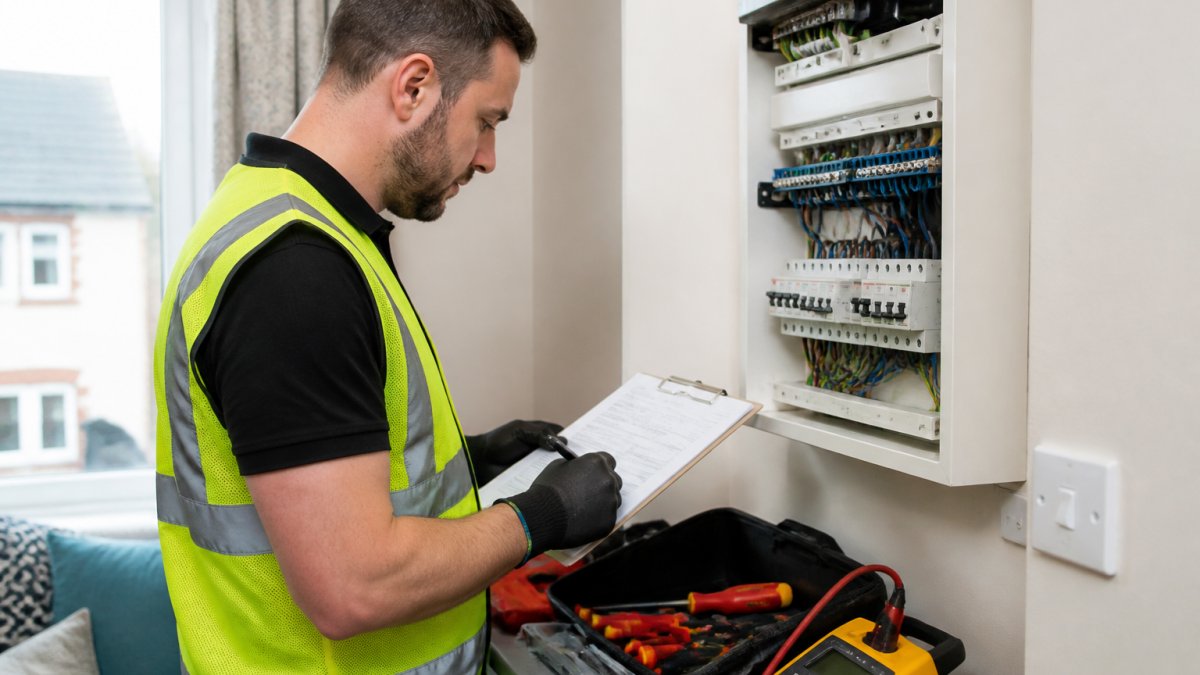
Competence is the whole game here. Look for registration with a recognised competent person scheme, valid public liability insurance, and a willingness to explain findings in plain terms. Ask for the report in writing before work begins. If a quote arrives without any inspection, treat it with suspicion.
EICR Report Codes C1, C2, C3 and FI Explained
Every observation on an EICR is coded, and the code determines what you must do. Understanding EICR report codes C1 C2 C3 FI explained simply is essential, because the difference between a C2 and a C3 decides whether your certificate is satisfactory.
| Code | Meaning | Action Required |
|---|---|---|
| C1 | Danger present, risk of injury | Immediate action, isolate circuit |
| C2 | Potentially dangerous | Urgent remedial work required |
| C3 | Improvement recommended | Not mandatory, but advised |
| FI | Further investigation needed | Additional testing required |
A report containing any C1 or C2 is unsatisfactory. C3 observations do not invalidate the certificate, but ignoring a cluster of them is short-sighted.
EICR Remedial Work: Your Responsibilities as a Landlord
Once coded defects appear, EICR remedial work landlord responsibilities kick in: you must commission and complete the work, then obtain a satisfactory re-inspection. There is no legal grace period for C1 and C2 items.
What this means in practice:
- C1 items require immediate isolation or repair
- C2 items should be addressed urgently, before the property is let
- Keep every invoice and re-test certificate as evidence
The most common trap is assuming a re-test is automatic. It isn't. You must arrange it, and it must confirm the installation is now satisfactory.
Portable Appliance Testing for Landlords in Scotland
Portable appliance testing landlord Scotland obligations apply to appliances you supply, not to tenants' own belongings. PAT testing is not a blanket legal requirement, but the repairing standard and your duty of care mean supplied appliances should be safe.
A sensible approach:
- Test appliances you provide at regular intervals
- Keep a written record of tests and results
- Replace damaged items rather than patching them
Fixed wiring and portable appliances are separate duties. Do not assume a satisfactory EICR covers the kettle and washing machine.
Common Pitfalls and How to Avoid Them
The recurring failures we see are predictable, and each one is avoidable.
- Booking the cheapest quote without checking registration. Cheap often means unqualified.
- Ignoring C3 observations indefinitely. They escalate into C2 items over time.
- Missing the five-year renewal. Diarise it immediately.
- Failing to pass the report to the tenant. This is a compliance requirement, not a courtesy.
- Assuming a rewire is always needed. Often targeted remedial work resolves the issue; get a proper assessment first.
Electrical compliance is one of those duties that feels like paperwork until something goes wrong, at which point it becomes the most important document you own. Project Rewire provides NAPIT-approved EICR inspections and remedial work across Glasgow, Renfrewshire and Ayrshire, backed by a 10-year guarantee on rewiring and a team that has spent over a decade working in domestic properties. If you need a certificate turned around quickly, or you're worried a previous report flagged work you never completed, get a quote from Project Rewire and let our qualified engineers confirm exactly where your property stands.
Frequently Asked Questions
Do landlords in Scotland need an EICR?
Yes. Since 2015, landlords in Scotland have been legally required to have the electrical installations in their rented properties inspected and tested by a qualified electrician. This is known as an EICR, or Electrical Installation Condition Report. The report must be carried out at the start of a new tenancy and at least every five years thereafter. Failing to comply can result in a Repairing Standard Enforcement Order and significant penalties, so it is essential to keep your EICR up to date.
How often must a landlord arrange an electrical safety inspection in Scotland?
The electrical safety inspection frequency for landlords in Scotland is at least every five years, and also at the start of every new tenancy. If the previous report identified remedial work, a further inspection may be needed sooner. Some landlords choose to inspect more frequently if the property has older wiring or high usage. Always check the date on your last EICR and diarise the next inspection well in advance so you never let it lapse during a tenancy.
What does an EICR check in a rented property?
An EICR assesses the safety and condition of the fixed electrical installation, including the consumer unit, wiring, sockets, switches and earthing. The electrician will carry out visual checks and live testing to identify defects, then issue a report with codes for any issues found. It does not cover appliances plugged into the system, which is where portable appliance testing comes in. The report gives you a clear picture of whether the installation is safe for continued use.
What happens if an EICR identifies urgent or remedial work?
If the EICR report codes an issue as C1 (danger present) or C2 (potentially dangerous), you must arrange remedial work promptly. C1 issues should be addressed immediately, often by isolating the affected circuit. C2 issues must be fixed within 28 days or by the date specified in the report. You are responsible for ensuring the work is done by a qualified electrician and for keeping evidence of completion. Failure to act can breach the Repairing Standard and leave you open to enforcement action.
Do I need to give tenants a copy of the EICR?
Yes. You must provide a copy of the EICR to your tenant at the start of the tenancy and to any new tenant within 28 days of the inspection. If the report identifies remedial work, you should also give the tenant a copy of the completion certificate once the work is done. Keeping clear records protects you if a dispute arises and demonstrates compliance with the Repairing Standard. Many landlords now share digital copies for ease of record-keeping.
Are portable appliance tests required for Scottish landlords?
Portable appliance testing is not a standalone legal requirement for landlords in Scotland in the same way as the EICR, but it forms part of your general duty to keep the property safe. The Electrical Equipment (Safety) Regulations 1994 require that supplied electrical equipment is safe. In practice, PAT testing of any appliances you provide, such as white goods or kettles, is strongly recommended and often expected by insurers. It helps demonstrate you have taken reasonable steps to ensure tenant safety.