 ultimate-guide
How to Modernise Electrical Systems in Period Properties
Last Updated: 28 October 2026
Quick Summary
Modernising electrical systems in period properties usually starts with an Electrical Installation Condition Report to assess the existing wiring, then addressing signs of failure such as warm sockets, frequent tripping, or rubber-insulated cabling. Many older homes need a full rewire or a consumer unit upgrade to meet current safety standards while preserving original features.
- Rubber-insulated, lead-sheathed or earthless wiring suggests the installation has reached the end of its safe life.
- Warm sockets, frequent tripping and burning smells are warning signs that should never be ignored.
- An Electrical Installation Condition Report identifies defects and classifies their severity before any work begins.
- Replacing an old fuse board with a modern consumer unit adds RCD protection and separate circuits.
- Ask any electrician to certify work to BS 7671 and check their registration with a recognised competent person scheme.
Table of Contents
- Why Period Property Wiring Needs Attention
- How to Tell If Your Period Property Needs a Full Rewire
- Getting an Electrical Installation Condition Report (EICR)
- Upgrading the Consumer Unit Without Damaging Original Features
- What Affects House Rewire Cost
- BS 7671 Requirements and Choosing a Qualified Electrician
- Booking Your Period Property Electrical Assessment
- Frequently Asked Questions
Why Period Property Wiring Needs Attention
Period properties are some of the most characterful homes in Glasgow, Renfrewshire and Ayrshire, but their electrical systems were rarely designed for the way we live now. Original wiring was built for a handful of lights and a single socket per room, not for kettles, chargers, heating controls and home offices all running at once. Project Rewire specialises in comprehensive electrical rewiring for domestic properties.
Electrical safety in older homes is a matter of wiring age, insulation and the consumer unit rather than a single fault. Many period homes still have rubber or fabric-insulated cables, round-pin sockets and fuse boards that offer little protection by modern standards. A common mistake is assuming that because nothing has tripped or sparked yet, the system is safe. Ageing insulation can deteriorate out of sight behind plaster for decades before it causes a problem.
Common electrical hazards in older homes
The hazards most often found in period properties include:
- Deteriorated rubber or fabric-insulated cabling that becomes brittle over time
- Overloaded circuits feeding modern appliances through old wiring
- Ageing consumer units without residual current devices (RCDs)
- Loose connections in junction boxes, hidden within walls and under floors
- Light fittings and sockets with no earth connection
How to Tell If Your Period Property Needs a Full Rewire
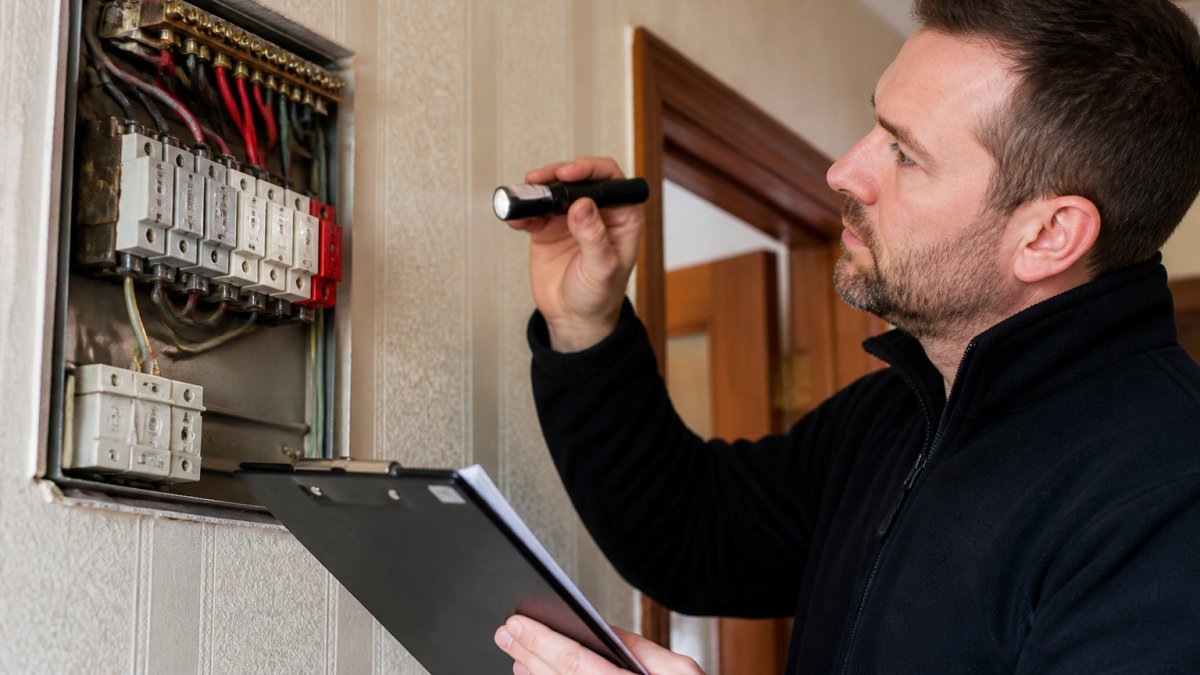
A full rewire is not always necessary, but certain signs strongly suggest the existing installation has reached the end of its safe life. Warm sockets, frequent tripping, a burning smell, or lights that dim when appliances switch on are all warning signs that should not be ignored.
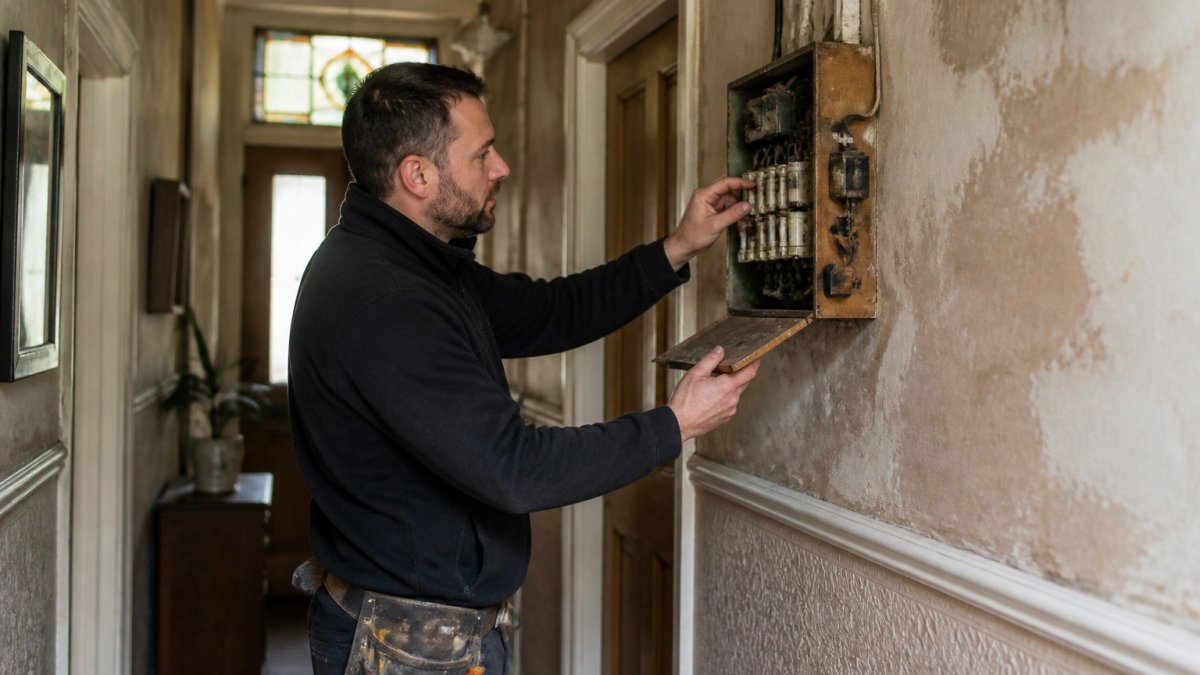
Look too at the age and type of the cabling. If the wiring is rubber-insulated, lead-sheathed or lacks an earth, a rewire should be considered seriously. Partial upgrades can be sensible in some homes, but a qualified electrician can advise whether patching will genuinely reduce risk or simply postpone the work.
Some signs and cable types point clearly towards a full rewire, as summarised below.
| Sign or cable type | Meaning | Action |
|---|---|---|
| Warm sockets | Sign of an overloaded or failing installation | Do not ignore |
| Frequent tripping | Circuit may be overloaded | Ask an electrician to assess |
| Burning smell | Possible serious fault | Do not ignore |
| Dimming lights when appliances switch on | Sign the installation is struggling | Ask an electrician to assess |
| Rubber-insulated wiring | Suggests end of safe life | Consider a rewire seriously |
| Lead-sheathed wiring | Suggests end of safe life | Consider a rewire seriously |
| No earth connection | Suggests end of safe life | Consider a rewire seriously |
Getting an Electrical Installation Condition Report (EICR)
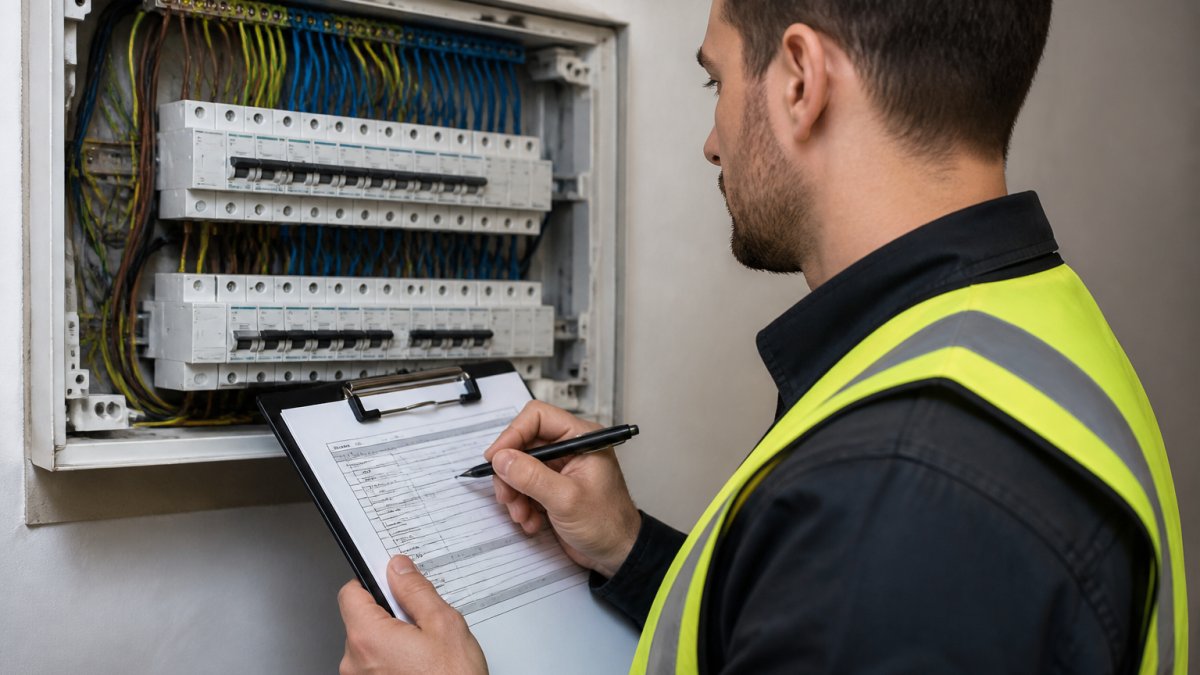
An Electrical Installation Condition Report (EICR) is a formal inspection and test of the fixed electrical installation in a property (Electrical safety standards in the private and social rented sectors: guidance). It identifies defects, classifies their severity and gives a clear picture of whether the system is safe to use. For many homeowners it is the most useful first step before deciding on any work.
Landlords in particular need an EICR for rental properties, and it should be carried out by a suitably qualified person (Electrical safety standards in the private and social rented sectors: guidance). Results are graded with codes, and any Code 1 or Code 2 observations require attention. If you are preparing for a sale or purchase, an EICR can also reveal issues that affect negotiations.
Upgrading the Consumer Unit Without Damaging Original Features
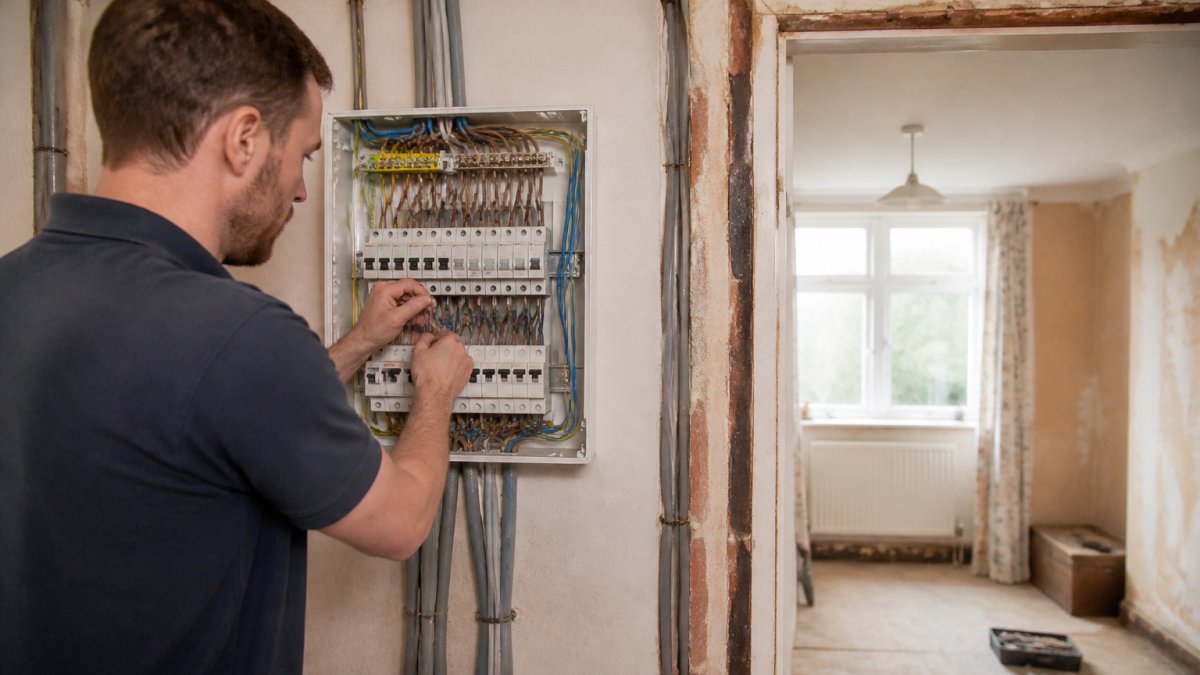
Replacing an old fuse board with a modern consumer unit is often the most important safety upgrade in a period home. A new consumer unit adds RCD protection and separate circuits. Done sensitively, the work can leave original fireplaces, cornicing and panelling untouched.
What Affects House Rewire Cost
Request a quote for your property. Project Rewire's website explains the services covered and how to request a quote for your property.
BS 7671 Requirements and Choosing a Qualified Electrician
Electrical installations in the UK are designed and tested to BS 7671, the Requirements for Electrical Installations (the IET Wiring Regulations) (BS 7671 - Requirements for Electrical Installations). Any work should comply with this standard, and it is the benchmark an inspector will use. Ask any electrician you consider how they design and certify work to BS 7671.
When choosing an electrician, check that they are registered with a recognised competent person scheme such as NAPIT, which Project Rewire is approved by. Ask for proof of registration, insurance and a written, itemised quote. A reputable contractor will be happy to explain the work and provide certification on completion.
Booking Your Period Property Electrical Assessment
local rewiring service. Discuss your property, plan the work and get a clear picture before committing to anything. Our team at Project Rewire can help you decide whether a full rewire or a staged upgrade suits your home best.
Frequently Asked Questions
How do I know if my period property needs a full rewire?
Signs include cloth-covered or rubber-insulated cabling, a rewirable fuse board, frequently tripping circuits, scorched sockets, flickering lights and no earth connection on some circuits. An EICR is an inspection and test of a property's fixed electrical installation. Pricing depends on the size of the property, the layout and access, so request a written quote from Project Rewire for an accurate figure.
Do I need to upgrade my consumer unit in a period property?
In most period properties, yes. Older fuse boards lack RCD protection and modern circuit breakers, which leaves the home exposed to electric shock and fire risk. A new consumer unit with RCBOs brings the installation closer to the current wiring regulations, BS 7671. An electrician will confirm whether the existing earthing and bonding can support the upgrade before any work begins.
How can I modernise electrical systems without damaging original features?
Plan routes for new cabling along skirting boards, through floor voids and in loft spaces where possible, and chase channels only where unavoidable. Surface-mounted trunking can suit feature walls, and original fittings such as cornicing and picture rails can often be protected during work. Ask your electrician to walk the property with you before work starts so the layout is agreed in advance.
What are the current BS 7671 requirements for older homes?
BS 7671 is the Wiring Regulations for electrical installations in the UK.