 how-to
Is My 1960s Wiring Safe? A Homeowner's Checklist
Table of Contents
- Is My 1960s Wiring Safe? Start With These Warning Signs
- Signs of Faulty Wiring You Should Never Ignore
- EICR for Older Properties: What the Inspection Actually Covers
- When to Rewire a House Instead of Repairing It
- Cost of an EICR and What Happens Next
- Your 1960s Wiring Safety Checklist
- When to Call a Professional Electrician
- Frequently Asked Questions
Last Updated: 14 October 2026
Is My 1960s Wiring Safe? Start With These Warning Signs
If your home was built in the 1960s, the odds are high that some of the original wiring is still in the walls. In our experience across older properties, that is rarely good news. The question "is my 1960s wiring safe" usually has one honest answer: it depends on what is still in use and what has been changed since.
This guide from Project Rewire covers the warning signs, the faults we see most, and how to decide between repair and a full rewire.
Most 1960s homes were wired to a standard that made sense at the time. That standard has since been overtaken by safer materials and stricter rules.
What a 1960s Installation Actually Contains
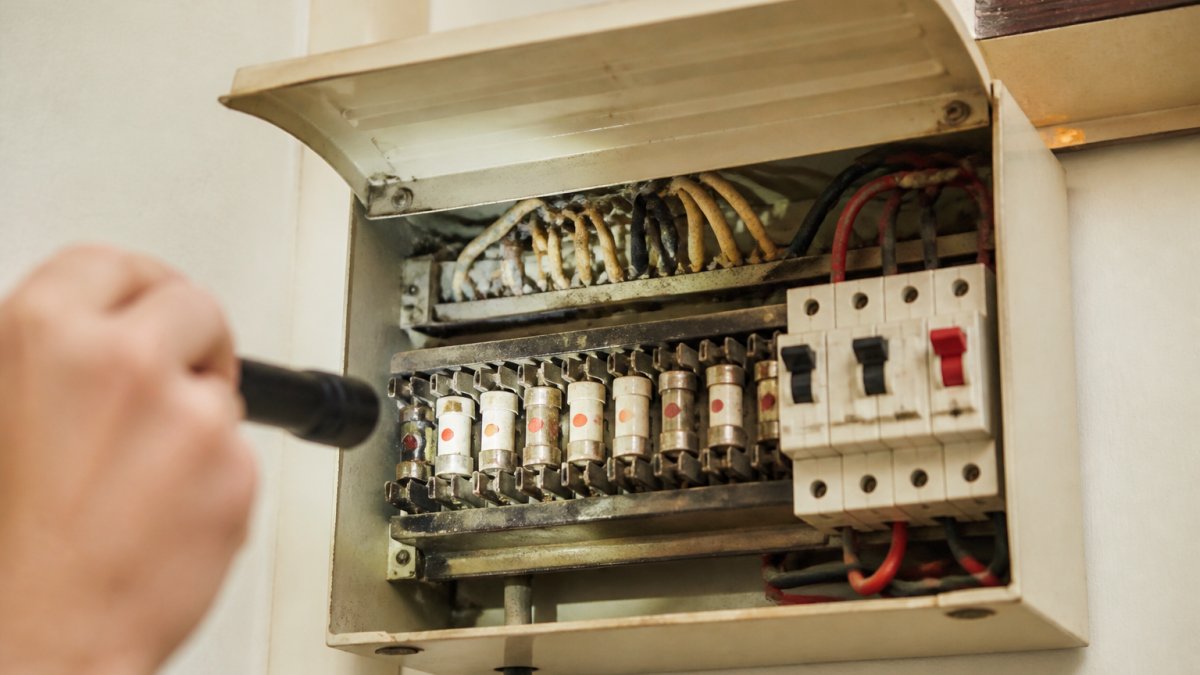
A typical 1960s installation runs on rubber-insulated cables, often with lead sheathing, feeding a small fuse box rather than a modern consumer unit. There may be no earth conductor in the lighting circuit at all.
- Rubber-insulated cables, now brittle with age
- Lead-sheathed or fabric-wrapped wiring
- A rewireable fuse box, not a consumer unit
- Little or no circuit protection against earth leakage
- Sockets and switches that may never have been updated
The IET Wiring Regulations guidance on older installations sets out why these materials no longer meet current standards.
Signs of Faulty Wiring You Should Never Ignore
The clearest signs of faulty wiring are a burning smell near sockets, scorch marks, buzzing switches, and fuses that blow repeatedly. Any one of these means you should stop using the circuit and get it checked.
Other signs are quieter but just as serious:
- Lights that flicker or dim when an appliance switches on
- Sockets that feel warm to the touch
- A faint fishy or burning smell with no obvious source
- Cracked or crumbling cable visible in the loft or under floorboards
- Fuses that blow when you plug in an ordinary appliance
A common mistake is treating flickering lights as a bulb problem. In a 1960s home, it usually points to a loose or corroded connection behind the fitting.
Why Rubber and Lead-Sheathed Cables Fail
Rubber insulation hardens and cracks as it ages, and lead sheathing becomes brittle. Once the insulation breaks down, bare conductors can touch and create a short or a shock risk.
Heat speeds this up. Cables buried under loft insulation or packed against timber dry out faster and fail sooner.
EICR for Older Properties: What the Inspection Actually Covers
An EICR, or Electrical Installation Condition Report, is a formal inspection and test of a property's fixed wiring. For older properties, it is the only reliable way to know whether the installation is safe.
The inspection covers:
- Visual condition of cables, accessories and the consumer unit
- Insulation resistance testing on each circuit
- Earthing and bonding checks
- Polarity and continuity of every circuit
- RCD and protective device testing
- A written report with codes for each fault found
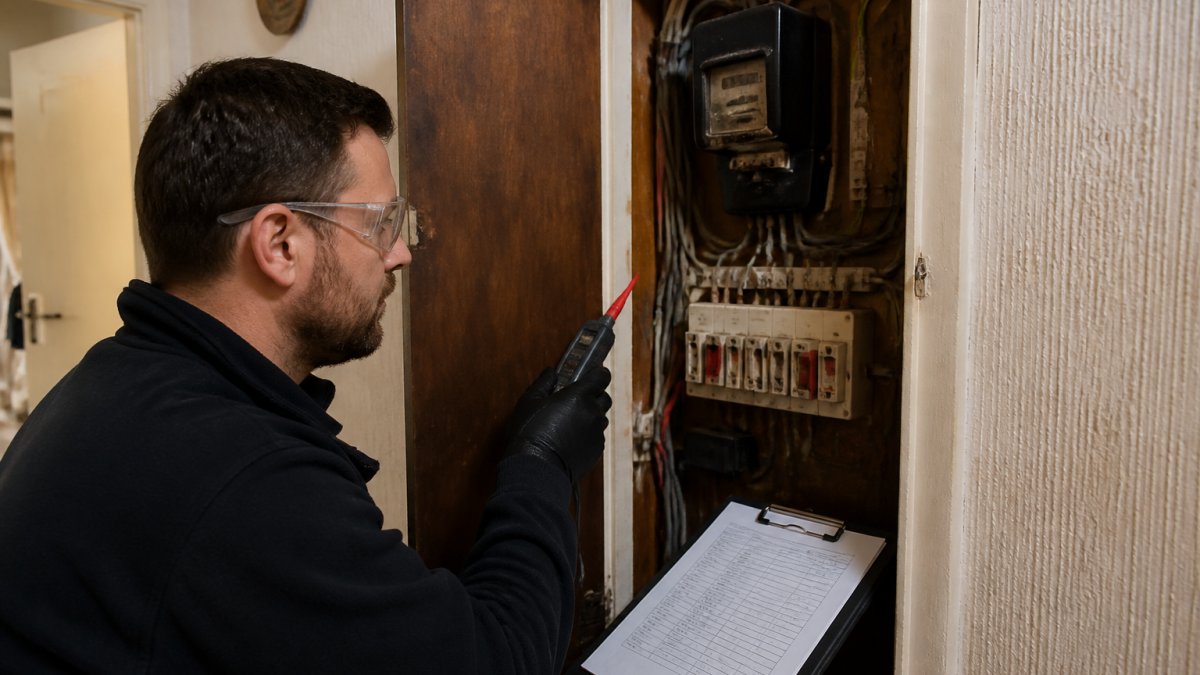
The report grades faults from C1 (danger present) to C3 (improvement recommended). A C1 or C2 result means remedial work is needed.
Landlords in Scotland must meet Scottish Government guidance on electrical safety standards in rented homes, which sets out the EICR requirement for private lets.
When to Rewire a House Instead of Repairing It
You should rewire a house when the faults are widespread rather than isolated. If one circuit has a fault, a repair may be enough. If the whole installation is original, repair is usually a false economy.
Rewiring is the right call when:
- The existing wiring is still rubber-insulated throughout
- There is no earth in the lighting circuits
- The consumer unit cannot take modern protective devices
- You are renovating and the walls are already open
- You plan to add an EV charger or heavy new circuits
How Disruptive Is a Full Rewire?
A full rewire is disruptive, but it is more manageable than most people expect. Expect floorboards up, some chasing into walls, and a few days without power on individual circuits.
A typical home is done in stages so you keep power to most of the house. We plan the schedule around you, not the other way round.
Cost of an EICR and What Happens Next
The cost of an EICR depends on the size of the property and how many circuits need testing. There is no single figure, because a large house with outbuildings takes far longer than a small flat.
Rather than quote a number that will not hold, we give you a fixed price after a quick look at the property. That price covers the inspection, testing and the written report.
After the report, you get a clear list of what needs doing, graded by urgency. You can then decide what to fix now and what can wait.
Your 1960s Wiring Safety Checklist
Use this checklist to spot problems before they become dangerous. If any box is unticked, get a qualified electrician to look at it.
- No burning smell near sockets or the consumer unit
- No scorch marks on sockets, switches or fittings
- No buzzing or crackling from switches or the fuse box
- Lights do not flicker when appliances switch on
- Sockets are not warm to the touch
- Fuses do not blow repeatedly
- Visible cables in the loft are not cracked or crumbling
- The consumer unit has RCD protection
- There is an earth conductor in the lighting circuit
- An EICR has been done within the last five years
| Warning Sign | Likely Cause | What to Do |
|---|---|---|
| Burning smell near sockets | Overheating connection | Stop using the circuit, call an electrician |
| Flickering lights | Loose or corroded joint | Get the circuit tested |
| Fuses blowing often | Faulty circuit or overload | Book an EICR |
| Warm sockets | Poor connection or overload | Stop using the socket now |
| Cracked cables in loft | Aged rubber insulation | Arrange a rewire assessment |
When to Call a Professional Electrician
Call a professional electrician immediately if you notice a burning smell, scorch marks, or a fuse that keeps blowing. These are not jobs to sit on. They are signs that a fault is already present.
You should also call us if:
- Your property has never had an EICR
- You are a landlord needing a certificate for a let
- You are buying an older property and want to know what you are taking on
- You are planning a renovation or an EV charger installation
At Project Rewire, we are a NAPIT-approved contractor with over a decade of experience in domestic rewiring. Every rewiring job we complete carries a 10-year guarantee. If a fault is found, we tell you plainly what needs doing and why.
Frequently Asked Questions
Is wiring from the 1960s safe to use?
It can still function, but most 1960s installations are now well past their expected service life. Rubber-insulated cables harden and crack, older fuse boxes often lack residual current device protection, and earthing arrangements may not meet current standards. None of that guarantees failure tomorrow, but it does mean the installation should be tested by a registered electrician rather than assumed safe.
What are the warning signs of faulty wiring?
Watch for sockets or switches that feel warm, scorch marks around outlets, a burning smell with no obvious source, lights that flicker when appliances start, fuses or breakers that trip repeatedly, and slight shocks when touching metal fixtures. Any one of these points to a fault that needs testing. If you notice burning smells or persistent tripping, stop using the affected circuits and call an electrician.
How often should old wiring be inspected?
Guidance for homeowners suggests an electrical installation condition report every ten years, or more often once an installation passes the 30 to 40-year mark. Landlords must have an EICR at least every five years for rented property. For a 1960s home where the wiring has never been replaced, a ten-year cycle is the minimum, and a shorter interval may be advised if the report flags deterioration.
Can I check old wiring myself?
You can safely note visible clues such as black rubber cables, round-pin sockets, a wooden-backed fuse box, or a lack of any residual current device, and you can log when lights flicker or breakers trip. What you cannot do is test insulation resistance, earth continuity, or polarity without proper instruments and training. Those tests are what actually determine whether your 1960s wiring is safe, so book a registered electrician for the verdict.
A 1960s installation can be made safe, but only once you know what is actually in the walls. Guessing is not an option when the risk is fire or shock. Project Rewire offers full EICR inspections, domestic rewiring, and emergency repairs across Glasgow, Renfrewshire and Ayrshire, all backed by our NAPIT approval and a 10-year guarantee on rewiring work. Get a quote from Project Rewire and find out exactly where your home stands.