 how-to
EICR Certificate for Landlords in Glasgow: 2026 Guide
Table of Contents
- What an EICR Certificate Is and Why Glasgow Landlords Need One
- EICR Certificate Requirements for Landlords: The Legal Basics
- Step-by-Step: How to Arrange an EICR for Your Rental Property
- Landlord EICR Cost: What Affects the Price You Pay
- How Long Does an EICR Take, From Booking to Certificate?
- What Happens If an EICR Fails: Your Next Steps as a Landlord
- Choosing an EICR Contractor and Avoiding Common Mistakes
- Frequently Asked Questions
Last Updated: 14 October 2026
What an EICR Certificate Is and Why Glasgow Landlords Need One
An EICR certificate is a formal safety report on the fixed electrical installation in a property. A qualified electrician inspects the wiring, sockets, consumer unit and earthing, then records whether each part is safe to use. For landlords, it is the electrical equivalent of a gas safety record: proof that you have checked the system and can show the paperwork if asked.
Since 2015, private landlords in Scotland have been legally required to hold a valid EICR certificate for every rental property. That duty comes from the Housing (Scotland) Act 2014 electrical safety requirements, and it applies whether you let one flat or a small portfolio. At Project Rewire, we handle EICR testing for landlords across Glasgow, Renfrewshire and Ayrshire, and the same questions come up every week: what does it cover, how long does it last, and what happens if it fails?
Here is what most guides get wrong. They treat the EICR as a box-ticking exercise you do once and forget. In practice, it is a snapshot of your wiring on the day of the test, and older Glasgow tenements and 1960s semis often need real work before they pass.
EICR Certificate Requirements for Landlords: The Legal Basics
The EICR certificate requirements for landlords come down to three things: get the test done, keep the certificate, and give a copy to your tenant.
The rules in Scotland are specific:
- You must arrange an EICR at least every five years (Annex D3: Installations for the supply of electricity - Repairing Standard: statutory...).
- A copy must go to your tenant, and to anyone who asks, within a set period.
- You must keep the certificate and give a new tenant a copy before they move in.
- If the report flags something as unsafe, you must act on it.
The Scottish duty sits with you as the landlord, not with the letting agent.
How Often a Landlord EICR Must Be Renewed
A landlord EICR must be renewed every five years in Scotland. The five-year cycle runs from the date of the inspection, not from when you bought the property or when the tenant moved in.
Some properties need testing sooner. If the installation is old, if there has been flood or fire damage, or if the previous report noted something to monitor, the electrician may set a shorter interval. Always check the "next inspection due" date on the certificate itself. That date is the one that matters, and it can be earlier than five years.
Step-by-Step: How to Arrange an EICR for Your Rental Property
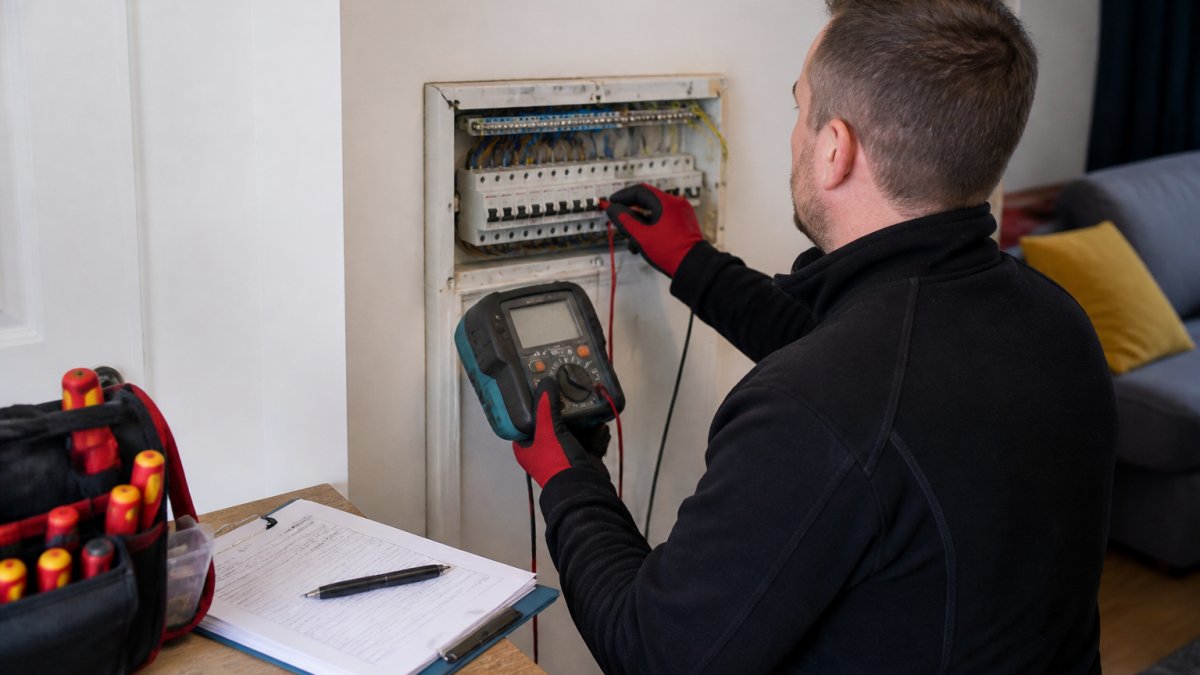
Arranging an EICR takes four steps, and the whole process is usually quicker than landlords expect.
- Find an accredited electrician. Look for someone registered with a competent person scheme such as NAPIT or SELECT.
- Book the visit and give access. Tell your tenant in advance and arrange a time that suits them.
- Let the test happen. The electrician inspects and tests the installation, which takes a few hours for a typical flat.
- Review the report and act on it. You get a certificate with a clear pass or a list of items to fix.
If you want the whole thing off your plate, Project Rewire can book the visit, deal with the tenant directly, carry out the test and send you the certificate.
Who Can Legally Carry Out an EICR
Only a competent, qualified electrician can carry out an EICR. The person must be able to inspect and test to the current wiring regulations and issue a signed report.
In practice, you should use someone registered with a recognised scheme. That gives you a route to complain or claim if the work is wrong. Ask for the registration number and check it on the scheme's own register before you book. A cheap quote from someone who cannot show registration is not a bargain.
Landlord EICR Cost: What Affects the Price You Pay
The cost of an EICR depends on the size and age of the property, the number of circuits, and how easy the installation is to access. A small modern flat with a tidy consumer unit takes far less time than a large period property with old wiring and limited access.
Four things push the price up:
- Property size. More rooms mean more sockets and circuits to test.
- Age and condition. Older installations take longer to inspect and often need remedial work.
- Access. Loft spaces, cellars and awkward consumer unit positions add time.
- Remedial work. Any fixes needed to bring the installation up to standard are quoted separately.
Get a quote based on your actual property and you will know where you stand.
How Long Does an EICR Take, From Booking to Certificate?
Most EICRs are completed within a few hours on site, and the certificate usually follows within a few working days. The exact time depends on the size of the property and how quickly the electrician can get access.
Here is how the timeline usually breaks down:
| Stage | Typical Time | What Happens |
|---|---|---|
| Booking | Same week to two weeks | You arrange a visit date with the electrician |
| On-site test | Two to four hours | The installation is inspected and tested |
| Report and certificate | A few working days | Results are checked and the certificate is issued |
| Remedial work, if needed | Varies by job | Any unsafe items are fixed and re-checked |
If you are between tenancies and need the certificate fast, say so when you book. A good contractor will tell you honestly what is achievable.
What Happens If an EICR Fails: Your Next Steps as a Landlord
An EICR does not "fail" in the way an MOT does. Instead, the report grades each finding, and the dangerous ones are marked for urgent action. What happens if an EICR fails depends on how serious the problem is.
The report uses three codes:
- C1: Danger present. This needs immediate action, often the same day.
- C2: Potentially dangerous. This must be fixed, usually within a set period.
- C3: Improvement recommended. Not unsafe now, but worth addressing.
If you get a C1 or C2, you must arrange remedial work. Once the work is done, the electrician issues a report confirming the installation is now satisfactory. Keep both documents together. If the report is satisfactory with no C1 or C2 items, you are compliant and can carry on.
Choosing an EICR Contractor and Avoiding Common Mistakes
Pick a contractor who is accredited, insured, and willing to explain the report in plain English. The cheapest quote is rarely the best value if it comes with a vague report or a long wait for the certificate.
Three mistakes cost landlords time and money:
- Chasing the lowest price. A bargain test that misses problems leaves you exposed.
- Ignoring the "next inspection due" date. Diarise it the day the certificate lands.
- Not acting on C1 and C2 items. These are the ones that matter legally and for safety.
At Project Rewire, our team is NAPIT approved, fully qualified, and has over a decade of experience with domestic properties, including the older Glasgow stock. We back our rewiring work with a 10-year guarantee, and we will tell you honestly whether your property needs a full rewire or just a small fix.
Landlords juggle enough paperwork without chasing certificates that could be sorted in a single visit. If your EICR is due, or you are not sure when it expires, Project Rewire can arrange the test, handle the tenant access, and issue your certificate with clear next steps. Our NAPIT-approved electricians, 10-year rewiring guarantee, and decade of experience with Glasgow's older housing stock mean you get a straight answer. Get a quote from Project Rewire and get your rental property compliant.
Frequently Asked Questions
What is an EICR and why do landlords need one?
An Electrical Installation Condition Report is a formal inspection and testing document that records the safety and condition of the fixed electrical installation in a property. In Scotland, private landlords must have a valid EICR certificate for every rented property. It must be carried out by a competent, qualified electrician and renewed at least every five years, or sooner if the report specifies.
How often does a landlord need an EICR?
The legal maximum interval is every five years, but the electrician who completes the inspection can set a shorter renewal date on the certificate if the installation shows signs of wear, damage or non-compliance. If you change tenants, you do not need a new EICR as long as the existing one is still valid. Keep a note of the expiry date and book the next inspection before it lapses to avoid a gap in compliance.
How long does an EICR take to complete?
The time an EICR takes on site depends on the number of circuits, the age of the wiring and how accessible the consumer unit and accessories are. The certificate itself is usually issued within a few working days after the visit, once the electrician has reviewed the test results.
What happens if an EICR fails?
An unsatisfactory EICR means the installation has one or more C1 or C2 defects, such as exposed live parts or inadequate earthing. You must arrange remedial work within 28 days of the inspection, or sooner if the report states a shorter deadline. Give your tenants a copy of the report and written confirmation that the work has been completed. A failed EICR does not automatically mean a full rewire is needed; many issues can be resolved with targeted repairs.