 how-to
Why Are My Lights Flickering? Common Causes Explained
Last Updated: November 6, 2026
Quick Summary
Flickering lights are usually caused by a loose or failing bulb, a worn switch, or an incompatible dimmer, but the pattern of the flicker shows where the fault lies. If several rooms flicker together or the flicker comes with heat, buzzing or a burning smell, stop using the affected circuits and call a qualified electrician.
- If only one bulb flickers, tighten or replace it first.
- Flicker in every bulb of one fitting points to the fitting, switch or its wiring.
- Several rooms flickering at once suggests the supply, consumer unit or a loose neutral.
- Stop using affected circuits if you notice heat, buzzing or a burning smell.
- Do not open the consumer unit or tighten supply connections yourself; contact your electricity network operator.
Table of Contents
- What Flickering Lights in Your House Are Telling You
- Lights Flickering in One Room: Bulbs, Switches and Local Circuits
- Lights Flickering Throughout the House: Supply, Neutral and Load Causes
- Faulty Wiring Symptoms You Should Not Ignore
- Normal LED Behaviour Versus a Genuine Fault
- When to Call an Electrician for Flickering Lights
- Booking a Full Electrical Inspection With Project Rewire
- Frequently Asked Questions
What Flickering Lights in Your House Are Telling You
Flickering lights are one of the most common electrical complaints homeowners raise. Most of the time the cause is simple, such as a loose bulb or a worn switch. Sometimes, though, the flicker is a sign of a wider fault in the wiring. The pattern of the flicker tells you a lot, and mapping that pattern to a likely cause is the quickest way to work out what to do next.
- One bulb flickers, others in the same fitting are steady. The bulb is loose, failing, or incompatible with the dimmer. Tighten or replace it first.
- Every bulb in one fitting flickers together. The fault is in the fitting, the switch, or the wiring to that room. Stop using the fitting and have it checked.
- One room flickers, other rooms are fine. A local circuit fault, a worn switch, or a loose connection in the ceiling rose is likely. Note whether it happens when the switch is touched.
- Several rooms flicker at the same time. This points to the supply, the consumer unit, or a loose neutral. Treat it as more serious than a single-room fault.
- The whole house dims or brightens rhythmically. A loose neutral or a supply-side voltage problem is possible. Contact your electricity network operator if the pattern is rhythmic and affects every circuit.
- Flicker starts when a kettle, shower, or heating system runs. A load-related voltage dip is likely. If it only happens with one high-demand appliance, the appliance or its circuit is the place to start.
- Flicker comes with buzzing, heat, or a burning smell. Stop using the circuit and call an electrician promptly. These are warning signs, not cosmetic faults.
A common pattern is for a single-room flicker to be fixed by reseating a bulb, while a whole-house flicker needs professional testing of the consumer unit and supply connections. If you are unsure which category you are in, note the answers to three questions before you call: which lights are affected, when the flicker happens, and whether any heat, noise, or smell accompanies it. That information helps an electrician arrive prepared and can shorten the diagnostic visit.
Lights Flickering in One Room: Bulbs, Switches and Local Circuits
When only one room flickers, start with the simplest checks. They cost nothing and often solve the problem.
- Tighten the bulb. A bulb that is not seated fully in its holder can flicker as it moves with vibration.
- Replace the bulb. Old or failing bulbs, especially cheap LEDs, often flicker before they die.
- Check the dimmer. A dimmer that does not match the bulb type is a common cause. LED bulbs often need a compatible LED dimmer.
- Look at the switch. A worn light switch can make an intermittent connection. If the switch feels loose or gets warm, it needs replacing.
If none of these fix it, the fault may sit in the local circuit or the fitting itself. A loose connection in the ceiling rose or the switch wiring can cause flicker in just one room. This is a job for a qualified electrician, because working on live wiring is dangerous.
For help with this kind of fault, see our lighting electricians service for installations, repairs and upgrades.
Lights Flickering Throughout the House: Supply, Neutral and Load Causes
When flickering affects several rooms at once, the problem is usually bigger than a single bulb. The most serious possibility is a loose neutral connection. The neutral carries current back to the supply, and if it is loose, voltage across the house can swing up and down. Lights dim, brighten, and flicker together, and the effect can be worse when high-demand appliances run.
Other common causes include:
- Voltage fluctuations from the electricity network, which often show up at busy times of day
- Overloaded circuits when several high-demand appliances run at once, such as a kettle, washing machine, and heater
- A faulty consumer unit where a breaker or connection is failing
- A loose supply connection at the point where the incoming cable meets your installation
If the flicker happens only when a large appliance starts, it may point to a load problem rather than a supply fault. Note the timing. It helps your electrician find the cause faster.
When to Stop Using a Circuit and Call for Help
Whole-house flickering deserves more caution than a single faulty bulb. Stop using the affected circuits and call a qualified electrician if any of the following apply:
- The flicker is persistent and affects every room, not just one circuit
- Lights brighten unusually before dimming, which can indicate a neutral fault
- You hear buzzing from the consumer unit or see any sign of heat or scorching
- A breaker trips repeatedly after being reset
- The flicker began suddenly and has not settled
If you suspect a supply-side problem, do not open the consumer unit or attempt to tighten connections yourself. Contact your electricity network operator, who is responsible for the supply up to your meter. Your electrician can test the installation and tell you whether the fault sits on your side of the meter or on the network side, which determines who should attend.
Watch out: a loose neutral can cause voltage to rise on some circuits while dropping on others, so appliances may be damaged even if the lights only flicker briefly. If you notice repeated flicker alongside a burning smell, hot switches, or sparking, treat it as urgent and call an emergency electrician rather than waiting for a routine appointment.
The main causes of whole-house flickering, and the signs that mean you should call for help, are summarised below.
| Cause | Typical sign | What to do |
|---|---|---|
| Loose neutral | Lights dim, brighten and flicker together | Stop using affected circuits and call an electrician |
| Voltage fluctuations | Flicker at busy times of day | Note the timing and contact your network operator |
| Overloaded circuits | Flicker when several high-demand appliances run | Note which appliances start the flicker |
| Faulty consumer unit | Breaker trips repeatedly after reset | Do not open the consumer unit; call an electrician |
| Loose supply connection | Flicker that has not settled | Have an electrician test the installation |
Faulty Wiring Symptoms You Should Not Ignore
Flickering can be a symptom of ageing or damaged wiring. This matters most in older homes, where insulation can become brittle and connections can loosen over decades. If you own an older property, flickering lights are worth taking seriously.
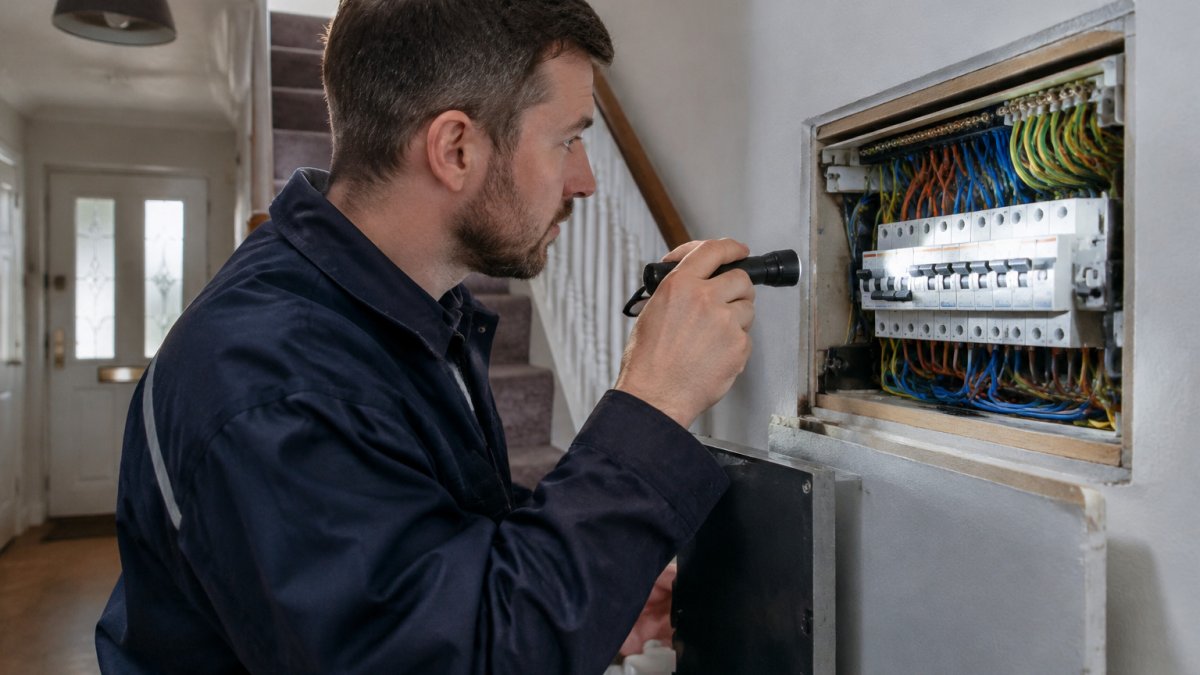
Watch for these wiring symptoms alongside flicker:
- Scorch marks around sockets or switches
- A hot plug or socket to the touch
- A crackling or buzzing sound from the fuse box or wall
- Tripping breakers that reset but trip again
- Sockets that feel loose or no longer hold a plug firmly
Older homes often need a full review rather than a quick patch. If you are unsure whether your wiring is up to standard, our guide to checking whether your home is due a rewire explains the warning signs to look for.
Warning Signs That Need Immediate Action
Some signs mean you should stop using the affected circuit and call an emergency electrician straight away:
- A burning smell, especially near a socket, switch, or fuse box
- Visible scorching, melting, or discolouration on any fitting
- Sparks or arcing when you plug in or switch on
- Smoke or a hot consumer unit
- Flickering combined with a warm or buzzing wall
Turn off the power at the consumer unit if it is safe to do so. Do not use the affected socket or switch. Then call a qualified electrician. For urgent help, see our emergency electrician service for faulty sockets and electrical problems.
Normal LED Behaviour Versus a Genuine Fault
LED bulbs sometimes behave in ways that worry people, but not every change is a fault. Understanding the difference saves unnecessary callouts.
A new LED may shimmer slightly when it first warms up, or show a faint flicker in its first few minutes. This is often normal. A flicker that comes and goes with the dimmer setting, or appears only with certain LEDs, usually means the bulb and dimmer do not match.
A genuine fault looks different. It is persistent, it affects several bulbs, or it comes with heat, noise, or a smell. A failing LED driver can also cause repeated flicker that gets worse over time.
If you are unsure, test the bulb in another fitting. If the flicker follows the bulb, replace the bulb. If it stays with the fitting or the circuit, the problem lies in the wiring or switch.
When to Call an Electrician for Flickering Lights
Call a qualified electrician when:
- Flickering affects several rooms or the whole house
- The flicker continues after you have replaced bulbs and checked dimmers
- You notice any wiring warning sign, such as heat, smell, or scorch marks
- The breaker trips, or the consumer unit looks damaged
- The property is older and you have not had its electrics checked
Do not attempt repairs to live wiring yourself. A qualified electrician can test the circuit, find the loose connection, and tell you whether a repair or a wider upgrade is the right answer.
Booking a Full Electrical Inspection With Project Rewire
If flickering keeps coming back, or your home is older, a full electrical inspection gives you a clear picture of its condition. A full electrical inspection can show the condition of a home's wiring and whether it is fit for modern demand.
At Project Rewire, our fully qualified engineers work on domestic properties across Glasgow, Renfrewshire, and Ayrshire. Every rewiring job we do is backed by a 10-year guarantee. Pricing depends on the size of the property and the work required, so request a quote from Project Rewire for a figure based on your home.
Frequently Asked Questions
Why are the lights in my house flickering?
Flickering lights in a house are most often caused by a loose bulb, a worn or incompatible dimmer switch, a loose connection in a light fitting, or a fault in the wiring. Voltage changes from the electricity supply or a heavy appliance starting up can also cause brief dips. If the flicker happens in only one light, start with the bulb and fitting. If it affects several rooms, the cause is more likely to be in the circuit, the neutral connection or the supply, and a qualified electrician should check it.
Why do my lights flicker in one room but not the rest of the house?
When flickering is confined to one room, the cause usually sits on that room's lighting circuit or in its fittings. Typical culprits include a loose bulb, a light fitting with a poor connection, an incompatible dimmer or LED bulb, or a loose connection in the ceiling rose or switch. Because the rest of the house is unaffected, the main supply is probably fine. Testing with a known-good bulb and checking the fitting for looseness will help narrow it down.
Are flickering lights a fire risk?
Flickering lights can be a warning sign of a loose or deteriorating connection, which generates heat and can lead to arcing. That is why persistent flickering should not be ignored, particularly if it is accompanied by a burning smell, warm switches or sockets, scorch marks, or buzzing. If you notice any of these signs, switch off the affected circuit at the consumer unit if it is safe to do so and contact a qualified electrician promptly.
When should I call a qualified electrician about flickering lights?
Call a qualified electrician if flickering affects several rooms, continues after you have replaced the bulb, happens alongside a burning smell, or occurs with sockets or switches that feel warm or crackle. Use only a registered or approved contractor to carry out the work. Ask for an inspection and a written report so you know exactly what was found and what needs doing.