 how-to
Does a House Rewire Need Building Regulations Approval?
Last Updated: November 12, 2026
Quick Summary
Yes, a full house rewire needs building regulations approval in most cases, because replacing the fixed wiring throughout a home counts as notifiable electrical work under Part P. The work must be designed, installed, inspected and tested to BS 7671, and you need a certificate to prove it. In Scotland, a rewire typically needs a building warrant.
- A rewire means replacing the fixed wiring, accessories and often the consumer unit throughout a property.
- Submit a building notice before work begins and book the first-fix inspection before cables are covered.
- A scheme-registered electrician can self-certify notifiable work without a separate building control visit.
- A full rewire should produce an EIC and a Building Regulations compliance certificate.
- Swapping a consumer unit is notifiable work in its own right, even if the rest of the wiring stays.
Table of Contents
- Does a House Rewire Need Building Regulations Approval?
- When Part P Building Regulations Electrical Work Applies to a Rewire
- Building Control Notification for Electrical Work: The Step-by-Step Route
- Registered Electrician Self-Certification Explained
- The Electrical Installation Certificate After a Rewire
- Partial Rewires, Consumer Units and Where the Rules Change
- Missing Certificates, Unregistered Work and the Consequences
- Get a Quote and Confirm Your Rewire Is Compliant
- Frequently Asked Questions
Does a House Rewire Need Building Regulations Approval?
Yes, a full house rewire needs building regulations approval in most cases, because replacing the fixed wiring throughout a home counts as notifiable electrical work under Part P.
That single answer hides a lot of detail. Who notifies, who signs off, what paperwork you keep, and what happens if the job was done years ago without any of it.
Below, we explain when approval applies, how the notification route works step by step, and what to do if you have no certificates.
When Part P Building Regulations Electrical Work Applies to a Rewire
The rules differ by jurisdiction, and this catches people out. In Scotland, electrical work is controlled through the building standards system, and a rewire typically needs a building warrant.
A rewire means replacing the fixed wiring, accessories and often the consumer unit throughout a property.
So the answer to "does a house rewire need building regulations approval" depends on where the property sits. In Scotland, expect a building warrant.
Building Control Notification for Electrical Work: The Step-by-Step Route
Building control notification for electrical work is the process of telling your local authority before notifiable work starts, so it can be inspected and approved.
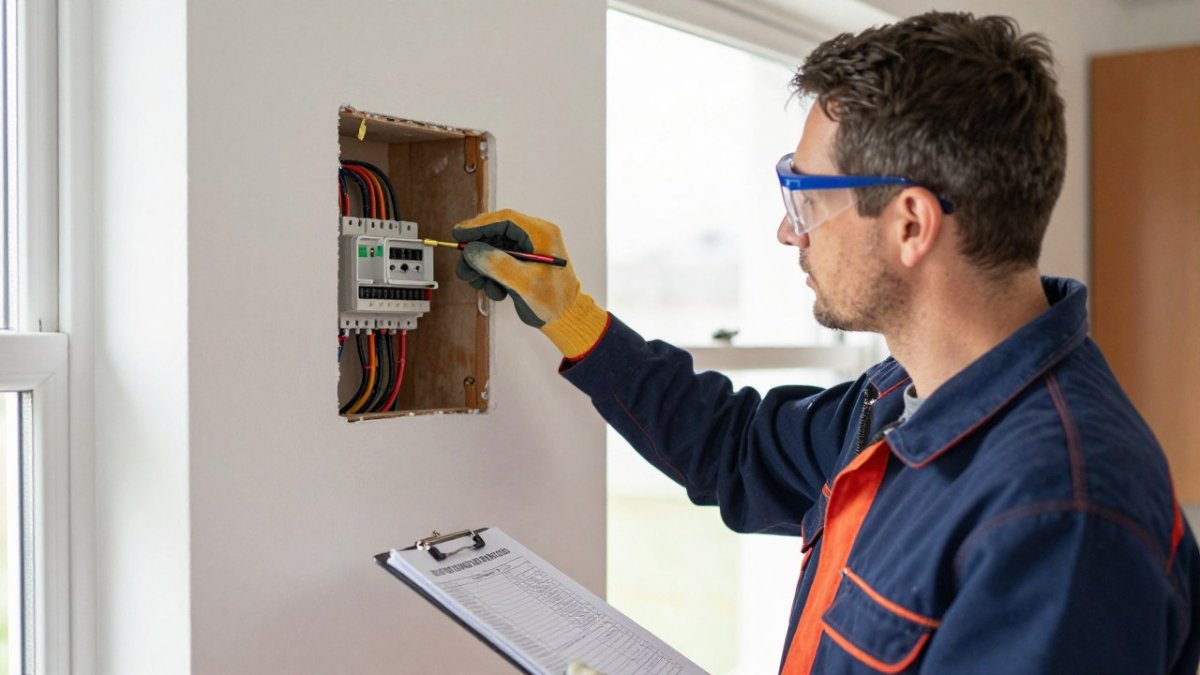
Here is how it works in practice when the electrician is not scheme-registered:
- Confirm the work is notifiable. A full rewire is. Most repairs and like-for-like replacements are not. If you are unsure, ask the local authority building control team before appointing anyone.
- Decide who notifies. You can notify as the homeowner, or your electrician can notify on your behalf with your consent. Whoever notifies is responsible for paying the fee and booking inspections.
- Submit a building notice (or full plans application) before work begins. A building notice is a route for domestic rewires and does not require detailed drawings. The fee is set by the local authority and varies by project, so confirm the current fee schedule with your council.
- Book the first-fix inspection before cables are covered. Building control will want to see cable routes, protective bonding, and the consumer unit position before plasterboard or floorboards go back. If you miss this stage, the inspector may ask for cable to be exposed again, which adds cost and delay.
- Book the completion inspection once the installation is energised and tested. Testing should be completed before this visit.
- Provide the test results and certificates. The electrician issues an Electrical Installation Certificate with schedules of inspections and test results. Building control reviews these alongside its own inspection notes.
- Receive the completion certificate. The local authority issues a completion certificate confirming the work meets the regulations. Keep it with your property papers, solicitors ask for it during a sale.
Watch out: if you notify after work has started, or after it has finished, building control can regularise the work but may charge a higher fee and require more intrusive inspection, so notify first.
What Evidence Building Control Expects
Building control expects to see evidence that the design and installation meet BS 7671 and that the relevant parts of the Building Regulations are satisfied. In practice that means:
- A completed Electrical Installation Certificate with schedules of test results
- Confirmation that protective bonding to incoming services (gas, water, structural steel) is in place
- Evidence that RCD protection has been provided where required
If your electrician cannot produce these, building control cannot sign the job off, and you will be left with a rewire that is safe in practice but undocumented on paper.
Notifiable and Non-Notifiable Work in a Rewire
Notifiable work includes new circuits, a consumer unit replacement, and any work in a special location such as a bathroom or kitchen zone. Non-notifiable work covers minor repairs, like-for-like replacements and maintenance that does not involve new circuits.
The distinction matters because it decides who signs the job off. Get it wrong and you can end up with work that is safe but undocumented, which becomes a problem when you sell.
What Happens After You Notify Building Control
After you notify, building control arranges inspections and reviews the electrician's test certificates. Once satisfied, it issues a completion certificate. Keep that document with your property papers, because solicitors ask for it during a sale. In Scotland, the route runs through a building warrant.
Registered Electrician Self-Certification Explained
Registered electrician self-certification means a scheme-registered electrician can certify their own notifiable work without a separate building control visit.
This is the fastest route for most homeowners. A registered electrician can certify notifiable work through their competent person scheme membership.
Not every electrician is registered. A common mistake is assuming a qualified electrician is automatically scheme-registered. Ask directly, and check the registration is current.
How to check what NAPIT approval means for electricians explains what scheme registration actually covers. Seven checks before hiring a local NAPIT electrician gives you a practical list to run through before you commit.
The Electrical Installation Certificate After a Rewire
The electrical installation certificate after a rewire is the document that proves the work was designed, installed, inspected and tested to BS 7671. Without it, you have no evidence the job was done properly. But a rewire can generate more than one certificate, and homeowners often confuse them. Here is the distinction that matters.
The Three Certificates You May Encounter
- Electrical Installation Certificate (EIC). Issued for new installation work, including a full rewire, a new circuit, or a consumer unit replacement. It covers design, construction, inspection and testing, and comes with schedules of inspections and test results.
- Minor Electrical Installation Works Certificate (MEIWC). Issued for small alterations or additions that do not extend an existing circuit and do not involve a new circuit, for example, adding a spur or replacing a damaged accessory. It is not a substitute for an EIC on a rewire.
- Building Regulations compliance certificate. Issued by a competent person scheme operator (or by local authority building control) to confirm that notifiable work complies with the Building Regulations. It is separate from the EIC and is the document solicitors typically ask for when a property is sold.
A full rewire should produce an EIC and, where the work was notifiable and self-certified, a Building Regulations compliance certificate. If you are handed only a MEIWC for a full rewire, that is a red flag.
What a Valid Certificate Should Contain
A valid certificate is more than a signature on a page. Check for these:
- The installer's name, signature and scheme registration number (or building control reference if not scheme-registered)
- Details of the installation covered and the extent of the work
- Schedule of test results, including insulation resistance, earth loop impedance and RCD trip times
If any of these are missing, ask why. A certificate without test results is not worth the paper it is printed on.
When Each Certificate Is Issued
Timing matters. The EIC is issued once testing is complete and the installation is safe to energise, normally at the end of the job. The Building Regulations compliance certificate follows the scheme operator's notification to the local authority, which can take a few weeks. Do not hand over final payment until you have at least the EIC in hand and a clear date for the compliance certificate.
A rewire can generate more than one certificate, so here is what each one covers.
| Certificate | Issued for | Note |
|---|---|---|
| Electrical Installation Certificate (EIC) | New installation work, including a full rewire | Comes with schedules of inspections and test results |
| Minor Electrical Installation Works Certificate (MEIWC) | Small alterations or additions that do not involve a new circuit | Not a substitute for an EIC on a rewire |
| Building Regulations compliance certificate | Notifiable work that complies with the Building Regulations | Issued by a scheme operator or local authority building control |
Partial Rewires, Consumer Units and Where the Rules Change
A partial rewire is notifiable when it involves new circuits or a consumer unit replacement.
This is where a lot of confusion starts. A homeowner replaces a few sockets and assumes nothing needs notifying.
Partial rewires sit in a grey area. If you are replacing cable in one area and adding circuits, treat it as notifiable until an electrician tells you otherwise.
The benefits of upgrading your home consumer unit covers why this upgrade matters and what it involves.
Missing Certificates, Unregistered Work and the Consequences
Missing certificates are a real problem when you sell, remortgage or rent out a property. Solicitors and lenders ask for evidence of notifiable work, and a gap in the paper trail can delay or derail a sale.
What to do if certificates are missing:
- Ask the previous owner or electrician. Certificates are sometimes filed away and forgotten.
- Check with the local authority. Building control keeps records of notifications and completion certificates.
- Commission an EICR. An Electrical Installation Condition Report will not replace a missing certificate, but it tells you the current condition of the wiring.
Unregistered work carries real risks. If you have unanswered questions, our rewiring FAQs cover the top questions about house rewiring in Glasgow, including certificates and what to expect.
Get a Quote and Confirm Your Rewire Is Compliant
Getting this right comes down to one thing: paperwork that matches the work. Before you appoint anyone, confirm three points.
- Is the electrician registered with a competent person scheme, and can they self-certify?
- Will you receive a full Electrical Installation Certificate with test results?
- If the work is notifiable and they are not registered, who notifies building control?
If the answers are vague, walk away. A cheap rewire with no certificate is not cheap.
We are NAPIT approved.
Get a quote for a full house rewire and we will confirm what your property needs and what approval route applies.
A rewire is one of the few home improvements where the paperwork matters as much as the work.
Frequently Asked Questions
Does a full house rewire need building regulations approval?
A full rewire involves new circuits, a consumer unit change and work throughout the dwelling, and in Scotland it typically needs a building warrant. If a registered electrician who belongs to a competent person scheme carries out the work, they self-certify it and notify Building Control on your behalf. If you use an unregistered electrician or do the work yourself, you must notify Building Control before work starts and pay for inspection. Either way, building regulations approval is a normal part of a compliant rewire.
Can a registered electrician self-certify a house rewire?
Yes. A registered electrician who is a member of a competent person scheme can self-certify notifiable work, including a full rewire. They complete the installation to BS 7671, test it, issue an Electrical Installation Certificate, and notify the scheme operator, who passes the details to Building Control. You should receive a compliance certificate confirming the work meets building regulations. Always check the electrician's scheme membership before work begins, not after.
What certificate should I receive after a house rewire?
You should receive an Electrical Installation Certificate covering design, installation, inspection and testing, along with a schedule of test results and a schedule of items inspected. If the work was self-certified through a competent person scheme, you also get a building regulations compliance certificate. Keep all of these with your property documents. A certificate without test results is incomplete, so ask for the full set before making the final payment.
What happens if a rewire was not certified?
Uncertified work can cause problems when you sell, remortgage or let the property, and it may leave genuine safety faults hidden. A registered electrician can carry out an inspection and issue a report on the existing installation, and a regularisation application through Building Control can bring the work into compliance, though this usually costs more than notifying upfront. If you are buying a property with no rewire certificate, budget for a full inspection before exchange.