 how-to
How Long Does an EICR Take? Timescales Explained
Last Updated: October 23, 2026
Quick Summary
An EICR usually takes between two and four hours for a typical home, though a small flat can be done in under two hours and a large property with several circuits may run to a full day. How long an EICR take depends on the size of the property, the age of the wiring, and how easy it is to reach every socket and fitting.
- A one-bedroom flat typically takes one to two hours to inspect.
- The number of circuits drives the timescale more than floor area does.
- The report is usually issued within a few working days of the inspection.
- Clear access to the consumer unit and meter helps keep the appointment short.
- An unsatisfactory report means remedial work is needed before the installation is safe.
Table of Contents
- How Long Does an EICR Take on Average?
- How Long Does an Electrical Safety Check Take by Property Size?
- EICR Duration by Property Size: Flats, Semis and Larger Homes
- What Happens During an EICR Inspection
- Factors That Make an EICR Take Longer
- How to Prepare for an EICR
- Getting Your EICR Report and What Comes Next
- Frequently Asked Questions
How Long Does an EICR Take on Average?
An EICR usually takes between two and four hours for a typical home. A small flat can be done in under two hours, while a large property with several circuits may run to a full day.
At Project Rewire, our NAPIT-approved engineers carry out these inspections regularly across domestic properties. The honest answer is that no two jobs are identical. The time depends on the size of the property, the age of the wiring, and how easy it is to reach every socket and fitting.
Below, we break down exactly how long an EICR takes by property type, what happens during the visit, and the simple steps that shave time off the appointment. But first, here's what most guides get wrong: they quote a single figure as if every house were the same. It isn't.
How Long Does an Electrical Safety Check Take by Property Size?
A one-bedroom flat typically takes one to two hours. A three-bedroom semi usually needs two to three hours. Larger homes with extensions, outbuildings or multiple consumer units can take four hours or more.
The number of circuits drives the timescale more than floor area does. A compact house with an old fuse board and one ring main may take longer than a bigger home with a modern board and clearly labelled circuits.
Landlords often ask us whether the check can be done between tenancies. It can, provided the property is empty and access is straightforward. An occupied home adds time because we need to move around furniture and ask for access to each room.
EICR Duration by Property Size: Flats, Semis and Larger Homes
The table below shows what we typically expect on site. Treat it as a guide, not a promise.
| Property type | Typical duration | What drives the time |
|---|---|---|
| One-bed flat | 1-2 hours | Few circuits, single consumer unit |
| Two-bed terraced | 2-3 hours | More sockets, older board |
| Three-bed semi | 2-3 hours | Ring mains, kitchen circuits |
| Four-bed detached | 3-4 hours | Multiple circuits, outbuildings |
| Period property | 4+ hours | Old wiring, limited access |
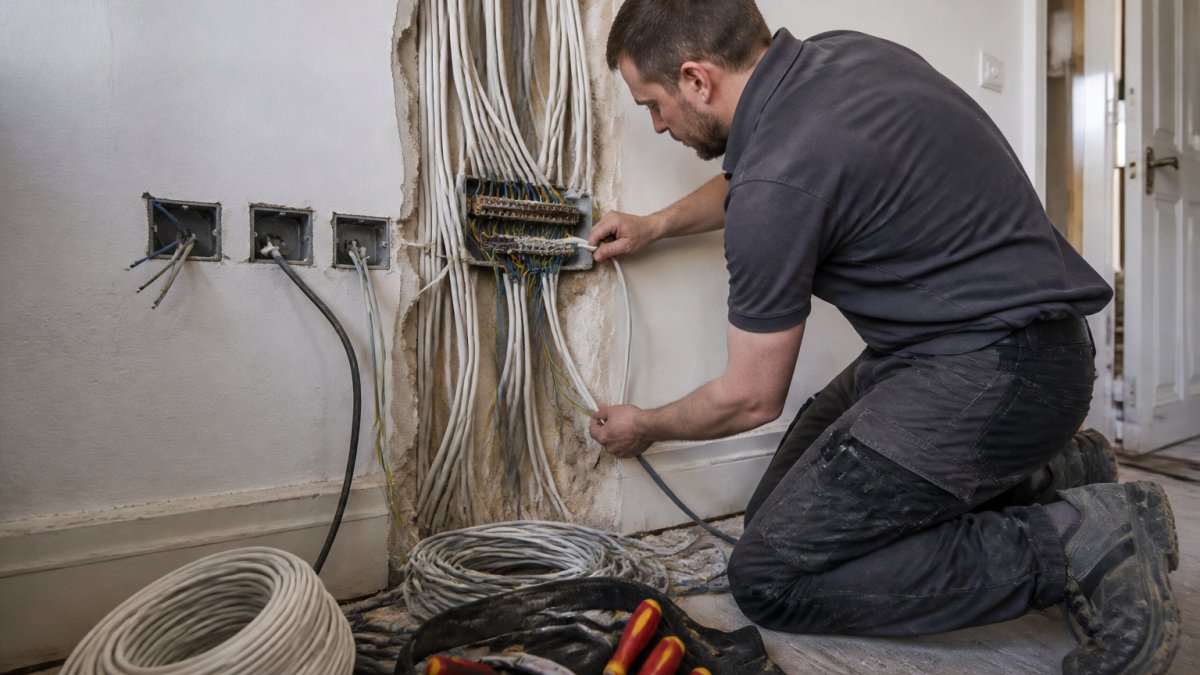
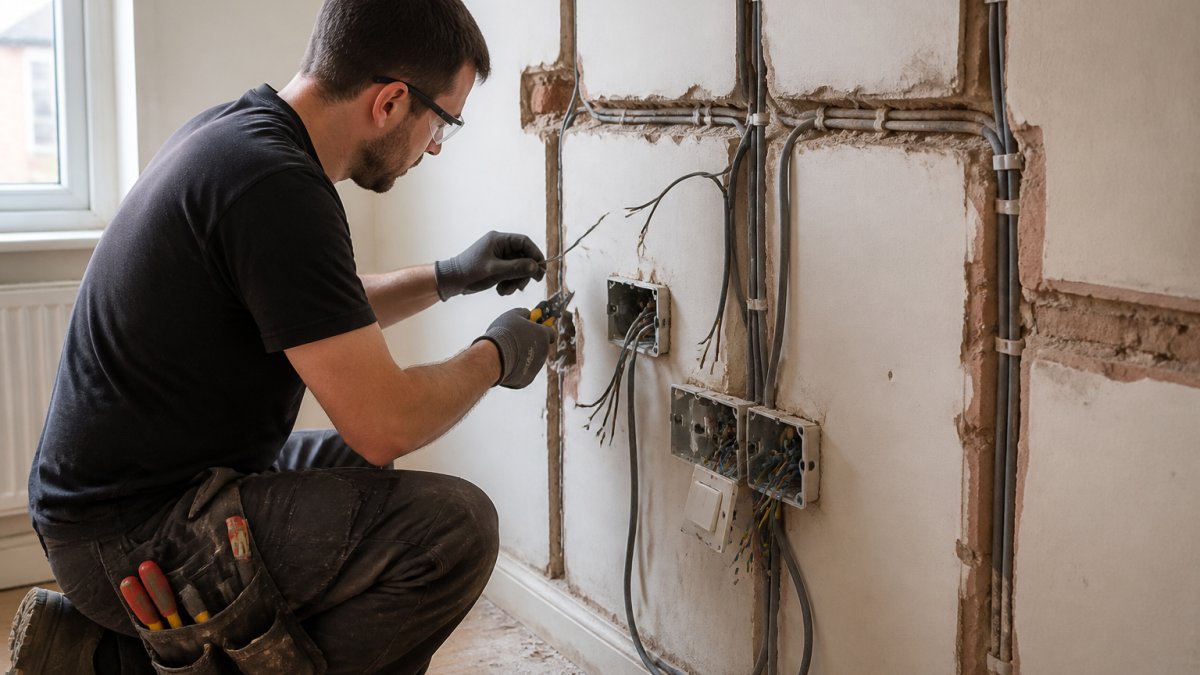
Older properties in this area often have the original wiring still in place. That slows things down. We may need to trace circuits that were never labelled, or check for earthing arrangements that don't match modern standards.
What Happens During an EICR Inspection
An EICR combines a visual inspection with a series of electrical tests. The engineer checks the installation against the current edition of the IET Wiring Regulations, published by the Institution of Engineering and Technology, and records the results on a formal schedule.
Visual Checks and Dead Testing
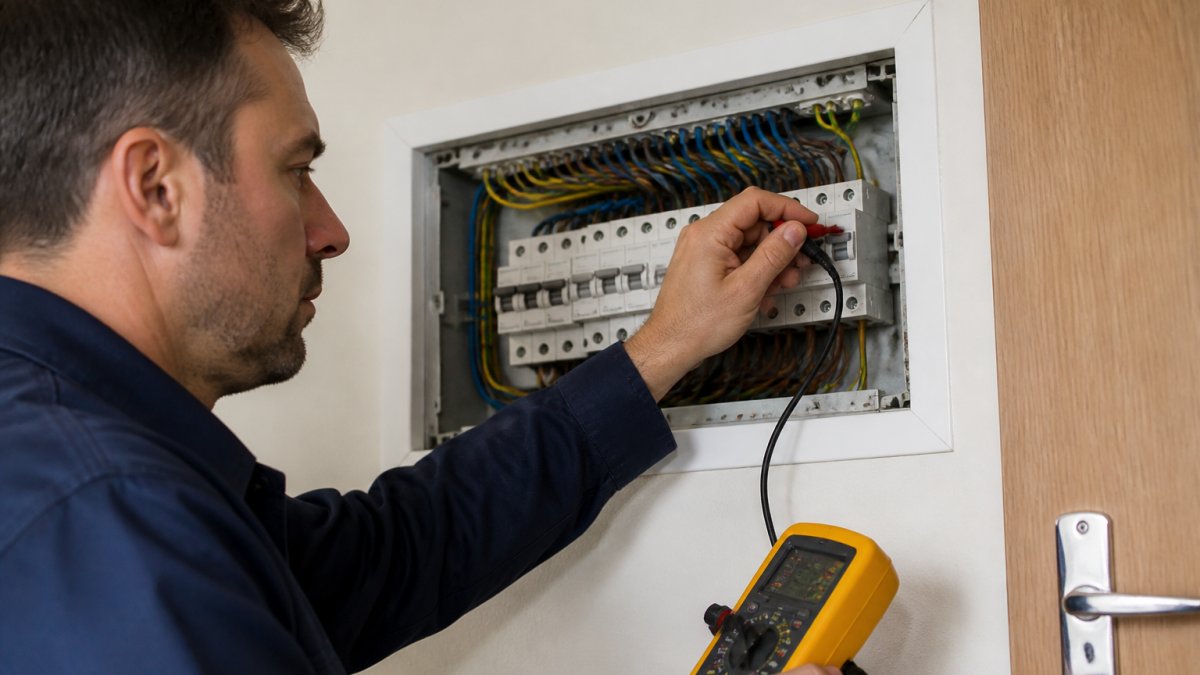
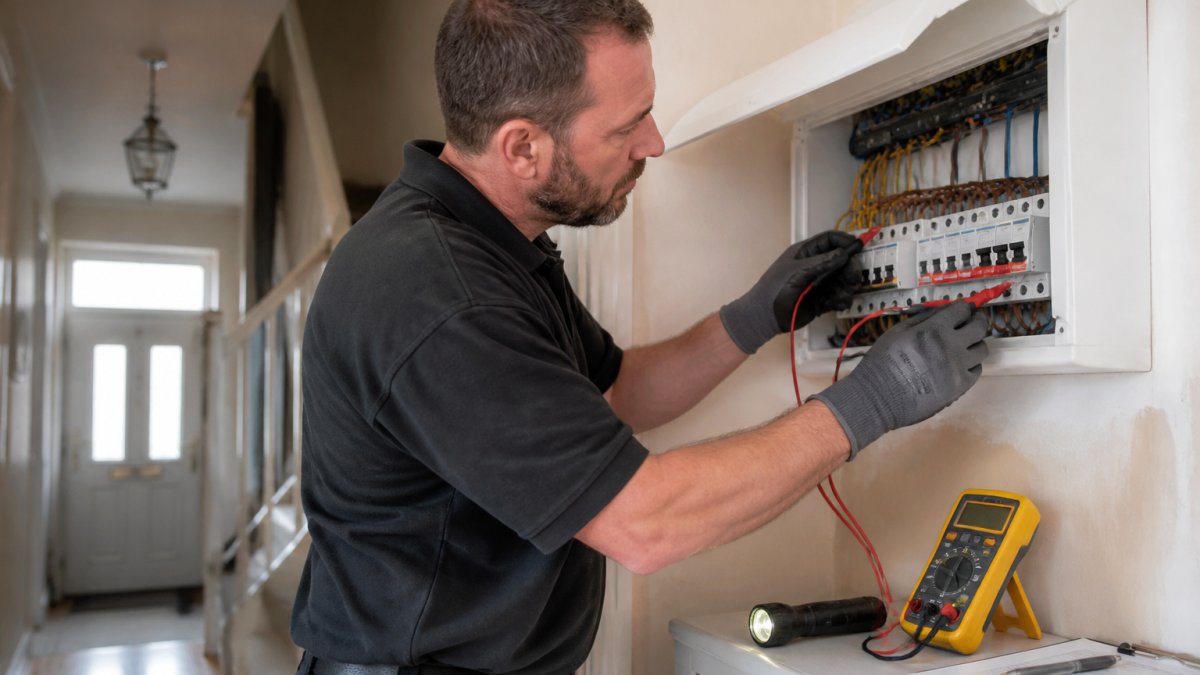
The first stage is a careful look around. The engineer inspects the consumer unit, sockets, switches, light fittings and any visible cabling. They check for signs of overheating, damage, or DIY work that doesn't meet the rules.
Dead testing follows. With the power off, the engineer measures insulation resistance and continuity. This confirms whether cables and earthing are sound. It is methodical work, and it cannot be rushed.
Live Testing and the Report
Live testing comes next. The engineer checks polarity, earth loop impedance and the operation of residual current devices. These tests confirm the installation is safe when energised.
The results are then written up into the report. This includes a schedule of circuit details and a list of any observations coded for urgency.
Factors That Make an EICR Take Longer
Several things push an inspection past the average timescale. Knowing them in advance helps you plan.
- Age of the installation. Old rubber or lead-sheathed cables take longer to assess.
- Poor labelling. Unmarked circuits mean the engineer has to trace each one.
- Limited access. Boxed-in consumer units or furniture in the way add time.
- Multiple boards. Extensions and outbuildings each need their own checks.
- Faults found. If something fails a test, the engineer must investigate further.
- Occupied property. Rooms in use slow the walkthrough.
A common mistake is assuming a failed test means a full rewire. It often doesn't. Many issues are minor and can be fixed without major work. But the engineer needs time to confirm what's actually wrong before writing it up.
How to Prepare for an EICR
Preparation is the easiest way to keep the appointment short. A little effort beforehand saves time on the day.
- Clear access to the consumer unit and meter
- Move furniture away from sockets and switches
- Note any recent electrical work or additions
- Have the previous EICR or certificate to hand
- Confirm access to outbuildings and lofts
- Make sure someone is home to let the engineer in
If you're a landlord, arrange the visit for a void period where possible. Empty properties are quicker to inspect, and the engineer won't need to work around tenants.
Getting Your EICR Report and What Comes Next
The report is usually issued within a few working days of the inspection. It sets out the condition of the installation and lists any observations, each given a code from C1 to C3.
- C1: Danger present. Needs immediate action.
- C2: Potentially dangerous. Should be fixed urgently.
- C3: Improvement recommended. Not immediately dangerous.
A satisfactory report means the installation is safe to use. An unsatisfactory one means remedial work is needed. The Electrical Safety First guidance for homeowners explains what each outcome means in plain terms.
For landlords, the government guidance on electrical safety standards in the private rented sector sets out the legal duty to have inspections carried out at required intervals and to give tenants a copy of the report.
If remedial work is needed, we can quote for it separately. Our team has over a decade of experience with older domestic wiring, and every rewiring job we complete carries a 10-year guarantee.
Frequently Asked Questions
Can an EICR be completed in one day?
For most domestic properties, yes. A flat or small terraced house is usually finished within two to four hours, and a three-bedroom semi typically takes three to five hours, so a single visit covers it. Larger homes with multiple consumer units, outbuildings or extensive circuits may need a longer visit or a return trip. The report itself is often issued within a few working days of the inspection, once test results have been reviewed and any observations coded.
Do I need to be at home during the EICR?
You do not have to stay for the whole visit, but someone aged 18 or over should be present to provide access to every room, the consumer unit, loft and any outbuildings. The electrician will need to isolate circuits briefly, so it helps to be contactable if a question comes up. If you are a landlord, arrange access with your tenant in advance and confirm the appointment in writing, as the inspection counts towards your legal duty to keep the installation safe.
What can make an EICR take longer than expected?
Limited access is the biggest cause of delay. Boxed-in consumer units, locked rooms, heavy furniture against sockets and lofts packed with stored items all add time. Older properties with outdated wiring, borrowed neutrals or a lack of circuit charts can also slow testing, because the electrician has to trace circuits before testing them. Properties with multiple fuse boards, extensions or outbuildings add further time, as each distribution board needs its own set of tests.
How long does it take to get the EICR report after the visit?
Most electricians issue the report within one to five working days, though straightforward domestic jobs are often sent the same day or the next. The delay comes from reviewing test readings and coding any observations as C1, C2 or C3. A C1 or C2 observation means remedial work is needed, and for landlords the report must be given to the tenant and the local authority within 28 days of the inspection. Ask your electrician for the expected turnaround when you book.
An EICR is only useful if it's done properly, and that takes time. Rushed inspections miss things. If you need a thorough, NAPIT-approved inspection for a home or rental property, Project Rewire can help. We offer qualified engineers, clear reports, and a straightforward quote with no surprises. Get a quote today and know exactly where your installation stands.