 how-to
Residential Electrical Rewiring Services: A 2026 Guide
Table of Contents
- What Residential Electrical Rewiring Involves
- Signs a House Needs Rewiring
- How Long Does a House Rewire Take
- Understanding Full House Rewire Cost
- What to Include in a House Rewiring Quote Checklist
- Finding Qualified Electrical Rewiring Contractors
- What to Expect During Your Rewiring Project
- Frequently Asked Questions
Last Updated: October 21, 2026
What Residential Electrical Rewiring Involves
Residential electrical rewiring is the complete replacement of your home's electrical system, from the main consumer unit to every socket, switch, and light fitting. It's a full overhaul, not a patch job.
Rewiring means removing old cable, installing new circuits, upgrading your consumer unit to current safety standards, and ensuring everything complies with Building Standards and the Wiring Regulations. For older properties, this means replacing systems never designed for modern electrical demand.
The work typically includes:
- Replacing all internal cabling with modern, safety-approved wire
- Installing a new consumer unit with modern circuit breakers
- Adding new circuits for different areas of your home
- Upgrading earthing and bonding systems
- Installing new socket outlets, switches, and lighting circuits
- Testing and certification of the entire installation
At Project Rewire, we approach each rewire as a bespoke project. Your 1960s semi won't need the same solution as a 1980s detached house. We assess what you've got and what will serve your home safely for the next decade.
Signs a House Needs Rewiring
Not every home needs a full rewire. But several warning signs suggest yours might.
Flickering lights when you switch on high-power appliances like your kettle or washing machine.
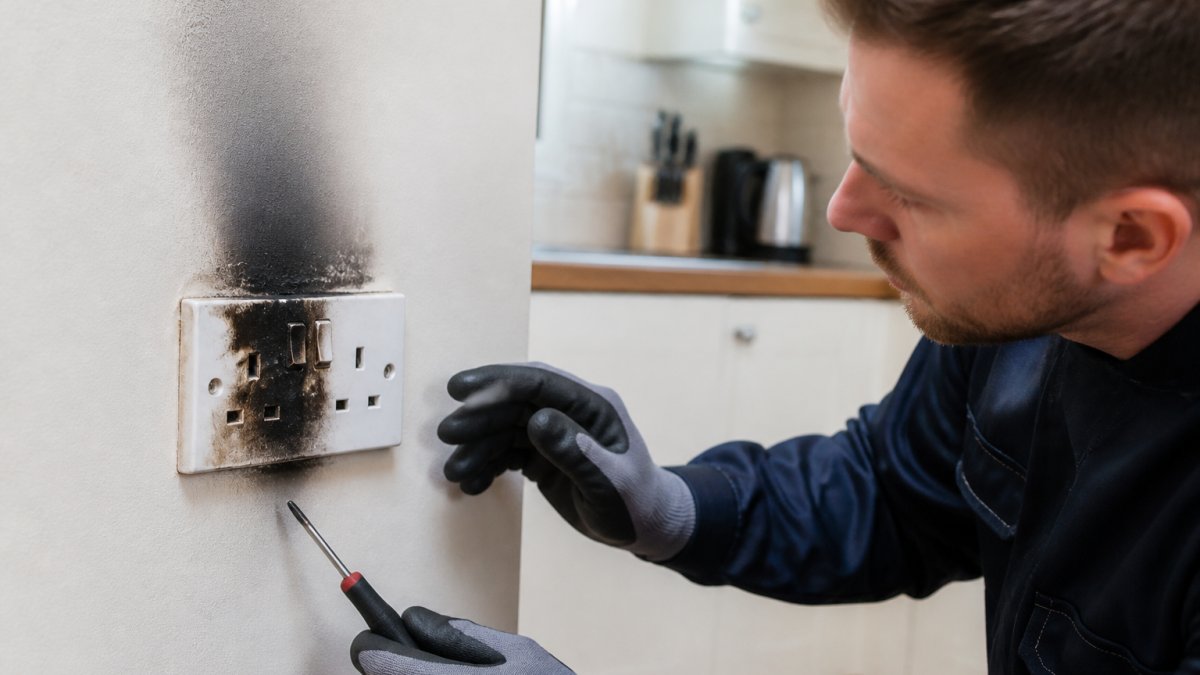
Sparking or burning smells from sockets or switches.
Faulty RCD (residual current device) trips happening regularly.
Discoloured or warm sockets and switches. Discolouration usually means arcing inside the fitting. Warm sockets mean excessive resistance, both are fire hazards.
Outdated fuse boxes instead of modern circuit breakers.
Physical damage to cables visible in lofts, under floorboards, or in your consumer unit. Damaged insulation exposes live conductors. This needs urgent attention.
No earth wire in older circuits. Many properties built before the 1960s lack proper earthing. This leaves you vulnerable to electrocution and equipment damage.
For rental properties, an EICR (Electrical Installation Condition Report) will flag these issues formally.
How Long Does a House Rewire Take
The timeline depends on your property's size, how accessible the work is, whether you're living there during the work, and the complexity involved.
A typical semi-detached house takes 5 to 10 working days. A larger detached property might stretch to 2 to 3 weeks. A small flat could be done in 3 to 5 days.
These figures assume straightforward access to walls, lofts, and under-floor spaces.
Living in your home during rewiring is disruptive but manageable. Your electrician works room-by-room, isolating circuits so the rest of the house keeps power.
The real timeline variable is access to your property. If you're renovating at the same time, the rewire fits the broader schedule; an occupied home with minimal disruption takes longer and more care.
| Property Type | Typical Duration | Disruption Level | Living During Work |
|---|---|---|---|
| Flat (1-2 bed) | 3-5 days | Low | Minimal |
| Semi-detached | 5-10 days | Medium | Manageable |
| Detached house | 2-3 weeks | Medium-High | Requires planning |
| Period property (solid walls) | 3-4 weeks | High | Challenging |
Project Rewire will give you a realistic timeline during your survey. We factor in your specific property layout, access constraints, and your preferences for minimising disruption.
Understanding Full House Rewire Cost
Cost depends on property size, complexity, and what you include beyond basic rewiring.
A basic full rewire for a semi-detached house typically costs between £3,000 and £8,000. A detached property runs £5,000 to £12,000; a flat £2,000 to £5,000. Ranges are broad because no two properties are identical.
What pushes costs up:
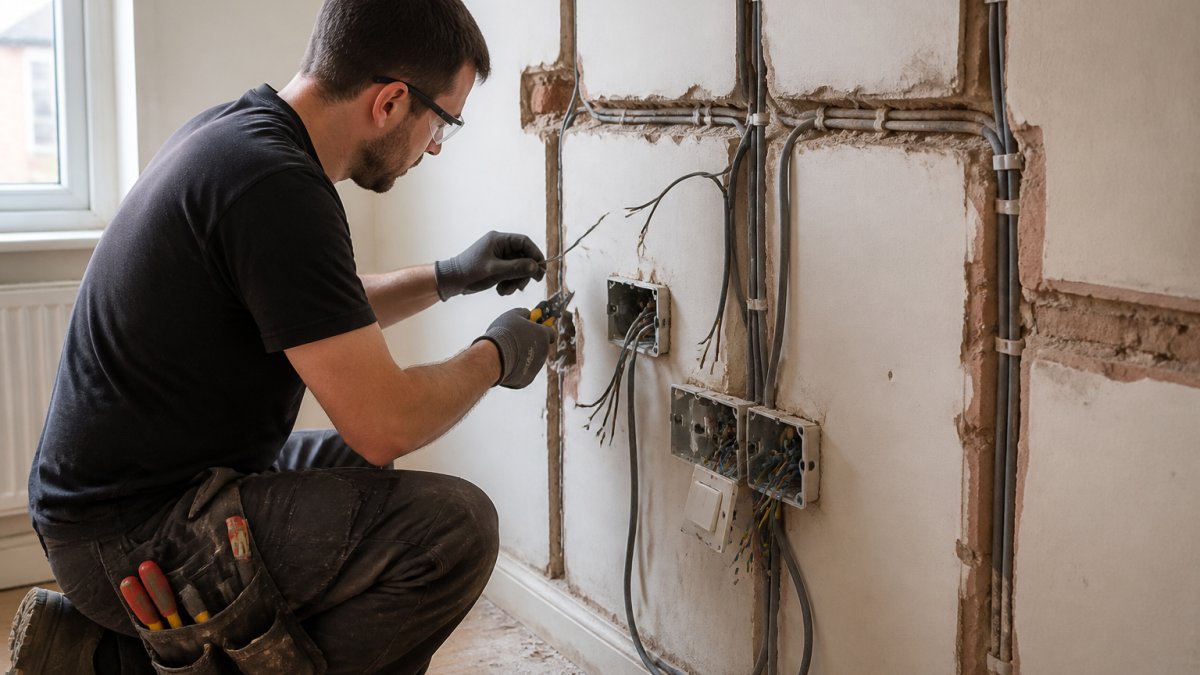
- Solid walls requiring chasing, cutting channels through brick for cable is labour-intensive
- Listed building or conservation area restrictions, work must follow specific rules, which takes longer
- Additional circuits or upgrades, adding circuits for EV chargers, underfloor heating, or new kitchens adds to the bill
- Asbestos removal, some older properties have asbestos in pipe lagging or insulation; this must be professionally removed first
- Difficult access, properties with limited loft space, solid floors, or tight layouts cost more
- Emergency or urgent work, if you need rewiring done quickly, expect to pay a premium
What's usually included in a rewire quote:
- New consumer unit installation
- All internal cabling replaced
- New circuits for sockets, lighting, and appliances
- Testing and certification
- Removal of old wiring
- Making good (patching walls and redecorating affected areas)
What's often NOT included (check your quote):
- Decoration beyond basic making good
- Specialist work like EV charger installation (charged separately)
- Asbestos removal (quoted separately)
- Upgrading your external supply (if needed)
For a true figure, you need a survey and a detailed quote. Project Rewire provides a detailed quote, walking you through what needs doing and why.
What to Include in a House Rewiring Quote Checklist
Consumer unit specification: Which make and model? Does it include surge protection?
Cable specification: What gauge cable? Modern standards use specific sizes for different circuits.
Number of circuits: How many separate circuits for lighting, sockets, cooker, immersion heater, etc.?
Testing and certification: Will you receive an EICR or an Electrical Installation Certificate?
Consumer unit location: Is the new unit in the same place or relocated?
Making good: What's included? Wall patching? Redecorating? Or just leaving the walls chased?
Timescale: How many working days? What time each day?
Guarantees: What's covered? For how long? Project Rewire offers a 10-year guarantee on all rewiring work.
Asbestos survey: Has the contractor identified potential asbestos? If so, is removal quoted separately?
Additional work: Are any upgrades included, new lighting circuits, extra sockets, EV charger prep?
Exclusions: What's explicitly NOT included? Specialist work? Decoration beyond making good?
A vague quote ("Full rewire, £5,500") is a red flag.
Finding Qualified Electrical Rewiring Contractors
The electrician you choose matters more than the price. Poor workmanship leaves unsafe wiring, failed inspections, and costly remedial work.
Start by checking qualifications. Your contractor should be registered with a competent person scheme. In the UK, the main schemes are NAPIT, SELECT, NICEIC, and BRE. These aren't optional, they're how you verify someone's actually qualified.
NAPIT's find a registered installer tool lets you search for approved contractors in your area. SELECT and NICEIC have similar directories.
Ask for references. A contractor with 10+ years' experience should have happy customers willing to speak to you.
Check insurance. Your contractor should carry public liability insurance and professional indemnity insurance. Ask to see the certificates.
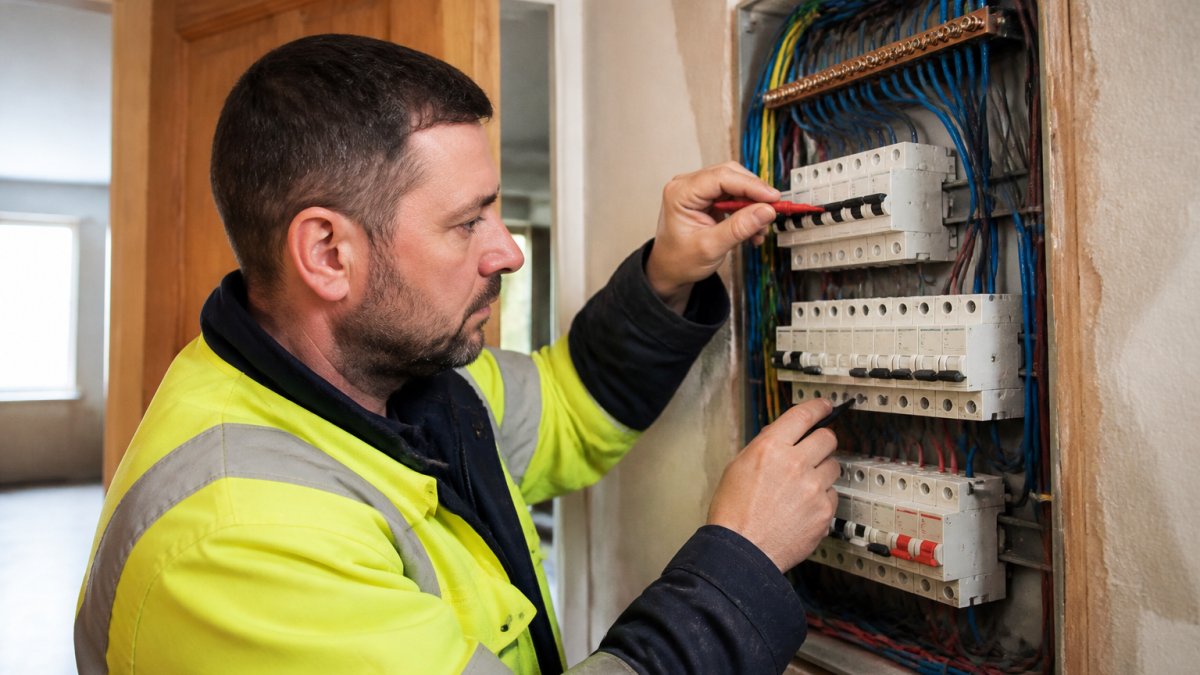
Checking Qualifications and Certifications
An electrician's qualifications tell you whether they've trained and been assessed to do the work safely.
Look for the letters after their name: NVQ Level 3 in Electrotechnical Services or City & Guilds Level 3 Electrical Installation. These are the baseline qualifications. They mean the person has completed a formal apprenticeship and passed exams.
Beyond that, check whether they hold Part P certification (Building Regulations approval for electrical work). This shows they can sign off their own work as compliant with Building Standards, you won't need a separate Building Control inspection.
NAPIT approval is particularly important. NAPIT-registered contractors carry a unique registration number. You can verify this on the NAPIT website. It means they've been audited, they carry proper insurance, and they're legally bound to put things right if something goes wrong.
Ask directly: "Are you NAPIT-registered?" If they hesitate or give a vague answer, move on.
Assessing Experience and Track Record
Experience matters. A newly qualified electrician might be competent, but a contractor with 10+ years of domestic rewiring experience has seen every problem and knows how to handle complications.
Ask about their experience specifically with properties like yours. A contractor who's rewired 50 Victorian terraces knows the challenges. Someone who's only done new-build work might struggle with your 1950s semi.
Request a portfolio or case studies. Can they show you before-and-after photos of rewiring projects? Can they name clients who'll speak to their work? Reluctance to provide evidence is a warning sign.
Check online reviews on Google and Trustpilot. Read the negative reviews carefully, they often reveal whether the contractor responds to complaints and puts things right.
Consumer Rights Act 2015 guidance on trader responsibilities sets out your legal protections. A reputable contractor will be familiar with these and won't try to dodge them.
What to Expect During Your Rewiring Project
The work follows a logical sequence, though the exact order varies with your property layout.
Days 2-3 involve first-fix work. Cable is run through walls, under floors, and into the loft.
Second-fix work happens next. Sockets, switches, and light fittings are installed. Cable is connected to the consumer unit. Testing begins.
Final testing and certification takes a day. The electrician tests every circuit, checks earth continuity, and verifies everything meets standards.
Throughout the work, your contractor should:
- Protect your carpets and furniture with dust sheets
- Tidy up debris daily
- Work during reasonable hours (typically 8am to 5pm)
- Explain what's happening and why
- Respect your home and your privacy
Disruption is inevitable: walls are chased, dust is created, and you'll lose power to parts of your home.
Ask your contractor in advance how they'll manage disruption. Will they work room-by-room? Can they schedule certain phases around your work patterns? Clear communication now prevents frustration later.
Electrical rewiring is one of the most important investments you can make in your home. It's not glamorous, but it's essential.
When you're ready to discuss your rewiring needs, Project Rewire is here to help. We're NAPIT-approved, we carry a 10-year guarantee on all work, and we've spent over a decade rewiring homes across the region. Building Standards Technical Handbook Section 4 on electrical safety sets the standards we work to, we exceed them.
Get a quote from Project Rewire today. We'll survey your property, explain exactly what needs doing, and give you a transparent, detailed estimate.
Frequently Asked Questions
How do I know if my house needs rewiring?
Several warning signs indicate your home may need electrical rewiring. Flickering or dimming lights, frequently tripped circuit breakers, warm sockets, burning smells near electrical fixtures, and visible damage to wiring are all red flags. Properties built before the 1980s with original wiring are particularly at risk. If you notice any of these issues, have a qualified electrician inspect your system promptly. Older properties often fail to meet current safety standards and may pose fire or electrocution hazards.
What qualifications should a domestic electrician have for rewiring work?
Your electrician should hold relevant qualifications such as NVQ Level 3 in Electrotechnical Services or equivalent. They must be registered with a recognised body like NAPIT, SELECT, or NICEIC to ensure compliance with Building Regulations. Registration guarantees they've met strict safety and competency standards. Always ask for evidence of current registration and public liability insurance before hiring. A reputable contractor will provide these credentials without hesitation and explain what their certifications mean for your project.
What should a house rewiring quote include?
A comprehensive rewiring quote should detail the scope of work, materials specification, labour costs, timeline, and completion date. It must include whether an electrical installation certificate will be provided upon completion. The quote should specify what's included, such as new consumer unit installation, cable replacement, socket and switch upgrades, and any lighting design work. Reputable contractors will also mention their guarantee period and insurance coverage. Compare multiple quotes to ensure you're getting fair pricing and complete transparency about what the project entails.
Will I need to move out during a house rewire?
Whether you need to vacate depends on the rewire scope and your property layout. Partial rewires or single-room work may allow you to remain in the property, though you'll experience some disruption. Full house rewires typically require temporary power disconnection, making the property unsuitable for living. Your electrician will discuss this during the planning phase and work to minimise disruption. Some contractors can arrange temporary power supplies or phase work to allow partial occupancy. Discuss your circumstances with your chosen contractor to plan accordingly.